
Explaining the value of nursing science
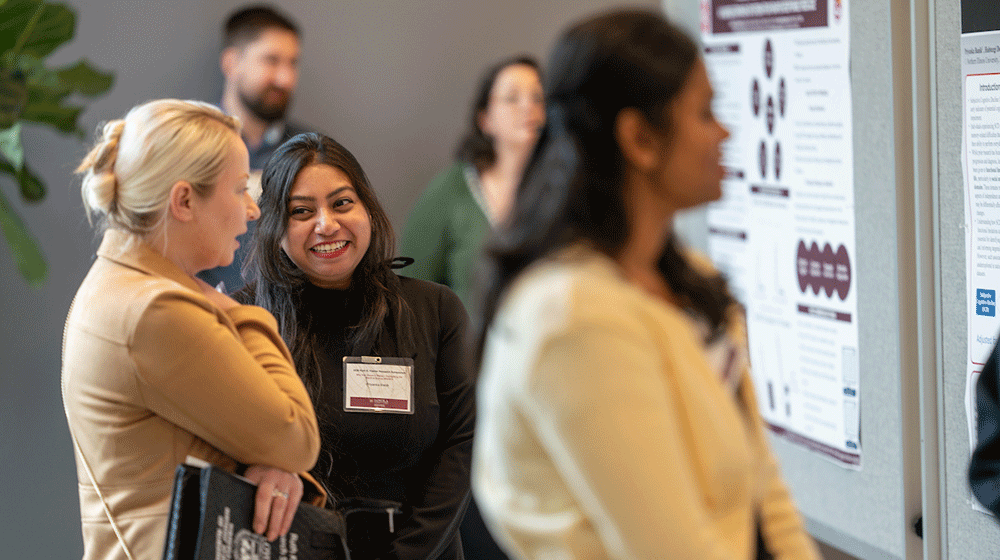
The 2026 Ruth K. Palmer Research Symposium brought together nursing students, faculty, administrators, and researchers to discuss the value of nursing science.
By Ashley Rowland
April 13, 2026
Why does nursing research matter—and how can nurse scientists share the impact of their work?
Helping researchers tell their stories was the focus of the 2026 Ruth K. Palmer Research Symposium, held April 10 at Loyola’s Health Sciences Campus. With a theme of “Why Your Research Matters: Highlighting the Reach of Nursing Science,” speakers addressed how to identify and share the positive, often-overlooked economic and societal impacts of nursing research.
“Nursing is a discipline grounded in science,” said Lorna Finnegan, dean of the Marcella Niehoff School of Nursing. “Our work does not stay in journals. It improves outcomes, informs decisions, and reaches communities.”
The Palmer Symposium is hosted annually by Loyola Nursing to highlight the role of nursing science and interdisciplinary collaboration in health care. Finnegan noted Loyola’s status as a top-tier research university and Loyola Nursing’s history and expertise in research. The school rose this year to #43 in national rankings of nursing schools that receive National Institutes of Health funding, reflecting the growing strength and visibility of Loyola Nursing’s research.
“Nursing has been doing R1-level research for a long time,” she added.
Provost Douglas W. Woods described Palmer’s growth from a small, regular gathering of academics and caregivers, organized by former Loyola Nursing Dean Gladys Kiniery, to share their experience and knowledge. Kiniery, who served as dean from 1947 through 1966, formalized the gathering 39 years ago through an endowment honoring her sister that created the Palmer Symposium.
Woods said Palmer exemplifies Loyola’s mission “to bridge education and research with service and community collaboration.”
“Quality clinical care is at the heart of what we do, and reflection and research on the ways we care for patients and communities enables all practitioners to get better,” he said. “That is the kind of greater good Loyola fosters in education, research, and service.”
Keynote speakers urged nurse scientists to highlight the human connection nurses bring to health care. That connection—and its impact on patient outcomes—spotlights the profession’s value.
Olga Yakusheva, an economist and a professor at the Johns Hopkins University School of Nursing, launched her research into the “human capital” value of nursing after her mother was hospitalized with a terminal illness 14 years ago.
Nurses, she said, brought “dignity and connection and love” to her mother and family as her mother was dying. Later, as Yakusheva reflected on the experience, she realized that much of the literature on nursing focused on cost and not nurses’ impact on patient experiences and satisfaction.
“The value that the nurses were bringing was so valuable to me, but it didn’t seem to be recognized within the system,” she said. “It was a disconnect, in my view.”
Yakusheva used a big data approach to examine nurses’ impacts on patients, and determined that leveraging individual nurses’ skills—instead of viewing nurses as homogenous inputs in a system—is critical to patient outcomes.
We’re “breaking the ‘nurse is a nurse is a nurse’ paradigm with big data,” she said.
Another keynote speaker, Krista Longtin, assistant dean for faculty affairs and professional development at Indiana University, encouraged researchers to reflect on the stories behind their research and tailor their messages to non-nursing audiences.
“Part of what I think is our responsibility is telling those who fund and support our research about the great work that we’re doing,” she said.