
Nourishing Hope
Nourishing Hope
Transformation Through Technology and Partnerships
Nourishing Hope is a Chicago-based non-profit with a mission of providing food, mental health counseling, and social services to Chicagoans in need. Through culturally sensitive and holistic services, paired with new technology and deep partnerships, Nourishing Hope works to ensure that all communities can thrive. Nourishing Hope was awarded the Baumhart Center for Social Responsibility’s Social Impact Award in the 2025 Leading for Good Conference.
Introduction
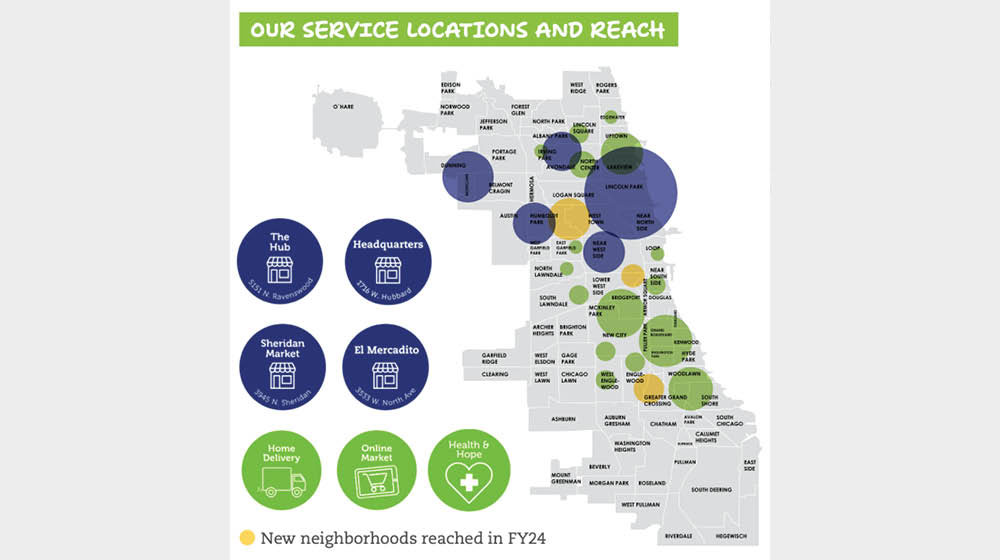
According to a July 2021 report by the Illinois Department of Public Health, 1,242,939 Illinois residents live in food deserts. Kellie O'Connell, former CEO of Nourishing Hope, addressed this inequity head-on to improve the quality of life for Chicagoans in need of interventions for nutrition2, mental health support, and social services (see Exhibit 1).
Exhibit 1: Nourishing Hope Geographic Concentration
Source: Nourishing Hope, “FY24 Annual Report”
About Nourishing Hope
Founded in 1970, Nourishing Hope (formerly Lakeview Pantry) has grown into one of Chicago’s largest and longest-running hunger relief organizations. Each year, the organization distributes more than 5.7 million pounds of food and delivers over 200,000 food, social, and mental wellness services to more than 50,000 individuals across all 77 neighborhoods.
Reimagining Food Assistance
As food insecurity deepened in the wake of rising food costs, systemic inequities, and the COVID-19 pandemic, Nourishing Hope recognized that simply providing food was no longer enough. Many Chicagoans—especially those in food deserts and underserved communities— faced barriers that food distribution alone could not solve.
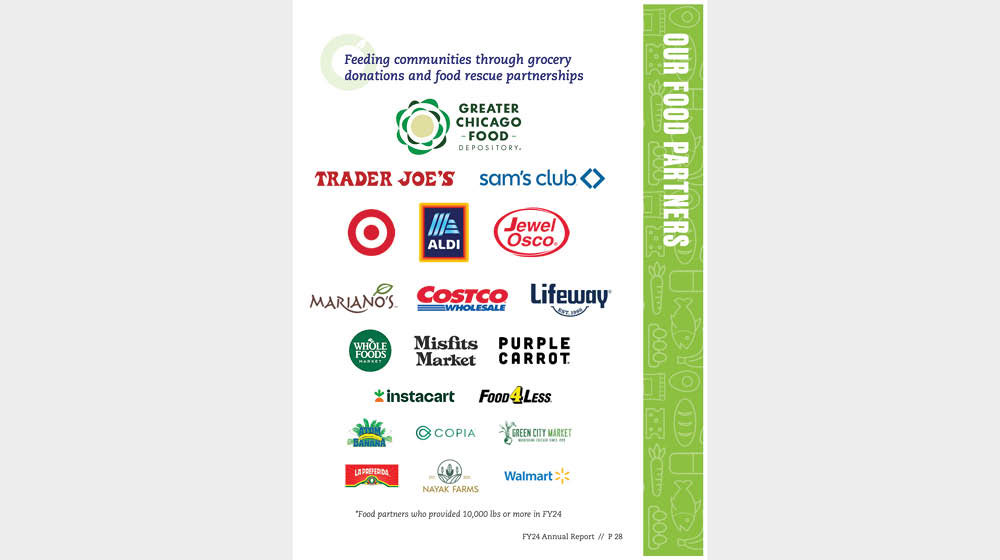
In response, Nourishing Hope reimagined its model, shifting from a traditional pantry to a holistic hub of wraparound support, including expanded mental wellness services, employment assistance, housing and transportation support, and financial assistance. They built a network of 40 strategic partnerships (see Exhibit 2) with trusted community organizations, hospitals, and service providers. These partnerships now enable Nourishing Hope to deliver groceries directly to homebound residents, offer convenient pickup through Online Market locations, and connect food-insecure patients with resources via healthcare systems.
This transformation enables Nourishing Hope to reach more people more effectively—meeting individuals where they are and addressing the root causes of hunger. Today, the organization not only feeds people but also empowers them with the tools and support to achieve long-term stability and self-sufficiency.
Exhibit 2: Nourishing Hope Food Partners who provided 10,000 lbs. or more in FY24
Source: Nourishing Hope, “FY24 Annual Report”
Impact Through Technology
To better meet growing needs with dignity, Nourishing Hope launched the Online Market—a groundbreaking initiative that makes it the first hunger relief agency in Chicago to offer a fully digital food pantry experience. This innovative platform mirrors traditional grocery ordering systems, giving individuals the freedom to choose the food they want, when and where it works for them.
By providing greater agency, convenience, and a sense of normalcy, the Online Market reflects Nourishing Hope’s deep commitment to equity, respect, and client-centered care.
Since its inception in 2019, the Online Market has distributed over 6 million pounds of food to more than 15,000 unique individuals. For example, families in North Lawndale can conveniently shop online and pick up groceries at the North Lawndale Employment Network, saving them valuable time and effort through the Online Market. This program is especially valuable for working families, such as Daniela Flores4. As quoted in a June 2024 blog post, Flores is able to save for her children’s future with the help of Nourishing Hope: “’This has helped my family tremendously,’ said Flores, 35. ‘You took on expenses (for food) that we could put toward college and books and that has helped us so much.’”
The Home Delivery partnership further expands access by delivering groceries directly to residents in food deserts, addressing the unique needs of vulnerable populations such as older adults5.
Conclusion
Through innovative programs, strategic partnerships, and a comprehensive approach to hunger relief and social services, Nourishing Hope not only meets critical survival needs, but also empowers individuals to achieve stability and self-sufficiency. Despite the challenges posed by increasing demand, Nourishing Hope continues to adapt and thrive, reaffirming its vital role in creating a more equitable and thriving Chicago.
Questions for Discussion
- How does Nourishing Hope’s approach address the root causes of systemic inequities in Chicago?
- How might these strategies be expanded or adapted for other urban areas?
- In what ways do Nourishing Hope’s strategic partnerships enhance its ability to deliver
Prepared by Quinton R Arthur, Caitlin Osei, Shelby Volosin and Karen Weigert. Special thanks to Interim CEO of Nourishing Hope/Chief Program and Clinical Officer, Jennie Hull and Jen Allman, Marketing and Communications Manager, Nourishing Hope.
Funding for the development of this mini case was provided by the Baumhart Center for Social Enterprise and Responsibility at the Quinlan School of Business, Loyola University Chicago.
BAUM004: This article is part of a collection of mini-cases.
Sources
[1] U.S. Census Bureau. (n.d.). QuickFacts: Chicago city, Illinois. Link
[2] For the purpose of the Illinois Public Act 100-0493, "food desert" means a location lacking fresh fruit, vegetables, and other healthful whole foods, in part due to a lack of grocery stores, farmers' markets, or healthy food providers. Link
[3] Nourishing Hope Innovator Award Nomination (September 2024). Baumhart Center for Social Enterprise and Responsibility
[4] Trotter, G. (2024, June 21). Online market serves working parents: 'This has helped my family tremendously'. Nourishing Hope. Link
[5] Schulder-Battis, K. (2024, May 17). Food pantry Nourishing Hope delivers groceries to older Chicagoans in food deserts. The Chicago Reporter. Link
Nourishing Hope is a Chicago-based non-profit with a mission of providing food, mental health counseling, and social services to Chicagoans in need. Through culturally sensitive and holistic services, paired with new technology and deep partnerships, Nourishing Hope works to ensure that all communities can thrive. Nourishing Hope was awarded the Baumhart Center for Social Responsibility’s Social Impact Award in the 2025 Leading for Good Conference.
Introduction
According to a July 2021 report by the Illinois Department of Public Health, 1,242,939 Illinois residents live in food deserts. Kellie O'Connell, former CEO of Nourishing Hope, addressed this inequity head-on to improve the quality of life for Chicagoans in need of interventions for nutrition2, mental health support, and social services (see Exhibit 1).
About Nourishing Hope
Founded in 1970, Nourishing Hope (formerly Lakeview Pantry) has grown into one of Chicago’s largest and longest-running hunger relief organizations. Each year, the organization distributes more than 5.7 million pounds of food and delivers over 200,000 food, social, and mental wellness services to more than 50,000 individuals across all 77 neighborhoods.
Reimagining Food Assistance
As food insecurity deepened in the wake of rising food costs, systemic inequities, and the COVID-19 pandemic, Nourishing Hope recognized that simply providing food was no longer enough. Many Chicagoans—especially those in food deserts and underserved communities— faced barriers that food distribution alone could not solve.
In response, Nourishing Hope reimagined its model, shifting from a traditional pantry to a holistic hub of wraparound support, including expanded mental wellness services, employment assistance, housing and transportation support, and financial assistance. They built a network of 40 strategic partnerships (see Exhibit 2) with trusted community organizations, hospitals, and service providers. These partnerships now enable Nourishing Hope to deliver groceries directly to homebound residents, offer convenient pickup through Online Market locations, and connect food-insecure patients with resources via healthcare systems.
This transformation enables Nourishing Hope to reach more people more effectively—meeting individuals where they are and addressing the root causes of hunger. Today, the organization not only feeds people but also empowers them with the tools and support to achieve long-term stability and self-sufficiency.
Impact Through Technology
To better meet growing needs with dignity, Nourishing Hope launched the Online Market—a groundbreaking initiative that makes it the first hunger relief agency in Chicago to offer a fully digital food pantry experience. This innovative platform mirrors traditional grocery ordering systems, giving individuals the freedom to choose the food they want, when and where it works for them.
By providing greater agency, convenience, and a sense of normalcy, the Online Market reflects Nourishing Hope’s deep commitment to equity, respect, and client-centered care.
Since its inception in 2019, the Online Market has distributed over 6 million pounds of food to more than 15,000 unique individuals. For example, families in North Lawndale can conveniently shop online and pick up groceries at the North Lawndale Employment Network, saving them valuable time and effort through the Online Market. This program is especially valuable for working families, such as Daniela Flores4. As quoted in a June 2024 blog post, Flores is able to save for her children’s future with the help of Nourishing Hope: “’This has helped my family tremendously,’ said Flores, 35. ‘You took on expenses (for food) that we could put toward college and books and that has helped us so much.’”
The Home Delivery partnership further expands access by delivering groceries directly to residents in food deserts, addressing the unique needs of vulnerable populations such as older adults5.
Conclusion
Through innovative programs, strategic partnerships, and a comprehensive approach to hunger relief and social services, Nourishing Hope not only meets critical survival needs, but also empowers individuals to achieve stability and self-sufficiency. Despite the challenges posed by increasing demand, Nourishing Hope continues to adapt and thrive, reaffirming its vital role in creating a more equitable and thriving Chicago.
Questions for Discussion
- How does Nourishing Hope’s approach address the root causes of systemic inequities in Chicago?
- How might these strategies be expanded or adapted for other urban areas?
- In what ways do Nourishing Hope’s strategic partnerships enhance its ability to deliver
Prepared by Quinton R Arthur, Caitlin Osei, Shelby Volosin and Karen Weigert. Special thanks to Interim CEO of Nourishing Hope/Chief Program and Clinical Officer, Jennie Hull and Jen Allman, Marketing and Communications Manager, Nourishing Hope.
Funding for the development of this mini case was provided by the Baumhart Center for Social Enterprise and Responsibility at the Quinlan School of Business, Loyola University Chicago.
BAUM004: This article is part of a collection of mini-cases.
Sources
[1] U.S. Census Bureau. (n.d.). QuickFacts: Chicago city, Illinois. Link
[2] For the purpose of the Illinois Public Act 100-0493, "food desert" means a location lacking fresh fruit, vegetables, and other healthful whole foods, in part due to a lack of grocery stores, farmers' markets, or healthy food providers. Link
[3] Nourishing Hope Innovator Award Nomination (September 2024). Baumhart Center for Social Enterprise and Responsibility
[4] Trotter, G. (2024, June 21). Online market serves working parents: 'This has helped my family tremendously'. Nourishing Hope. Link
[5] Schulder-Battis, K. (2024, May 17). Food pantry Nourishing Hope delivers groceries to older Chicagoans in food deserts. The Chicago Reporter. Link