
Nancy Caronia: Teaching Immigration with a Holistic Focus
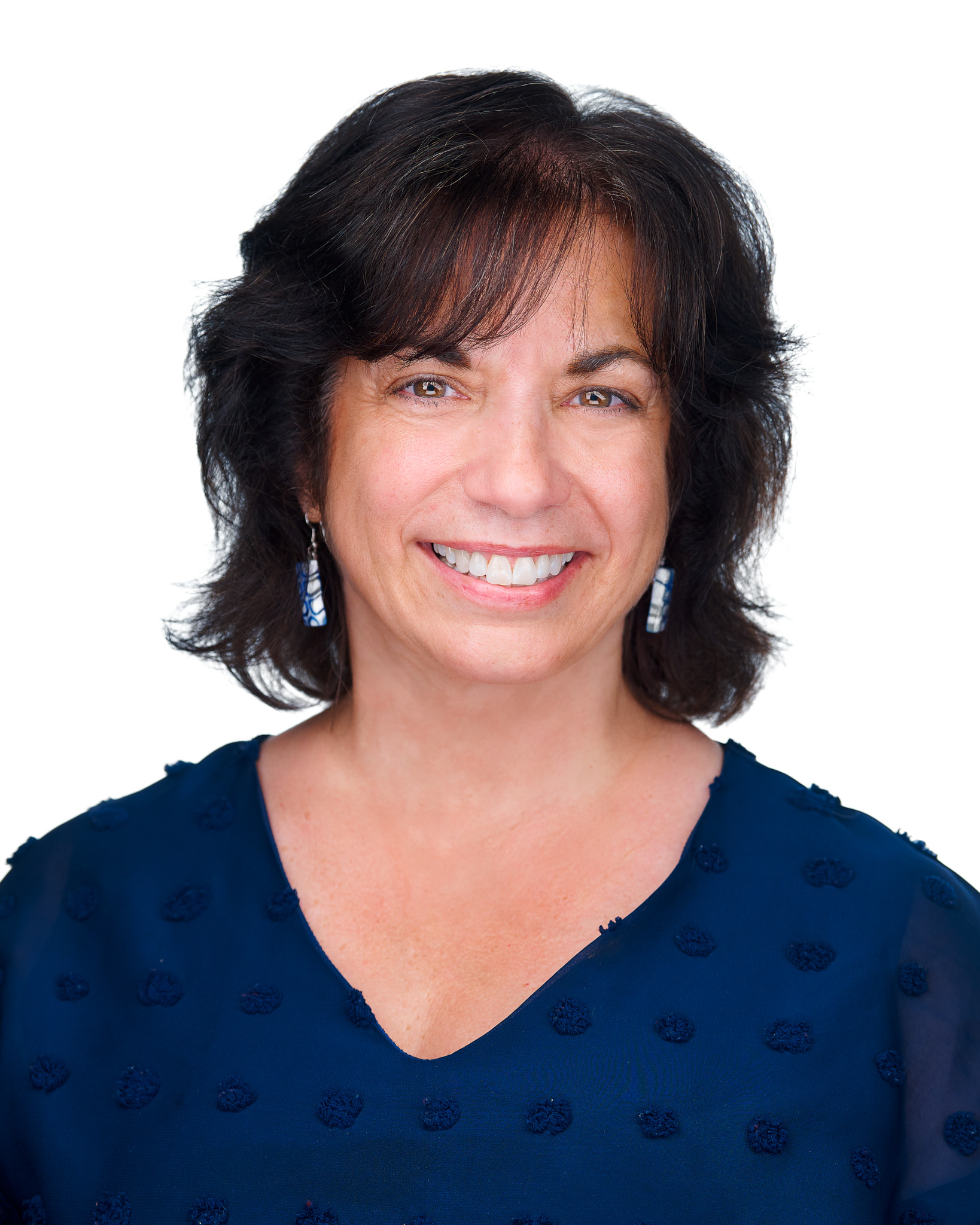
Dr. Nancy Caronia
The English Department's newest faculty member, Dr. Nancy Caronia didn't take the straight A to Z path to get here, she took a few turns along the way. "So I actually have a BFA in theater from Hofstra University. I started out as somebody who wanted to act and direct and write plays and somewhere down the line I changed my mind. [I was] an older returning student who got a master's degree and then a PhD. When I went to get my master's, at first I still thought I was going to write, but I found myself in classes around literary criticism and new historicism, and it was much more interesting to me. I was like, I can write, I don't need to be in a class. I was already published in creative writing. I already had a Pushcart Prize nomination. I was doing that and enjoying it, but, all of a sudden, something sparked inside of me and I switched. The Chair of the department at Brockport said, 'We never have people switch this way. They always switch the other way'."
It was when she met Poet Laurate Ted Koozer who came to Brockport to do a reading, that Dr. Caronia learned she was smart in trusting her gut. "I told him how I had switched, and he said, 'You know, that's really smart. You can work in your field and still write creatively'." This fortified Dr. Caronia in finishing her degree, "What getting a master's and then a Ph.D. in literary criticism did for me was it taught me to think more broadly about the genres that I want to write in. It also enabled me to begin to write in Italian-American Studies very directly. My focus is on Italian American Studies, because what I realized was I was so tired, and this is how my book (Personal Effects: Essays on Memoir, Teaching, and Culture in the Work of Louise DeSalvo) came about. I was so tired of only being able to talk about Italian-Americans through a criminal lens. You know, that you only talk about Mario Puzo, Francis Ford Coppola and The Godfather, or Martin Scorsese and Goodfellas. Now of course, there are things that are of merit to talk about, especially with the cinematic techniques that Coppola and Scorsese did. But there are also so many other literatures to talk about that really meet and talk with other ethnic literatures."
"For me, it was important to recognize Italian-Americans as coming from an immigrant population. Due to assimilation, I feel like part of what happens is people forget that their family were immigrants. And so, I find it's my job to remind people what it means to be an immigrant and to school them on the fact that before 1924, Italians could not be legal or illegal; anybody who wanted to come into the US before the Immigration Rights Act of 1924 could come in without thinking about it. They didn't need papers. And Italian immigrants are really interesting because when they realized that things were changing, they started attempting to get naturalization papers--like my grandfather arrived here in 1908, never applied for naturalization papers until 1925 the year after the war. My grandmother did not, though, because in Italian customs, if a husband has naturalization papers [the wives were] protected under that. I remember my dad talking very specifically about how he remembers his mother and her sister studying like crazy for the naturalization test because with the rise of World War II they were about to get enemy alien courts."
"I like to write about these literatures and films because I think it helps us to see immigration in a much more holistic way. Because, people like to conveniently forget this history that is contested, that they were discriminated and are now like, look at us, we just pulled ourselves up by our bootstraps and now we're all assimilated. I find that kind of false history really damaging, and it takes away from immigrants today who work really hard, who struggle in many of the same ways that Italian immigrants struggled in the late 19th, early 20th century, and then even after World War II. Because when Italians came to the United States after World War II, they were looked at as suspect because they came from the land of Mussolini, whether or not they were fascists. So [this work] has a lot to say with how and what is the United States? How did the United States become the United States? How is it that immigrants, especially later Italian immigrants to the United States, still have a connection to Italy? That's only a myth for Italian-Americans whose families came much earlier. A lot of those folks don't have connections anymore and so they have a kind of mythology around what Italy is or it isn't and they'll go back to the "old country". I hate that phrase "old country" because it means this [America] is the new country, but it's just a different country it's not new. What happens when these folks go to Italy is they go to Rome, they go to Florence, they go to Milano, they go to Venice, and they have no idea what Italy is. Because the Italy that their grandparents grew up in was the hillside in Calabria where they were eating dirt in Sicily."
Dr. Caronia found herself in a position of having to leave her role at West Virginia University and trying to figure out the next step in her path. She found that the next step bought her to Loyola. "I had left my endowed professorship I had been at West Virginia University during a really tumultuous time of academic transformation. And for a year, I was living up in Pittsburgh, and for a while I thought, 'well, maybe I'm leaving academia.' I was still writing, though. I was working on my book. I was a visiting scholar at Chatham. And I was thinking about, do I want to go on in academia? And then the job ad [for Loyola] came out, and all my friends started writing to me and saying, this job has you all over it. So I applied to a job at a time when I didn't think I wanted to live in a big city again. I'm a New Yorker, I'm a native New Yorker, I was born in Brooklyn, grew up in Brooklyn, Queens, Long Island, New York City. And I thought, 'I don't know, Pittsburgh is a nice sized city, it's 400,000 people, there is no such thing as traffic.' But, when I came to campus to visit and met a lot of colleagues--not only in the Department of English, but in Women and Gender Studies and History--everybody was welcoming and there was a sense of academic freedom and a sense of collaboration that I was surprised by in a pleasant way. When I got this offer, I thought 'No, I'm not going to stay here (in Pittsburgh) this is about my whole career, not just a piece of my career'. When I realized that I could come and not only do my work and be in collaboration with a lot of really cool people who were working as hard as I was, but also work in the field that I wanted to be working in. The fact that I can come here and teach in my area of expertise is a really big deal."
As for Chicago? "I love it. Why did I think I didn't want to be in a big city again? That was madness. Like, what was I thinking? I live in Rogers Park and I'm really enjoying it right now, even though it's hard right now, but not because of us, it's because of outside. But I'm meeting my neighbors because I'm out with my whistles, so I'm getting to meet people, I'm getting to understand neighborhoods and blocks and things like that, and that's really great"
Dr. Caronia dove right into her role this past semester, creating a space for curious students and opening up to new class development. "Currently, I'm teaching a Women Writers class, and [while teaching] I realized that I want to teach a class that's focused on Italian-American women writers, mostly in the second half of the 20th century, a Women Writers after 1900 class. And part of the reason I want to do that is that there's a code that called omerta, O-M-E-R-T-A in Italian customs, which means you have to remain silent, so you don't tell the secrets. Most of the time we apply it to criminal enterprises. It gets talked about a lot when you think about the mafia, sort of the godfather. You don't become a rat. But it's also very much a part of familial patriarchal system in Italy, in southern Italy. So Italian-American women writers in the mid and late 20th and 21st century are really interesting because a lot of times they're letting go of secrets. They're upending this notion of submission. They're upending the notion of I have to be silent in the face of domestic abuse. Now, I'm going to have them read some difficult literatures. And I'm putting it in the syllabus, it'll be right in the course description. I think I want students to be able to stay with those kinds of things, and look at the way that women very methodically say, we have to change the future but the only way to change the future or to live in the present moment is by going back and looking at the past and telling the truth as much as we know of it of the past."
There's one woman writer that I teach, Annie Lanzillotto, I'm teaching part of her memoir, L is For Lion: An Italian Bronx Butch Freedom Memoire, it's a tale of her coming out. In it she talks about coming out in a home in the Bronx, in a working class family, where her father has PTSD because he was in World War II with Okinawa, and so he beat his wife. His wife left when Annie was 12, after 1974, when the Credit Card Act was introduced, and women could actually get their own credit. I want students to have some history, sometimes they don't understand, they think, well, it's always been this way. No! Part of the reason why women didn't leave until almost 1974 was because they had no resources. They couldn't get credit. They couldn't rent without a male signature. So if they didn't have somebody in their life that could help them, they literally had nowhere to go. We say, 'Why do people get divorced so much more now?' It was because women literally didn't have choices. So I can use a memoir like Annie Lanzillotto's to teach them about how tenuous women's agency has been. So, we'll talk about domestic violence and we'll talk about mental health, and I want them to come away with a more well-rounded sense of how literature can tell these truths in a contained manner and give readers a form to not lose themselves. When we talk about it, I deconstruct it in a way that makes it not so scary. It has to become accessible so students can work through it with the author. Here's the thing, I want it to be difficult to the point where it helps them to push at the boundaries. I want students to get out of their boxes. I want it to push, but I also want it to be fun. I usually always give some kind of creative assignment that will allow them to respond to the literature that they've read, that allows them to create something of their own. Like for my film class, I've asked the students this semester to take a scene from one of the movies they've watched, and because we're talking about gender in Italian-American film, they have to sort of play with gender in some ways. They're make their own little movies, and it puts them in the artist's shoes and it can then help them think about, oh, maybe I didn't like this for this reason, but now I understand why they did what they did."
As she sets her roots in, Dr. Caronia is finding that Loyola is starting to feel like home. "It's made me love teaching again. The students here are terrific. I find them to be engaging. I find them to actually want to do the work and that they're intellectually curious and creative. So that's been a real joy. I didn't know what to expect, though everybody was very positive, but you never know until you get in the classroom. And I haven't taught English majors yet. I'm teaching an honors class on Italian-American film, and then I'm teaching a Women in Literature class. I have a few Italian-American writers in it, and none of them are English majors. So next semester, I have one class that will be almost 100% English majors."
"[As for myself] when I was the visiting scholar at Chatham, I suddenly realized I spent a lot of time thinking. I thought I was going to just pound out a manuscript. But, what I realized was what I didn't have at my previous job (at WVU): time; I was teaching and I was advising almost 200 students a semester. I had a full-time position that was really two full-time positions. It was killing me. I saw that what I needed time to think. And what I'm really enjoying right now is sometimes I'll come here and I'll read or I'll just read something and then I think. And the thinking time, we forget that writing isn't just about writing. Writing is about reading. Writing is about conducting research and taking notes. But writing is also about thinking time where you don't do anything--or it seems to other people you're not doing anything, but you're doing a lot of really productive work that's about. That has been a blessing this semester."
Moving forward, Dr. Caronia says her goals are two-pronged. "I have three books that are in various stages of undress. And my long-term goal is I want to get all three of those books out. Then there are probably another two books that are already in different stages, collaborative books with people that I've already talked about and we want to get those done as well. So I have a whole book agenda. That's the first thing. The second thing, is that it's very important to me to mentor students. At my last institution, I did a lot of mentorship of undergraduate researchers, and I fully expect that I'll continue to do that here. And there's a lot of archives in Chicago related to Italian-Americans that either A) nobody knows about, or B) they're not cataloged correctly. I'd like to get my students into these archives so they can start writing about them and bringing greater accessibility and discoverability to the archives. There is one place in Chicago called Casa Italia. They have a lot of archives there, but there's no archivists that work there, so a lot of the things that they have have never been cataloged. I am not an archivist, but I can certainly have students go there. I can say, 'Okay, they have 118 oral histories, for this project, you're going to read all the oral histories that were done with women, and I want you to create a narrative about what you see.' This can help students write a paper that they can bring to a conference or they can maybe publish it in an undergraduate journal. So those are the kinds of things that I'm interested in doing. And on campus I have my fall lecture series, and what I hope is that I can start to collaborate with colleagues and bring in people that can speak not only to Italian-American students, but that we can have a greater collaboration across the board."
In her book Personal Effects, which came out in 2019, Dr. Caronia says the developing and writing of that work was hard, but valuable and enjoyable. "I was a PhD student, and I was at an Italian American Studies Association conference. And once again, most of the panels were all about people like... Mario Puzo, Francis Ford Coppola, Don DeLillo, and the women were relegated to reading their creative work. Nobody was talking about the women's work. And so I turned to Edwige Junta, who became my co-writer, collaborator, co-editor, and said, 'Maybe we should do a panel on Louise DeSalvo. I mean, she's a Wolf Scholar, she's a memoirist, she has 24 books.' And she goes, 'okay, we'll write a book'. The book focuses on her whole life, it's a big volume of 19 different writers. We made a decision early on that because her career was so eclectic we wanted to focus on a lot of different things; we have articles on her Wolf Scholarship, on her novel, on her memoir, and we have articles on her teaching. Like I said, it's 19 essays, and it's three sections; memoir, culture, and teaching, because those were her three pillars. It wasn't an easy volume to put together because we were very exacting. We would get essays and we would say, work on this, and there were some people we had to do maybe five or six passes, and then there were other people where we did ten passes with them, until we got it in the shape that we knew could fit."
When it comes to herself, and supporting her quiet thinking time Dr. Caronia likes to read a wide range of work. "I just found one of Celeste Ng's books that I haven't read, and I just grabbed because I want to read that. But I also have a bunch of new Italian-American stuff that's coming in. There's a woman, Jennifer Martelli. who just passed away from cancer, and she has two books of poetry called The Queen of Queens and My Tarantella. And I'm really excited for those. What I'm looking for is I want things that can take me out of myself. Sometimes I'm looking for a challenge. Sometimes it all just depends on my mood, you know? But I, I'm, open to almost everything, which is why you see I have so many books here. And I have another two bookshelves at home. So I have a lot of books because sometimes I don't even finish a book. Sometimes I start it and then I'll pull it down and I'll start reading it again."