
Loyola Law Magazine 2025 - Celebrating excellence
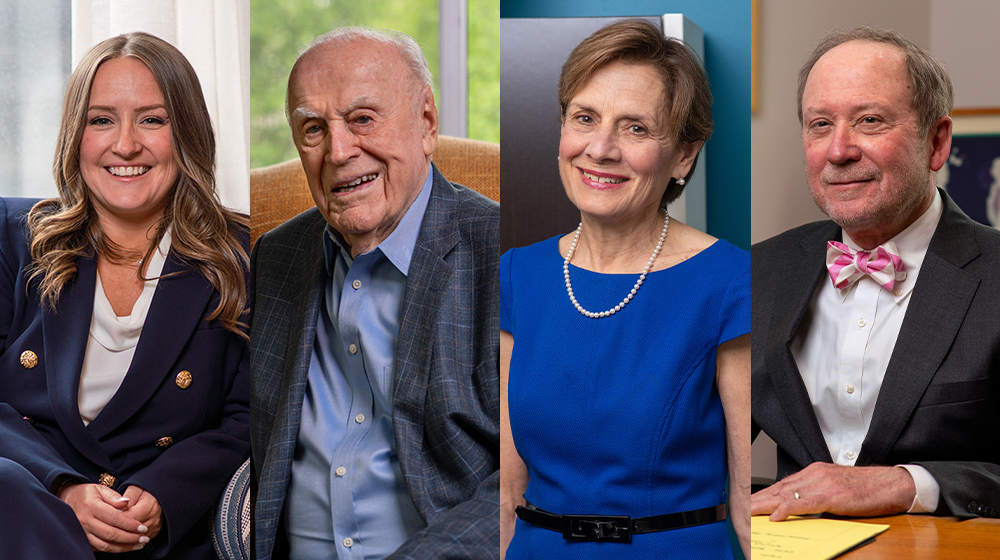
Celebrating excellence
School of Law awards honor Megan Fahey Monty, Fred Lane, Mary Meg McCarthy, and Paul Vickrey
Each year, Loyola University Chicago School of Law recognizes alumni for outstanding contributions to the school and the law. Here are the 2025 School of Law alumni award recipients.
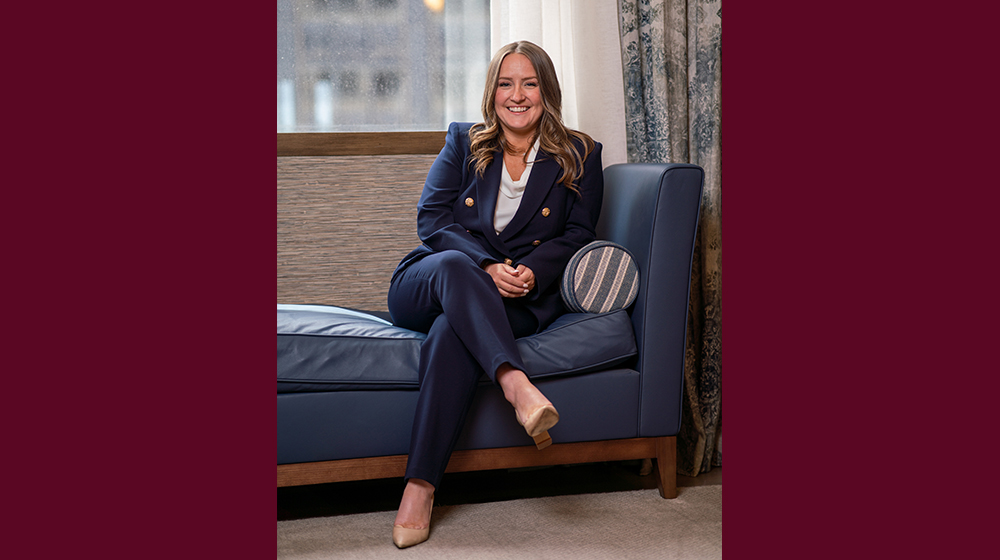
Megan Fahey Monty (JD ’14)
ST. ROBERT BELLARMINE AWARD
The St. Robert Bellarmine Award recognizes a graduate who earned a JD within the past 15 years for distinguished service to the community, to the legal profession, and to the School of Law.
When Megan Fahey Monty (JD ’14) accompanied her father to his law office on Take Your Daughter to Work Day, she saw her future when she met his colleague Kathy Byrne (JD ’88). “I knew, ‘this is what I want to do,’” Monty says today of Byrne, who built her career advocating for plaintiffs affected by asbestos and mesothelioma. “She was a trailblazer. I can’t believe I got the opportunity to have her mentor me.”
In law school, Monty met other women who inspired her, like Laura Caldwell (JD ’92), who ran the Life After Innocence clinic, which Monty joined to help exonerated clients adjust to life outside prison. She eventually became president of the school’s Public Interest Law Society, served as a legal writing tutor, and worked with the Cook County public defender’s office.
After graduation, Monty served as a judicial law clerk in the Cook County Circuit Court, taught at the School of Law, and worked at Corboy & Demetrio before arriving at Cooney & Conway in 2019 and earning a spot on Law Bulletin Media’s “40 Under Forty Illinois Attorneys to Watch” in 2024. She also served on the School of Law’s young alumni events committee for six years, helping to cultivate a network of classmates in different legal areas who continued to share referrals and cases.
“If you’re there in person …to really talk about what their experience has been, then you have their trust throughout the litigation.” Megan Fahey Monty
Monty has worked on personal injury cases, sex abuse litigation, and even maritime law, but Cooney & Conway is best known for cases involving asbestos, mesothelioma, and lung cancer. “I’m sitting in living rooms with clients, drinking their coffee and talking with someone who either just received a very bad diagnosis or has lost a loved one,” she says. “I find if you’re there in person with them to really talk about what their experience has been, then you have their trust throughout the litigation.”
Monty continues to share her expertise as president of the board of Lawyers Lend-a-Hand to Youth, a tutoring organization, and to boost other young lawyers over coffee or on alumni panels at Loyola. “It is really important to make those connections, to support people who have supported you and to continue giving back,” she says.
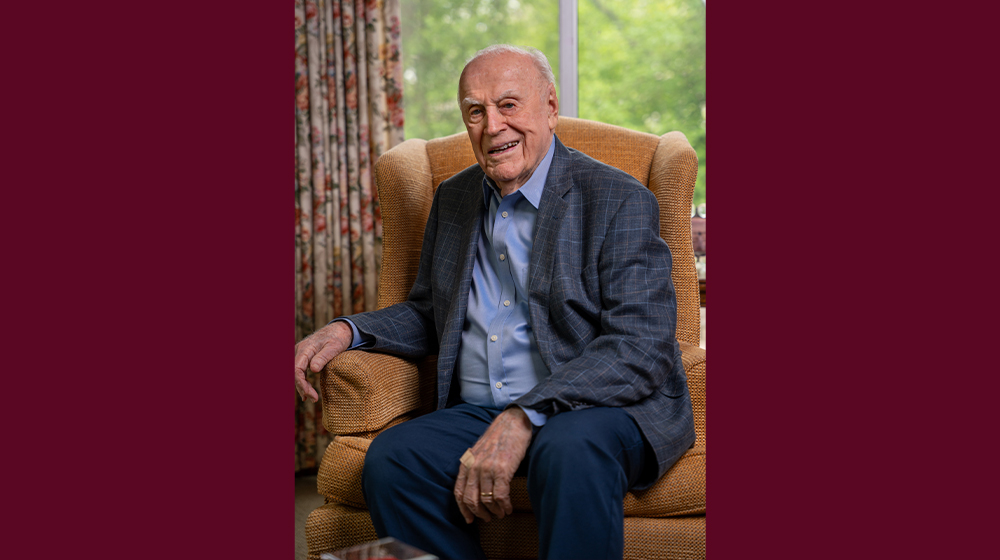
Fred Lane (JD ’50)
Medal of Excellence
The Medal of Excellence honors a member of the School of Law community who exhibits the qualities of character, intellect, and social and professional responsibility that the School of Law fosters.
Fred Lane (JD ’50) stays busy at age 100. He learns new tricks (literally) at a magic club, plays harmonica in an ensemble, and attends board and executive committee meetings for the InterNational Academy of Dispute Resolution, which he cofounded in 2002 to host international law school mediation tournaments. Catching up with younger attorneys, especially those who went to Loyola, he says, “keeps me young.”
As a GI Bill recipient, Lane opted for law school after deciding that training in medicine would take too long. His decision would influence thousands of future lawyers. While in law school, Lane took a course on trial technique that later led him to found the Illinois Bar Association Trial Technique Institute, which still offers a program named for him—now taught by his son, Scott Lane (JD ’88)—which covers all phases of trial work from both prosecutor and defendant viewpoints, in both civil and criminal cases.
Lane’s contributions to the field are varied and lengthy. A former assistant state’s attorney and litigator, he remade himself as a mediator, working to bring resolution through negotiated settlements—one of the few successful mediators who emerged directly from the trial bar rather than the bench. He wrote and edited numerous books on trial technique, litigation, and mediation. Lane served as president of the Illinois Trial Lawyers Association, the American Board of Trial Advocates Illinois Chapter, the Illinois State Bar Association, and the Decalogue Society of Lawyers.
“Try hard to see the other point of view. Be a peacemaker.” Fred Lane
Despite having an often confrontational line of work, Lane is known for his positive attitude and gregarious nature as well as his dedication to Loyola, mentoring students at school or inviting new lawyers to his home for professional development. Lane’s philosophy at 100 is similar to his approach to law school: Make time for other people. “I was always busy, and I was working very hard, but there’s always room for some pleasure,” he says, recalling good times with his law school touch football team. “Enjoy yourself and learn to be respectful of people. Learn to try to understand them and try hard to see the other point of view. Be a peacemaker.”
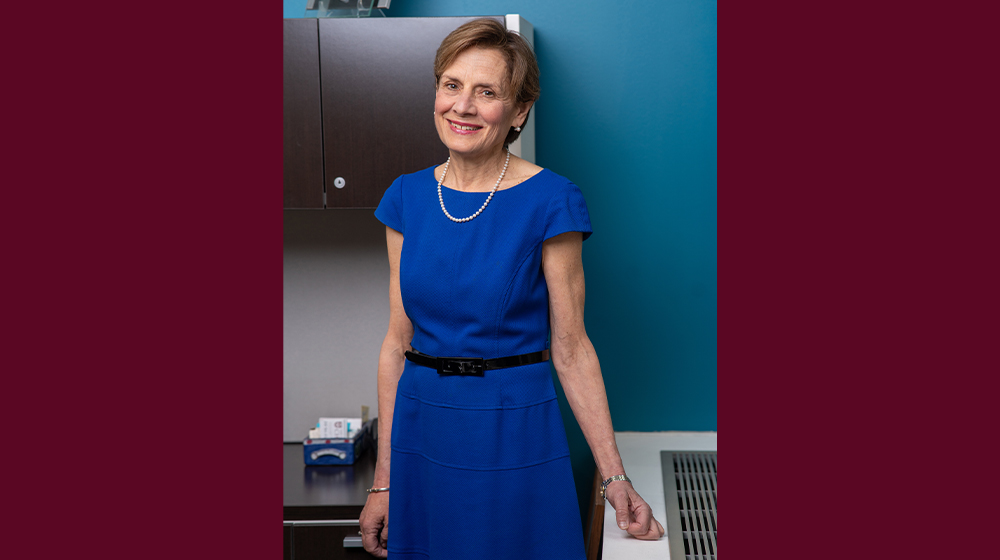
Mary Meg McCarthy (JD ’89)
Public Service Merit Award
The biannual Public Service Merit Award recognizes a School of Law graduate who has demonstrated an outstanding commitment to public service and social justice.
Mary Meg McCarthy (JD ’89), executive director of the Chicago-based National Immigrant Justice Center (NIJC), has been a passionate advocate for immigrants and refugees for over 25 years. NIJC, which works to ensure justice and human rights protections through pro bono direct legal services, policy advocacy, and litigation, has weathered numerous challenges. However, McCarthy describes recent years as “unlike anything I’ve seen,” noting relentless policy shifts that put immigrant communities at risk. McCarthy says she and her senior team now meet daily—to assess immigration court developments, enforcement operations, and community needs.
Her journey into public interest law began before law school. After volunteering in Chile during the Pinochet dictatorship as a Holy Cross Associate, helping to safeguard human rights, McCarthy returned to the U.S. with a commitment to social justice. She chose Loyola because it was one of the few law schools offering immigration-focused coursework. There, she worked with the National Lawyers Guild and volunteered with NIJC’s predecessor organization, gaining experience assisting pro bono attorneys who represented asylum seekers.
“We need to build the next generation of lawyers who follow the Jesuit tradition of being persons for others.” Mary Meg McCarthy
McCarthy credits former deans Michael Kaufmanand Nina Appel with encouraging students to follow their passions. “Law school leadership cared for students and were invested in their success,” she says. “They were willing to tailor the law school experience to student interests.” An independent study on human rights with Kaufman, she says, was particularly rewarding. Today, McCarthy remains connected to Loyola, mentoring future lawyers at the Center for the Human Rights of Children. “Now more than ever, we need to build the next generation of lawyers who follow the Jesuit tradition of being persons for others,” she says.
McCarthy has helped NIJC expand its reach through litigation, policy advocacy, and partnerships with over 2,000 pro bono attorneys—many of them Loyola graduates. She emphasizes to young lawyers that public service doesn’t require a nonprofit job; pro bono work offers vital ways for attorneys with different legal expertise to advance justice.
When asked what sustains her, even—or especially—during unprecedented challenges, McCarthy cites her calling. “I walk into NIJC’s headquarters and see our clients, and that’s what keeps me going.”
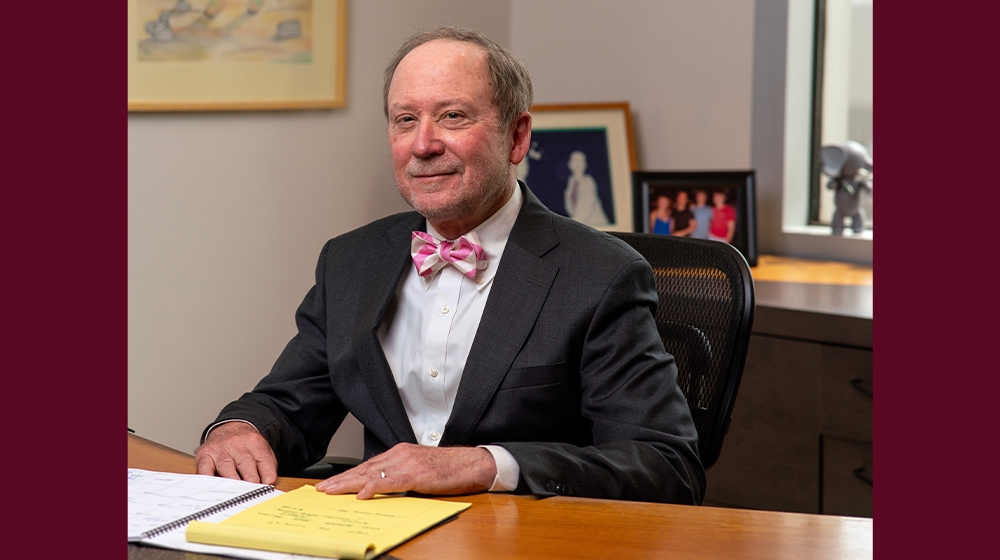
Paul Vickrey (JD ’80)
Francis J. Rooney/St. Thomas More Award
The Francis J. Rooney/St. Thomas More Award recognizes continuous, outstanding loyalty and dedicated service to the School of Law.
Paul Vickrey (JD ’80) chose Loyola Law because he could commute to classes from Homewood, where he worked at a deli to put himself through school. He also was drawn to the school’s dual emphases on trial practice and social justice. Vickrey went on to a career marked by wins in both intellectual property cases and pro bono work (typically while wearing his signature bow tie and Lucchese cowboy boots).
Early in his career, Vickrey represented victims of AIDS discrimination and fought for LGBTQ+ rights, serving as chairman of AIDS Legal Council of Chicago for several years. “In the late eighties, you didn’t have a lot of big firms signing on to be involved with AIDS and sexual orientation discrimination,” Vickrey says. “I tried to mainstream those causes as much as possible.”
Vickrey later won, on a pro bono basis, a murder trial in which his client had been in pretrial detention for five years and faced a life sentence if he lost. Vickrey had never tried a criminal case before, but he applied his civil trial experience. “I figured, if I could take down a seasoned patent expert on cross-examination, I could do the same thing with a Chicago police detective,” he says. “Loyola prepared me to meet that moment by instilling in me confidence and a willingness to expand my comfort zone to work for social justice.” In 2023, Vickrey took on another pro bono murder case, securing the dismissal of all charges against his client, who had been incarcerated for over 10 years for the murder of an off-duty police officer; Vickrey argued that police and prosecutors hid evidence showing that his client could not have committed the crime.
"Loyola prepared me to meet that moment by instilling in me confidence and a willingness to expand my comfort zone to work for social justice.” Paul Vickrey
In 1985, Vickrey’s brother, Clifford, died from Hodgkin’s lymphoma while also attending law school at Loyola. “That prompted me to take a hard look at doing something more for Loyola,” Vickrey says, because he was moved by the school’s kindness to his brother. He began teaching legal writing and moot court as an adjunct and, with his wife, Caroline (JD ’92), funded an annual research stipend in honor of Clifford.
As founding partner of Vitale, Vickrey, Niro, Solon & Gasey LLP, Vickrey handles intellectual property, business tort, and civil rights cases. His current civil rights work includes wrongful detention cases and several cases for clients who were punished for speech supporting Palestinians.
For new lawyers hoping to effect change, Vickrey has one piece of advice: Aggressively seek out trial opportunities. “Litigation savvy is a very important tool in the pro bono arena if you want to make a difference,” he says.
Loyola Law Magazine 2025
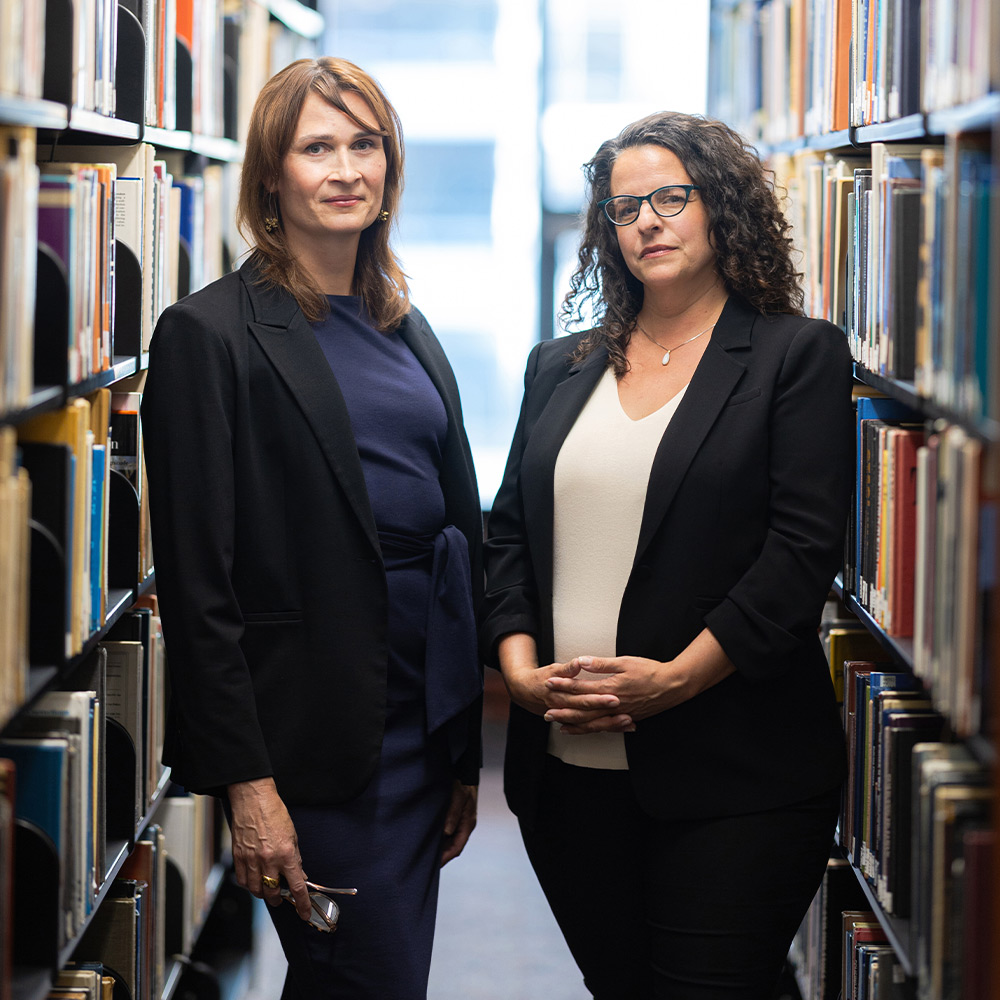
A 360-degree approach to immigrant justice
Loyola’s new Holistic Immigration Hub will prepare more effective immigration lawyers while working for systemic change
Read the story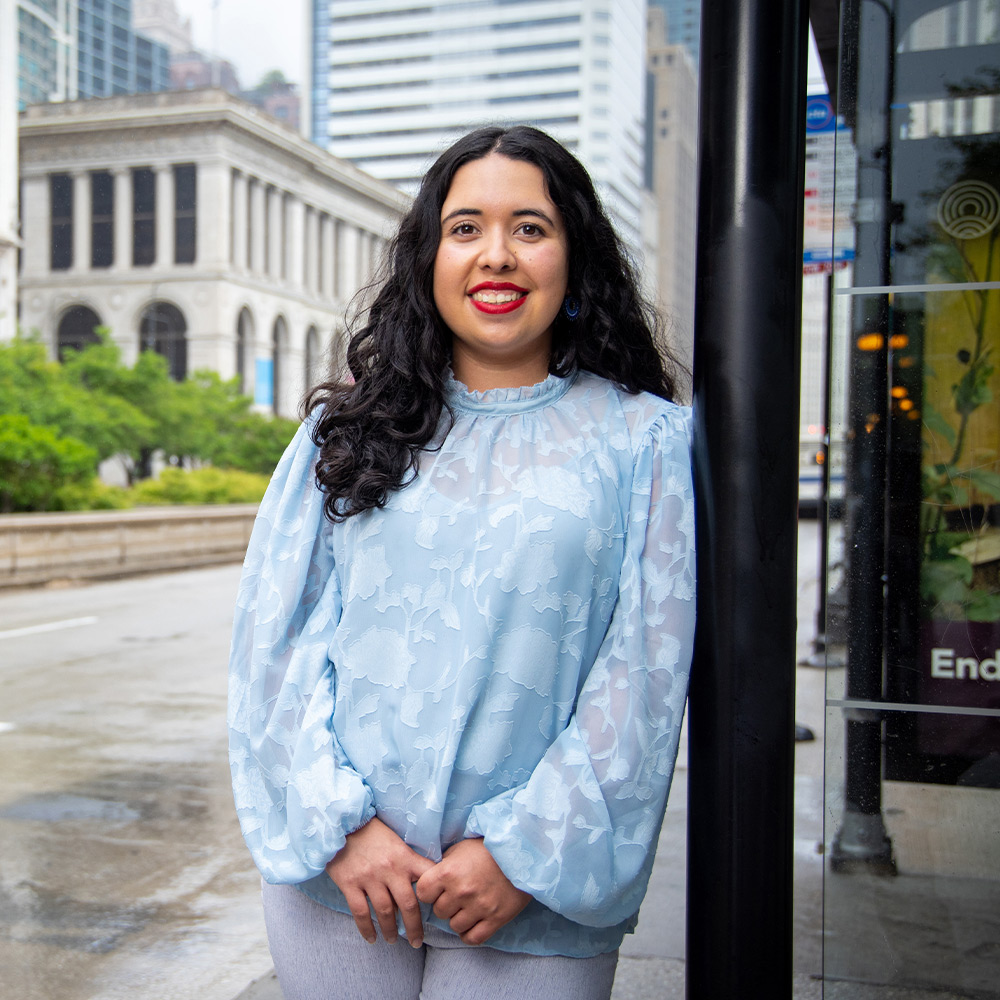
Prep school
Education Law and Policy Institute alumni make their way in a complex field
Read the story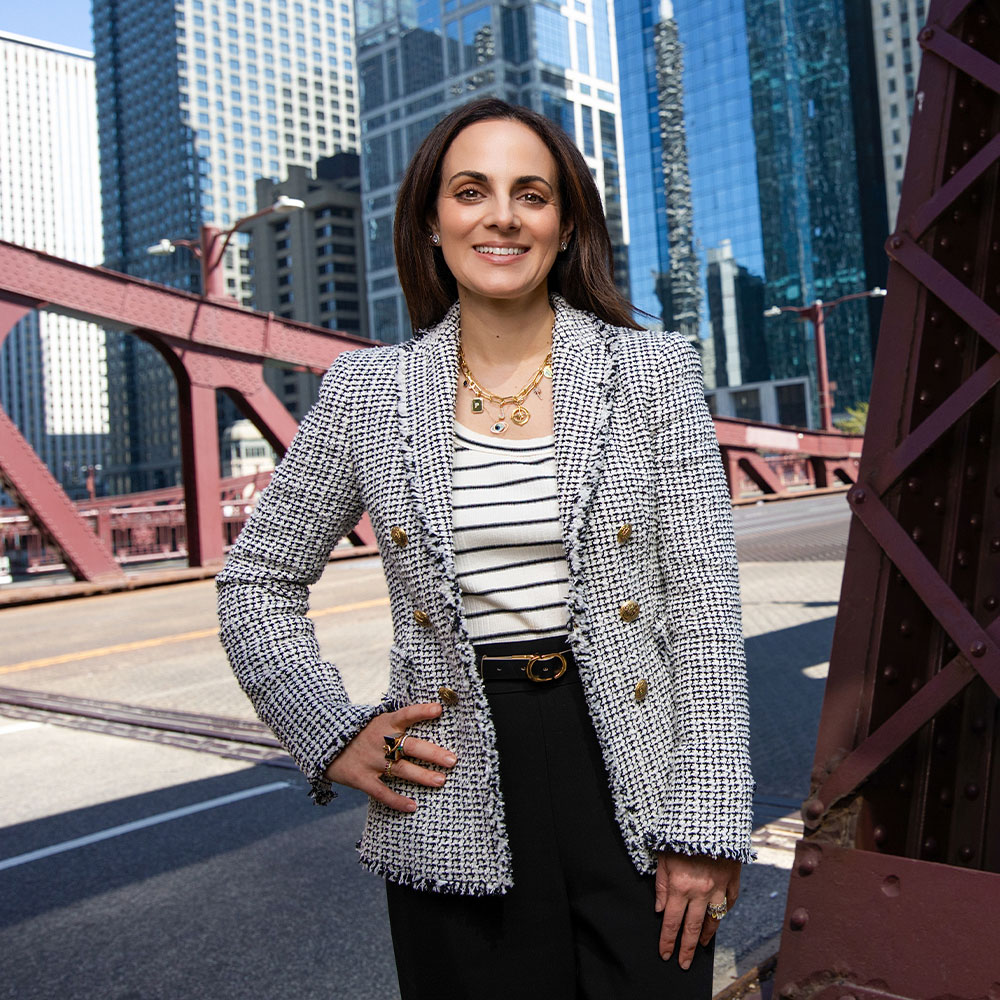
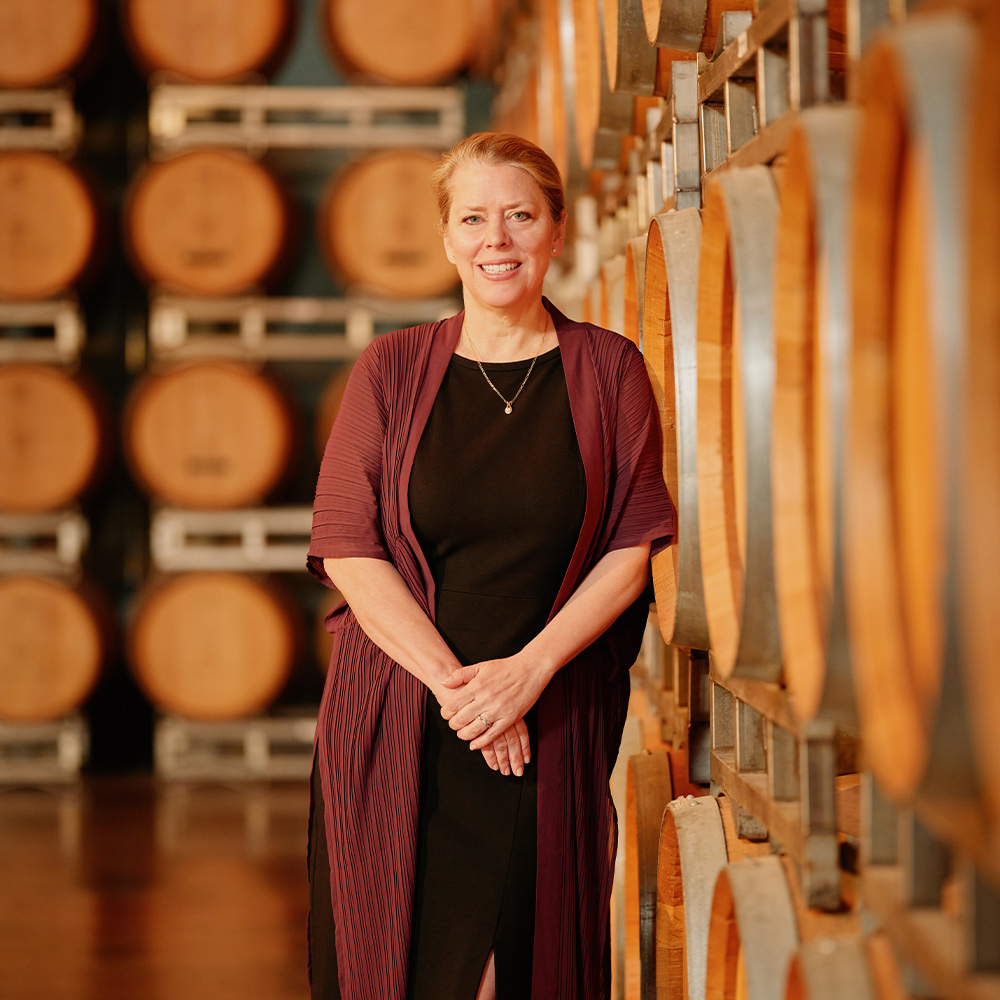
Megan Fahey Monty (JD ’14)
ST. ROBERT BELLARMINE AWARD
The St. Robert Bellarmine Award recognizes a graduate who earned a JD within the past 15 years for distinguished service to the community, to the legal profession, and to the School of Law.
When Megan Fahey Monty (JD ’14) accompanied her father to his law office on Take Your Daughter to Work Day, she saw her future when she met his colleague Kathy Byrne (JD ’88). “I knew, ‘this is what I want to do,’” Monty says today of Byrne, who built her career advocating for plaintiffs affected by asbestos and mesothelioma. “She was a trailblazer. I can’t believe I got the opportunity to have her mentor me.”
In law school, Monty met other women who inspired her, like Laura Caldwell (JD ’92), who ran the Life After Innocence clinic, which Monty joined to help exonerated clients adjust to life outside prison. She eventually became president of the school’s Public Interest Law Society, served as a legal writing tutor, and worked with the Cook County public defender’s office.
After graduation, Monty served as a judicial law clerk in the Cook County Circuit Court, taught at the School of Law, and worked at Corboy & Demetrio before arriving at Cooney & Conway in 2019 and earning a spot on Law Bulletin Media’s “40 Under Forty Illinois Attorneys to Watch” in 2024. She also served on the School of Law’s young alumni events committee for six years, helping to cultivate a network of classmates in different legal areas who continued to share referrals and cases.
Monty has worked on personal injury cases, sex abuse litigation, and even maritime law, but Cooney & Conway is best known for cases involving asbestos, mesothelioma, and lung cancer. “I’m sitting in living rooms with clients, drinking their coffee and talking with someone who either just received a very bad diagnosis or has lost a loved one,” she says. “I find if you’re there in person with them to really talk about what their experience has been, then you have their trust throughout the litigation.”
Monty continues to share her expertise as president of the board of Lawyers Lend-a-Hand to Youth, a tutoring organization, and to boost other young lawyers over coffee or on alumni panels at Loyola. “It is really important to make those connections, to support people who have supported you and to continue giving back,” she says.
Fred Lane (JD ’50)
Medal of Excellence
The Medal of Excellence honors a member of the School of Law community who exhibits the qualities of character, intellect, and social and professional responsibility that the School of Law fosters.
Fred Lane (JD ’50) stays busy at age 100. He learns new tricks (literally) at a magic club, plays harmonica in an ensemble, and attends board and executive committee meetings for the InterNational Academy of Dispute Resolution, which he cofounded in 2002 to host international law school mediation tournaments. Catching up with younger attorneys, especially those who went to Loyola, he says, “keeps me young.”
As a GI Bill recipient, Lane opted for law school after deciding that training in medicine would take too long. His decision would influence thousands of future lawyers. While in law school, Lane took a course on trial technique that later led him to found the Illinois Bar Association Trial Technique Institute, which still offers a program named for him—now taught by his son, Scott Lane (JD ’88)—which covers all phases of trial work from both prosecutor and defendant viewpoints, in both civil and criminal cases.
Lane’s contributions to the field are varied and lengthy. A former assistant state’s attorney and litigator, he remade himself as a mediator, working to bring resolution through negotiated settlements—one of the few successful mediators who emerged directly from the trial bar rather than the bench. He wrote and edited numerous books on trial technique, litigation, and mediation. Lane served as president of the Illinois Trial Lawyers Association, the American Board of Trial Advocates Illinois Chapter, the Illinois State Bar Association, and the Decalogue Society of Lawyers.
Despite having an often confrontational line of work, Lane is known for his positive attitude and gregarious nature as well as his dedication to Loyola, mentoring students at school or inviting new lawyers to his home for professional development. Lane’s philosophy at 100 is similar to his approach to law school: Make time for other people. “I was always busy, and I was working very hard, but there’s always room for some pleasure,” he says, recalling good times with his law school touch football team. “Enjoy yourself and learn to be respectful of people. Learn to try to understand them and try hard to see the other point of view. Be a peacemaker.”
Mary Meg McCarthy (JD ’89)
Public Service Merit Award
The biannual Public Service Merit Award recognizes a School of Law graduate who has demonstrated an outstanding commitment to public service and social justice.
Mary Meg McCarthy (JD ’89), executive director of the Chicago-based National Immigrant Justice Center (NIJC), has been a passionate advocate for immigrants and refugees for over 25 years. NIJC, which works to ensure justice and human rights protections through pro bono direct legal services, policy advocacy, and litigation, has weathered numerous challenges. However, McCarthy describes recent years as “unlike anything I’ve seen,” noting relentless policy shifts that put immigrant communities at risk. McCarthy says she and her senior team now meet daily—to assess immigration court developments, enforcement operations, and community needs.
Her journey into public interest law began before law school. After volunteering in Chile during the Pinochet dictatorship as a Holy Cross Associate, helping to safeguard human rights, McCarthy returned to the U.S. with a commitment to social justice. She chose Loyola because it was one of the few law schools offering immigration-focused coursework. There, she worked with the National Lawyers Guild and volunteered with NIJC’s predecessor organization, gaining experience assisting pro bono attorneys who represented asylum seekers.
McCarthy credits former deans Michael Kaufmanand Nina Appel with encouraging students to follow their passions. “Law school leadership cared for students and were invested in their success,” she says. “They were willing to tailor the law school experience to student interests.” An independent study on human rights with Kaufman, she says, was particularly rewarding. Today, McCarthy remains connected to Loyola, mentoring future lawyers at the Center for the Human Rights of Children. “Now more than ever, we need to build the next generation of lawyers who follow the Jesuit tradition of being persons for others,” she says.
McCarthy has helped NIJC expand its reach through litigation, policy advocacy, and partnerships with over 2,000 pro bono attorneys—many of them Loyola graduates. She emphasizes to young lawyers that public service doesn’t require a nonprofit job; pro bono work offers vital ways for attorneys with different legal expertise to advance justice.
When asked what sustains her, even—or especially—during unprecedented challenges, McCarthy cites her calling. “I walk into NIJC’s headquarters and see our clients, and that’s what keeps me going.”
Paul Vickrey (JD ’80)
Francis J. Rooney/St. Thomas More Award
The Francis J. Rooney/St. Thomas More Award recognizes continuous, outstanding loyalty and dedicated service to the School of Law.
Paul Vickrey (JD ’80) chose Loyola Law because he could commute to classes from Homewood, where he worked at a deli to put himself through school. He also was drawn to the school’s dual emphases on trial practice and social justice. Vickrey went on to a career marked by wins in both intellectual property cases and pro bono work (typically while wearing his signature bow tie and Lucchese cowboy boots).
Early in his career, Vickrey represented victims of AIDS discrimination and fought for LGBTQ+ rights, serving as chairman of AIDS Legal Council of Chicago for several years. “In the late eighties, you didn’t have a lot of big firms signing on to be involved with AIDS and sexual orientation discrimination,” Vickrey says. “I tried to mainstream those causes as much as possible.”
Vickrey later won, on a pro bono basis, a murder trial in which his client had been in pretrial detention for five years and faced a life sentence if he lost. Vickrey had never tried a criminal case before, but he applied his civil trial experience. “I figured, if I could take down a seasoned patent expert on cross-examination, I could do the same thing with a Chicago police detective,” he says. “Loyola prepared me to meet that moment by instilling in me confidence and a willingness to expand my comfort zone to work for social justice.” In 2023, Vickrey took on another pro bono murder case, securing the dismissal of all charges against his client, who had been incarcerated for over 10 years for the murder of an off-duty police officer; Vickrey argued that police and prosecutors hid evidence showing that his client could not have committed the crime.
In 1985, Vickrey’s brother, Clifford, died from Hodgkin’s lymphoma while also attending law school at Loyola. “That prompted me to take a hard look at doing something more for Loyola,” Vickrey says, because he was moved by the school’s kindness to his brother. He began teaching legal writing and moot court as an adjunct and, with his wife, Caroline (JD ’92), funded an annual research stipend in honor of Clifford.
As founding partner of Vitale, Vickrey, Niro, Solon & Gasey LLP, Vickrey handles intellectual property, business tort, and civil rights cases. His current civil rights work includes wrongful detention cases and several cases for clients who were punished for speech supporting Palestinians.
For new lawyers hoping to effect change, Vickrey has one piece of advice: Aggressively seek out trial opportunities. “Litigation savvy is a very important tool in the pro bono arena if you want to make a difference,” he says.