
Loyola Law Magazine 2025 - Prep school
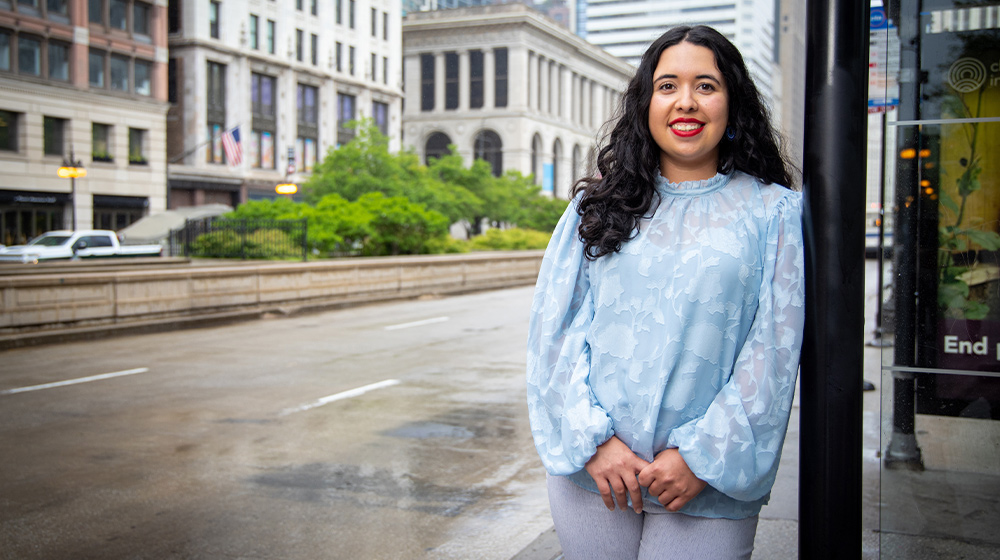
At Equip for Equality, a disability rights organization, Vanessa Aceves helps low-income clients gain access to tools to help them succeed in school.
Prep school
Education Law and Policy Institute alumni make their way in a complex field
When Vanessa Aceves (JD ’23) considered her law school offers, one institution stood out from the rest. “During the spring of your 1L year at Loyola, you get to pick an elective—and education law was one of the options,” she says. “I knew that I wanted to focus on special education, so it was important to me that I could get started right away.”
Whether students enroll with an interest in education law or develop it along the way, Loyola University Chicago School of Law is among the top schools for pursuing this passion. According to a 2020 national survey of law schools, Loyola comes out ahead of every other school—including Harvard Law School, NYU School of Law, Stanford Law School, and Boston College Law School—for the sheer quantity of education law courses offered.
Loyola’s robust curriculum includes courses in education law and policy, fundamentals of school law, special education law and advocacy, labor and employment law in the education workplace, and legal issues in school discipline.
Additionally, the law school’s expertise in this area extends to scholarship and research, the annual Education Law: A Year in Review conference, and experiential learning opportunities, such as Stand Up for Each Other (SUFEO), a student-run group that advocates for PreK–12 students (see High stakes). The law school also offers an Education Law Practicum, which provides field placement opportunities to work on education law matters at law firms, organizations, and school districts. All of these activities, as well as the curriculum, fall under the purview of the Education Law and Policy Institute.
This hub, which is housed in the Civitas ChildLaw Center, prepares students to navigate the complex and evolving landscape of education law. “We need education law attorneys now more than ever,” says Miranda Johnson, clinical professor of law and director of the Education Law and Policy Institute. “When you come here, you’re going to meet students who care about educational inequality and want to know what they can do to make a difference. From that perspective, Loyola Law is an excellent place to develop a skill set and connect with others to enact real change.”
312+
Families of PreK-12 students served by the School of Law's Educational Advocacy Program
18
Education Law and related courses offered during the 2024-25 school year
268
Students enrolled in Education Law and related courses during the 2024-25 school year
Invaluable practice
For Aceves, law school provided a supportive environment to hone the skills she uses daily as an Equal Justice Works (EJW) Fellow at Equip for Equality, a disability rights organization. Many of Aceves’s responsibilities mirror the work she did as a SUFEO intake cocoordinator during her second year at the School of Law. Aceves conducts intake calls with prospective clients and their families, prepares for Individualized Education Program (IEP) and conflict resolution meetings, and reviews casework and records.
“Some skills aren’t specifically measurable, but they take practice to do well,” she says. “I’ve met attorneys who say you have to learn everything on the job, but I’m thankful that hasn’t been my experience.”
In fact, Aceves was emboldened to lodge a state complaint soon after joining Equip for Equality because she had already written one in SUFEO. “I had learned about that entire process, so I knew how to structure the complaint,” she says.
This idea emerged as part of Aceves’s two-year EJW fellowship project. Aceves focuses on increasing access to augmentative and alternative communication devices for low-income students. These devices are essential for many students to succeed in school, but Aceves discovered that families were facing lengthy delays in the evaluation process to obtain them.
Through her state complaint, Aceves successfully petitioned the Illinois State Board of Education to monitor Chicago Public Schools to complete these evaluations and provide compensatory education for students who did not get evaluated in a timely manner.
“I understood how to break down the issues, what to cite, and what was important to include,” Aceves says. “And the reason I was able to do this so fast—and make a difference for those families—is because I had that prior experience from SUFEO.”
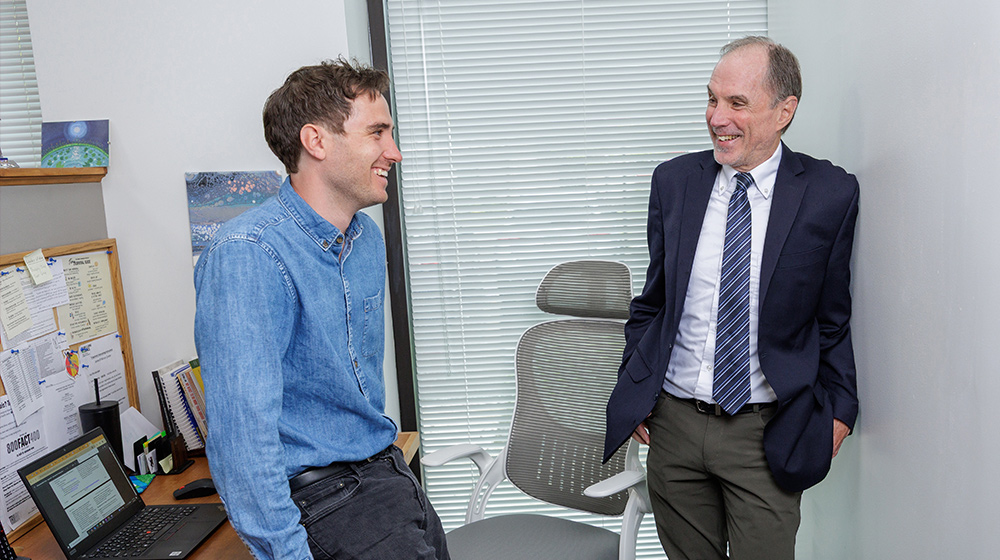
Andy Froelich, left, is a staff attorney at the Moran Center for Youth Advocacy, a community-based legal aid organization in Evanston. He also serves as an adjunct faculty member at the School of Law, guiding future attorneys through coursework, supervision, trainings, and projects for the Anti-Bullying Program.
A collaborative mindset
Andy Froelich (JD ’21) is a staff attorney at the Moran Center for Youth Advocacy, a community-based legal aid organization in Evanston. After working as an intern for the Moran Center, Froelich secured an EJW Fellowship to expand the geographic footprint of the organization’s education advocacy program into nearby Rogers Park.
“Loyola set the stage for me to get this fellowship,” Froelich says. Faculty mentors provided feedback on his proposal and oversaw mock interviews, while SUFEO and experiential learning opportunities in the classroom prepared Froelich for the emotional rigors of educational advocacy. In particular, Froelich cites hands-on simulations in the Special Education Law and Advocacy seminar as foundational to his subsequent career.
“It was an interactive experience where we would actually role-play being at an IEP meeting,” he says. “I know that changed my perspective of the school-side attorneys and their purpose; I was able to see their viewpoints in a way that helps me advocate for my clients today.”
Froelich, who spends a great deal of time in IEP meetings, emphasizes that this shift in perspective was not antagonistic but rather a move toward teamwork. “If you are going into educational law and advocacy work, collaborative problem-solving skills are critical,” Froelich says. “It’s about developing trust by asking the right questions, engaging in active listening, and building consensus collaboratively. My professors modeled that approach, and it’s something I’m replicating at the Moran Center.”
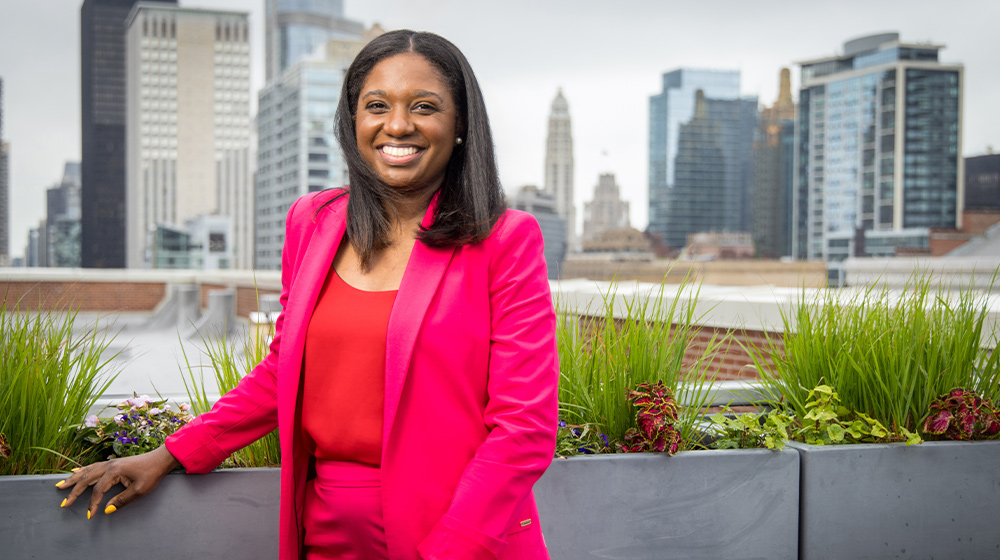
As assistant general counsel for Chicago Public Schools, Kerease Epps helps align district policy with state and federal legislation, advises principals and local school councils, investigates residency fraud, and assists on expulsion cases.
Citywide connections
Like many students who become involved in the Education Law and Policy Institute, Kerease Epps (JD ’21) entered law school because she wanted to tackle educational inequities. As a former Teach for America educator and charter school teacher, Epps had concerns about the disproportionate suspension and expulsion rates for students of color, especially Black students. Additionally, when Epps worked for the Illinois State Board of Education, she assisted with a statewide equity assessment project that highlighted how disparities in resources and approaches to student discipline affect student outcomes.
This background spurred Epps to seek out a law school with demonstrated excellence in education law and policy. “Loyola was really the only school in the city that had a very strong alumni network in the education space,” she says. Recognizing Epps’s commitment to youth advocacy, the law school selected her as a ChildLaw Fellow, a program that includes scholarship assistance, internship opportunities, and an interdisciplinary course of study.
“Loyola was really the only school in the city that had a very strong alumni network in the education space.” Kerease Epps
Today, Epps serves as assistant general counsel for Chicago Public Schools (CPS), the fourth-largest school district in the country. Working within the School Law Unit, Epps helps align district policy with state and federal legislation, advises principals and local school councils, investigates residency fraud, and assists on expulsion cases.
“During law school, I was a clerk for CPS on the team that I’m on now,” Epps says. “That’s because Loyola and the institute have built these great relationships and such a strong externship program. I was able to merge policy with practice in real time as a law student, which isn’t the case at every school.”
Epps joined a family law firm after graduating, but in 2023, she returned to CPS. Thanks to her externship, Epps felt confident it was the right move. “I knew I would be part of a team where everybody is aligned and working in the best interests of our students,” Epps says. “I have the unique privilege that I really love the work that I do.” –Kelsey Schagemann (August 2025)
Impact
High stakes
With three years of experience working as a case manager for a Texas law firm, Elizabeth Martinez entered the School of Law eager to work directly with clients. But she thought that those opportunities wouldn’t be possible until much later in her law school journey—perhaps as a second-year student working in one of Loyola’s six clinics or once she obtained her 711 license.
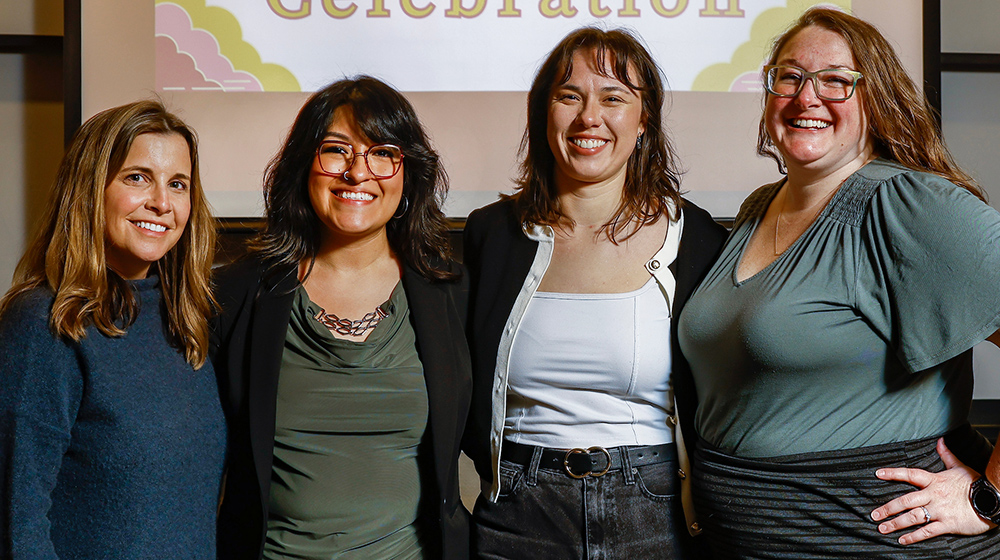
So, Martinez (pictured second from left) was thrilled when she learned about Stand Up for Each Other (SUFEO), a student-run organization with several curricular components. It’s the only program in the School of Law that provides first-year students with live client interaction.
Launched in 2014, SUFEO assists families in keeping children safe and engaged in school. The organization provides free information, resources, and advocacy for PreK–12 students facing challenges in schools across Illinois. Faculty attorneys associated with the law school’s Civitas ChildLaw Clinic supervise the law students.
“We’re not your traditional student organization,” says Martinez. “I think of us as a hybrid organization; we’re providing professional development opportunities to the Loyola community, but we’re also a legal service provider for families in the Chicagoland area.”
Read the rest of High stakesLoyola Law Magazine 2025
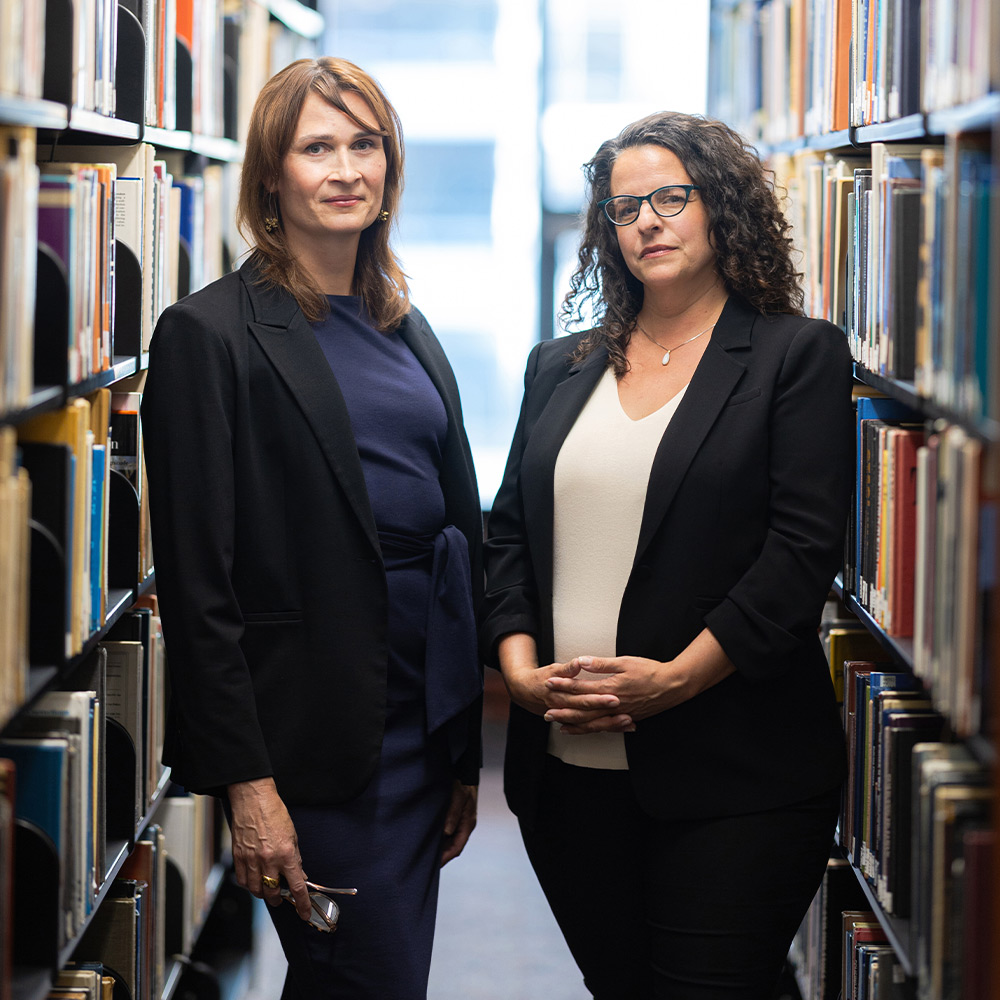
A 360-degree approach to immigrant justice
Loyola’s new Holistic Immigration Hub will prepare more effective immigration lawyers while working for systemic change
Read the story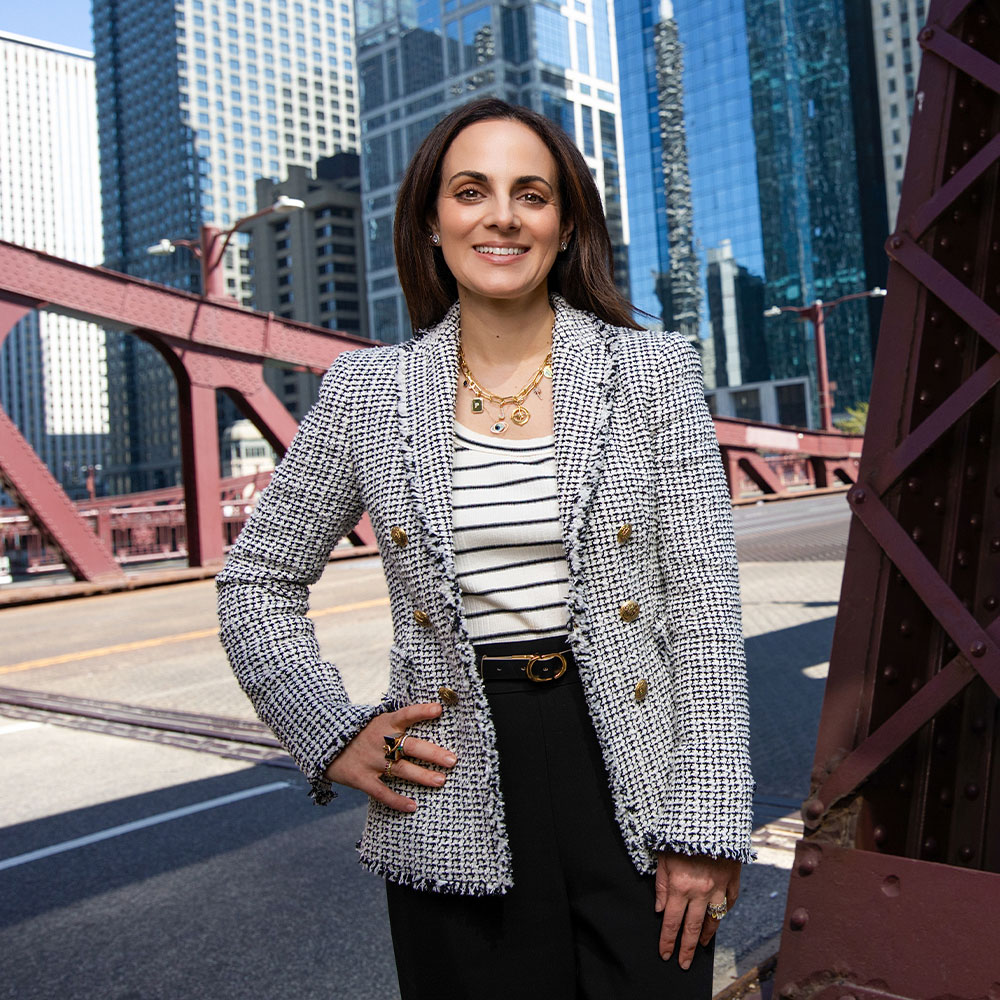
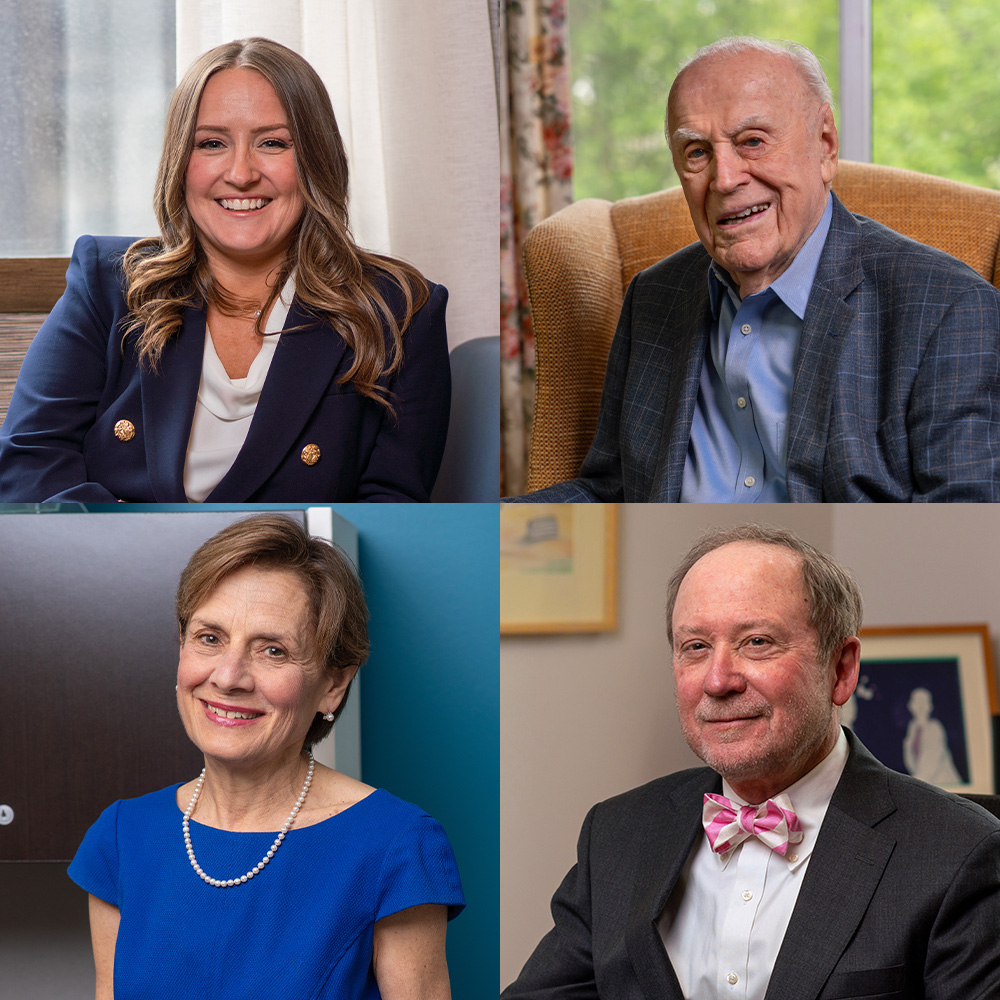
Celebrating excellence
School of Law awards honor Megan Fahey Monty, Fred Lane, Mary Meg McCarthy, and Paul Vickrey
Read the story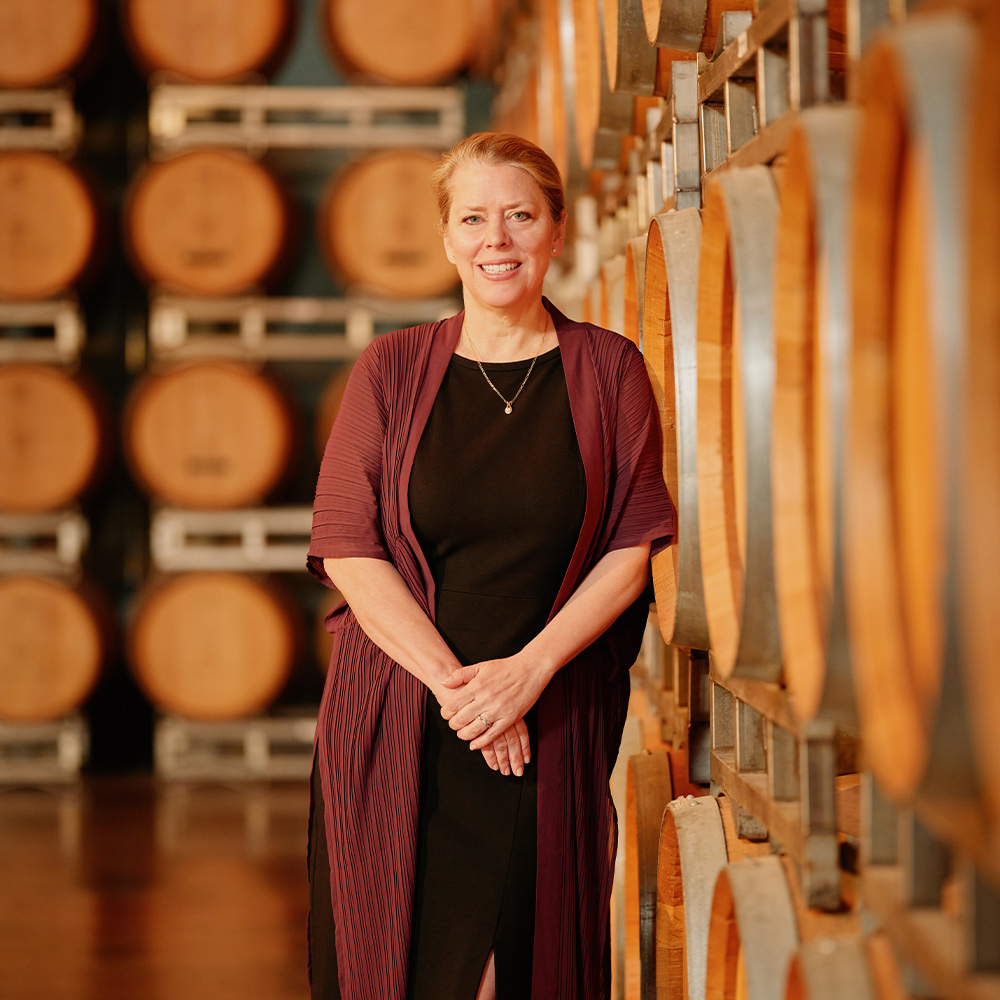
When Vanessa Aceves (JD ’23) considered her law school offers, one institution stood out from the rest. “During the spring of your 1L year at Loyola, you get to pick an elective—and education law was one of the options,” she says. “I knew that I wanted to focus on special education, so it was important to me that I could get started right away.”
Whether students enroll with an interest in education law or develop it along the way, Loyola University Chicago School of Law is among the top schools for pursuing this passion. According to a 2020 national survey of law schools, Loyola comes out ahead of every other school—including Harvard Law School, NYU School of Law, Stanford Law School, and Boston College Law School—for the sheer quantity of education law courses offered.
Loyola’s robust curriculum includes courses in education law and policy, fundamentals of school law, special education law and advocacy, labor and employment law in the education workplace, and legal issues in school discipline.
Additionally, the law school’s expertise in this area extends to scholarship and research, the annual Education Law: A Year in Review conference, and experiential learning opportunities, such as Stand Up for Each Other (SUFEO), a student-run group that advocates for PreK–12 students (see High stakes). The law school also offers an Education Law Practicum, which provides field placement opportunities to work on education law matters at law firms, organizations, and school districts. All of these activities, as well as the curriculum, fall under the purview of the Education Law and Policy Institute.
This hub, which is housed in the Civitas ChildLaw Center, prepares students to navigate the complex and evolving landscape of education law. “We need education law attorneys now more than ever,” says Miranda Johnson, clinical professor of law and director of the Education Law and Policy Institute. “When you come here, you’re going to meet students who care about educational inequality and want to know what they can do to make a difference. From that perspective, Loyola Law is an excellent place to develop a skill set and connect with others to enact real change.”
Invaluable practice
For Aceves, law school provided a supportive environment to hone the skills she uses daily as an Equal Justice Works (EJW) Fellow at Equip for Equality, a disability rights organization. Many of Aceves’s responsibilities mirror the work she did as a SUFEO intake cocoordinator during her second year at the School of Law. Aceves conducts intake calls with prospective clients and their families, prepares for Individualized Education Program (IEP) and conflict resolution meetings, and reviews casework and records.
“Some skills aren’t specifically measurable, but they take practice to do well,” she says. “I’ve met attorneys who say you have to learn everything on the job, but I’m thankful that hasn’t been my experience.”
In fact, Aceves was emboldened to lodge a state complaint soon after joining Equip for Equality because she had already written one in SUFEO. “I had learned about that entire process, so I knew how to structure the complaint,” she says.
This idea emerged as part of Aceves’s two-year EJW fellowship project. Aceves focuses on increasing access to augmentative and alternative communication devices for low-income students. These devices are essential for many students to succeed in school, but Aceves discovered that families were facing lengthy delays in the evaluation process to obtain them.
Through her state complaint, Aceves successfully petitioned the Illinois State Board of Education to monitor Chicago Public Schools to complete these evaluations and provide compensatory education for students who did not get evaluated in a timely manner.
“I understood how to break down the issues, what to cite, and what was important to include,” Aceves says. “And the reason I was able to do this so fast—and make a difference for those families—is because I had that prior experience from SUFEO.”
A collaborative mindset
Andy Froelich (JD ’21) is a staff attorney at the Moran Center for Youth Advocacy, a community-based legal aid organization in Evanston. After working as an intern for the Moran Center, Froelich secured an EJW Fellowship to expand the geographic footprint of the organization’s education advocacy program into nearby Rogers Park.
“Loyola set the stage for me to get this fellowship,” Froelich says. Faculty mentors provided feedback on his proposal and oversaw mock interviews, while SUFEO and experiential learning opportunities in the classroom prepared Froelich for the emotional rigors of educational advocacy. In particular, Froelich cites hands-on simulations in the Special Education Law and Advocacy seminar as foundational to his subsequent career.
“It was an interactive experience where we would actually role-play being at an IEP meeting,” he says. “I know that changed my perspective of the school-side attorneys and their purpose; I was able to see their viewpoints in a way that helps me advocate for my clients today.”
Froelich, who spends a great deal of time in IEP meetings, emphasizes that this shift in perspective was not antagonistic but rather a move toward teamwork. “If you are going into educational law and advocacy work, collaborative problem-solving skills are critical,” Froelich says. “It’s about developing trust by asking the right questions, engaging in active listening, and building consensus collaboratively. My professors modeled that approach, and it’s something I’m replicating at the Moran Center.”
Citywide connections
Like many students who become involved in the Education Law and Policy Institute, Kerease Epps (JD ’21) entered law school because she wanted to tackle educational inequities. As a former Teach for America educator and charter school teacher, Epps had concerns about the disproportionate suspension and expulsion rates for students of color, especially Black students. Additionally, when Epps worked for the Illinois State Board of Education, she assisted with a statewide equity assessment project that highlighted how disparities in resources and approaches to student discipline affect student outcomes.
This background spurred Epps to seek out a law school with demonstrated excellence in education law and policy. “Loyola was really the only school in the city that had a very strong alumni network in the education space,” she says. Recognizing Epps’s commitment to youth advocacy, the law school selected her as a ChildLaw Fellow, a program that includes scholarship assistance, internship opportunities, and an interdisciplinary course of study.
Today, Epps serves as assistant general counsel for Chicago Public Schools (CPS), the fourth-largest school district in the country. Working within the School Law Unit, Epps helps align district policy with state and federal legislation, advises principals and local school councils, investigates residency fraud, and assists on expulsion cases.
“During law school, I was a clerk for CPS on the team that I’m on now,” Epps says. “That’s because Loyola and the institute have built these great relationships and such a strong externship program. I was able to merge policy with practice in real time as a law student, which isn’t the case at every school.”
Epps joined a family law firm after graduating, but in 2023, she returned to CPS. Thanks to her externship, Epps felt confident it was the right move. “I knew I would be part of a team where everybody is aligned and working in the best interests of our students,” Epps says. “I have the unique privilege that I really love the work that I do.” –Kelsey Schagemann (August 2025)