
DNP’s difference maker
DNP’s difference maker
New director position helps students navigate rigorous scholarly projects
Loyola’s Marcella Niehoff School of Nursing saw an opportunity to innovate.
Enrollment in its Doctor of Nursing Practice (DNP) program has been rising—an increase of 337% over the five years, from 43 in 2020–21 to 188 in the 2024–25 term.
Since each DNP student is required to complete a rigorous scholarly project, coordinating all those assignments was challenging.
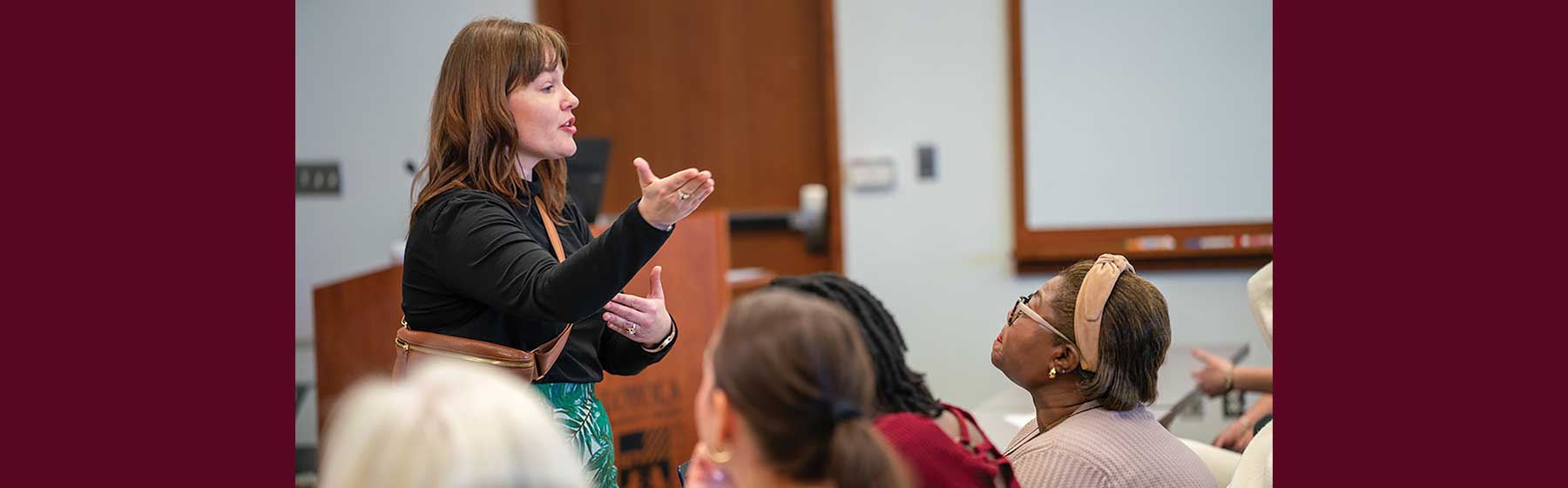
“Overseeing this process from start to finish, a bird’s-eye view, was crucial,” said Associate Professor Mandy Peacock. “So we pitched it to Lorna (Finnegan, Loyola Nursing dean) and she liked it.”
Loyola Nursing created the new position of director of DNP Project Experiences—and, in July of 2024, Peacock got the job.
Not all institutions have that level of support for students, or for their faculty, from a project perspective,” Peacock said. “Having someone who helps them navigate all of these potential barriers and processes at different sites is helpful and innovative.”
“As prospective students consider Loyola for their graduate work, they say ‘Wow, Loyola has this person that helps guide you through the entire project experience.’ That’s a plus.” Vicki Bacidore, Director of the Adult Gerontology Acute Care Nurse Practitioner Track
Once a student develops an idea, ideally one that will improve either practice or patient outcomes, they work with the school to arrange a clinical site and secure agreements to start the research, get all the necessary clearances and paperwork, including Institutional Review Board approval, and complete onboarding. Then begins the project itself: development, implementation, assessment, and, finally, dissemination of the findings.
These projects take a year to complete.
Peacock’s job is to help—with the faculty adviser—guide the project from the beginning to the final presentation. Often, Peacock’s work is troubleshooting.
Take Hannah Kerr, for instance.
Kerr, who will graduate from the DNP program in December, had everything arranged for a project at St. Francis Hospital in Evanston. But then, in March, the hospital was sold, and her project was derailed.
“Dr. Peacock was my savior,” said Kerr. They decided to switch locations, which required an entire new round of negotiations and paperwork. “Without her, I would have had to push my graduation to next spring.”
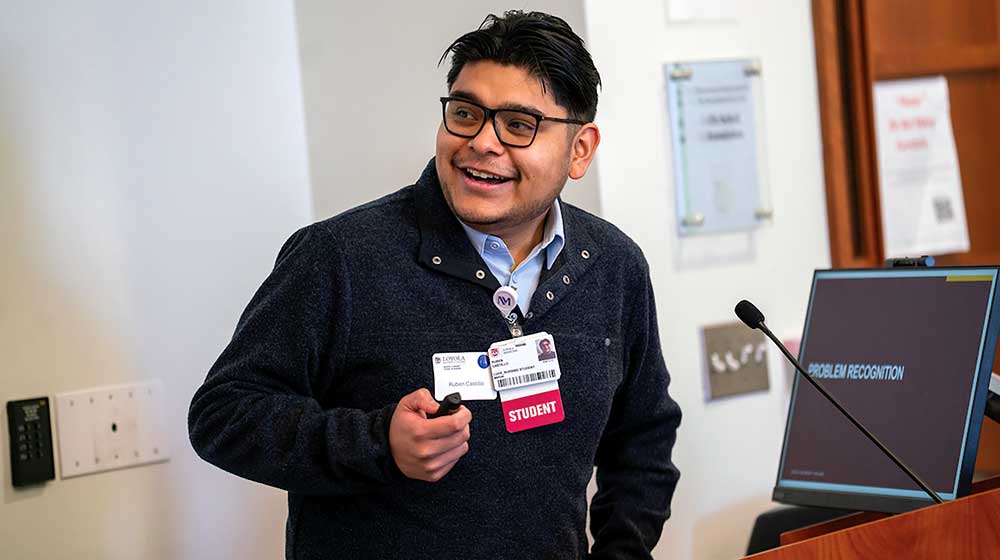
Kerr was not alone. Other Loyola DNP students have had to switch sites mid-project, and Peacock also helped with the transfers.
Julia Peterson, who will graduate with her DNP in December, said Peacock was also crucial in getting all the approvals necessary to launch her project at Northwest Community Hospital. “I didn’t really even know how to begin,” Peterson said. “That would have been a lot more stressful if she had not been there to help.”
Peacock’s new role has also been a difference maker for the DNP faculty. She has built relationships with clinical sites and professional organizations to expand the program, and has nurtured a growing network of skilled mentors.
“It’s just so nice to have a go-to person,” said Vicki Bacidore, director of the Adult Gerontology Acute Care Nurse Practitioner track, who has been teaching at Loyola Nursing since 2012 and in the DNP program since 2016. “She oversees everything. And she has added quality improvement to the whole project process.”
Peacock, for instance, has recruited more faculty to be project advisers, and has created a database that tracks every project. She also launched a repository of DNP projects, making them available to prospective DNP students.
This helps with recruiting.
“As prospective students consider Loyola for their graduate work,” Bacidore said, “they say, ‘Wow, Loyola has this person that helps you find your project and helps guide you through the entire project experience. ’That’s a plus.”
Above all, Peacock has added a higher level of direct support for students.
DNP graduate Mary Zawlocki said her project process was rigorous and rewarding, helping prepare her for her nursing career. Peacock’s guidance was so focused, Zawlocki said, that “sometimes it made me feel as if I was her only student.”
Once a student develops an idea, ideally one that will improve either practice or patient outcomes, they work with the school to arrange a clinical site and secure agreements to start the research, get all the necessary clearances and paperwork, including Institutional Review Board approval, and complete onboarding. Then begins the project itself: development, implementation, assessment, and, finally, dissemination of the findings.
These projects take a year to complete.
Peacock’s job is to help—with the faculty adviser—guide the project from the beginning to the final presentation. Often, Peacock’s work is troubleshooting.
Take Hannah Kerr, for instance.
Kerr, who will graduate from the DNP program in December, had everything arranged for a project at St. Francis Hospital in Evanston. But then, in March, the hospital was sold, and her project was derailed.
“Dr. Peacock was my savior,” said Kerr. They decided to switch locations, which required an entire new round of negotiations and paperwork. “Without her, I would have had to push my graduation to next spring.”
Kerr was not alone. Other Loyola DNP students have had to switch sites mid-project, and Peacock also helped with the transfers.
Julia Peterson, who will graduate with her DNP in December, said Peacock was also crucial in getting all the approvals necessary to launch her project at Northwest Community Hospital. “I didn’t really even know how to begin,” Peterson said. “That would have been a lot more stressful if she had not been there to help.”
Peacock’s new role has also been a difference maker for the DNP faculty. She has built relationships with clinical sites and professional organizations to expand the program, and has nurtured a growing network of skilled mentors.
“It’s just so nice to have a go-to person,” said Vicki Bacidore, director of the Adult Gerontology Acute Care Nurse Practitioner track, who has been teaching at Loyola Nursing since 2012 and in the DNP program since 2016. “She oversees everything. And she has added quality improvement to the whole project process.”
Peacock, for instance, has recruited more faculty to be project advisers, and has created a database that tracks every project. She also launched a repository of DNP projects, making them available to prospective DNP students.
This helps with recruiting.
“As prospective students consider Loyola for their graduate work,” Bacidore said, “they say, ‘Wow, Loyola has this person that helps you find your project and helps guide you through the entire project experience. ’That’s a plus.”
Above all, Peacock has added a higher level of direct support for students.
DNP graduate Mary Zawlocki said her project process was rigorous and rewarding, helping prepare her for her nursing career. Peacock’s guidance was so focused, Zawlocki said, that “sometimes it made me feel as if I was her only student.”