
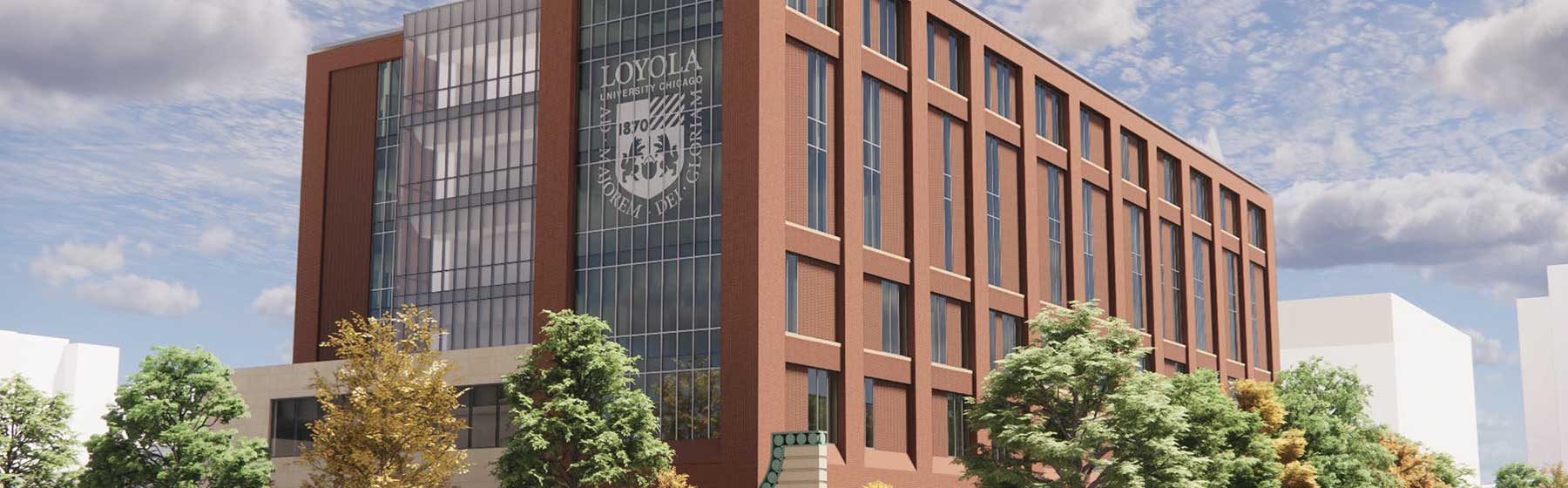
New building to anchor Loyola Nursing expansion
New building to anchor Loyola Nursing expansion
The Marcella Niehoff School of Nursing is growing
A new building, scheduled to open in fall 2028 on Loyola University Chicago’s main residential campus, will provide much-needed space for the school’s undergraduate program to expand. Enrollment in Loyola Nursing’s four-year Bachelor of Science in Nursing (BSN) track will gradually increase while construction is underway, with the goal of admitting 400 students annually by 2028—nearly doubling the size of the program.
“This marks a major new phase in Loyola Nursing’s proud 90-year history,” Dean Lorna Finnegan said of the ambitious expansion, a key part of the school’s effort to address the critical nationwide nursing shortage.
“Because of this building, we’ll graduate more BSN-prepared students and build on our legacy of academic excellence and meeting the needs of our communities,” Finnegan added. “At a time when demand for highly skilled nurses has never been greater, this world-class facility will be a catalyst for innovation in nursing education and propel our undergraduate program to the next level.”
Applications for Loyola Nursing’s BSN program, ranked 13th nationally by U.S. News & World Report, have increased steadily in the past decade.
The planned facility will centralize the school’s faculty, staff, and students and provide a state-of-the-art learning environment featuring specialized classrooms, advanced simulation and virtual reality labs, and welcoming gathering spaces.
“There’s a sense of excitement and momentum within the school,” said Associate Professor Jorgia Connor, assistant dean of the BSN program. “Our mission is to educate nurse leaders who are exceptional in their commitment to health equity and service to humanity. Being able to expand our program to this level is a sign that we’re delivering on that mission.”
An investment in the future
The six-story building will replace Campion Hall, an aging dormitory, and is one of the first projects in the University’s Campus Plan to modernize facilities and advance its presence in health care and the sciences. Loyola Nursing will share part of the space with the College of Arts and Sciences’ Forensic Science Program and Department of Chemistry and Biochemistry.
Provost Douglas W. Woods said the University’s prioritization of a new nursing school facility signals its investment in Loyola Nursing and dedication to educating compassionate nurses in the Jesuit tradition.
“The School of Nursing and its exceptional reputation are a source of pride across the University,” Woods said. “This project represents our commitment to ensuring our nursing school facilities match the caliber of our academic programming and meet the needs of our students and faculty.”
Loyola Nursing’s four-year BSN program is located at Loyola's Lake Shore Campus on the northern edge of the city. The school’s graduate and Accelerated Bachelor of Science in Nursing programs are housed at Loyola's Health Sciences Campus in west suburban Maywood.
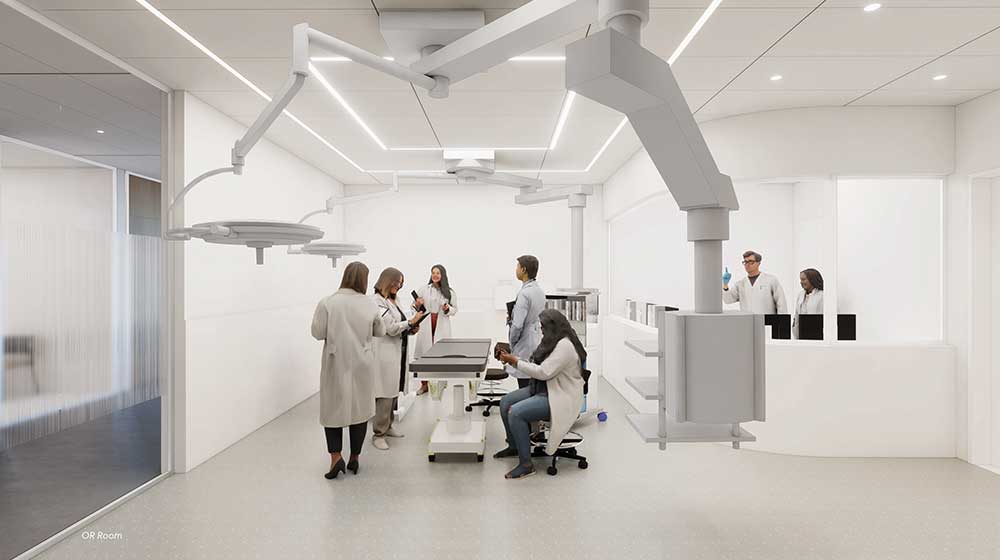
Inside the new building
Plans for the nursing space were designed with the unique needs of BSN students in mind, said Kana Henning, vice president for facilities and campus management. Simulation labs, debriefing rooms, and skills labs will provide high-quality instruction, while huddle rooms and work stations will support group and individual study.
The building intentionally reflects the school’s Jesuit commitment to cura personalis, or care for the whole person, by creating formal and informal spaces that foster mentoring and community, she said. Space is earmarked for participants in the school’s CARE (Collaboration, Access, Resources, and Equity) Pathway to the BSN.
“The BSN program is incredibly demanding and we wanted to create a facility that would offer the best education possible, while making it easier for students to connect with faculty and peers,” she said.