
The Art of Healing
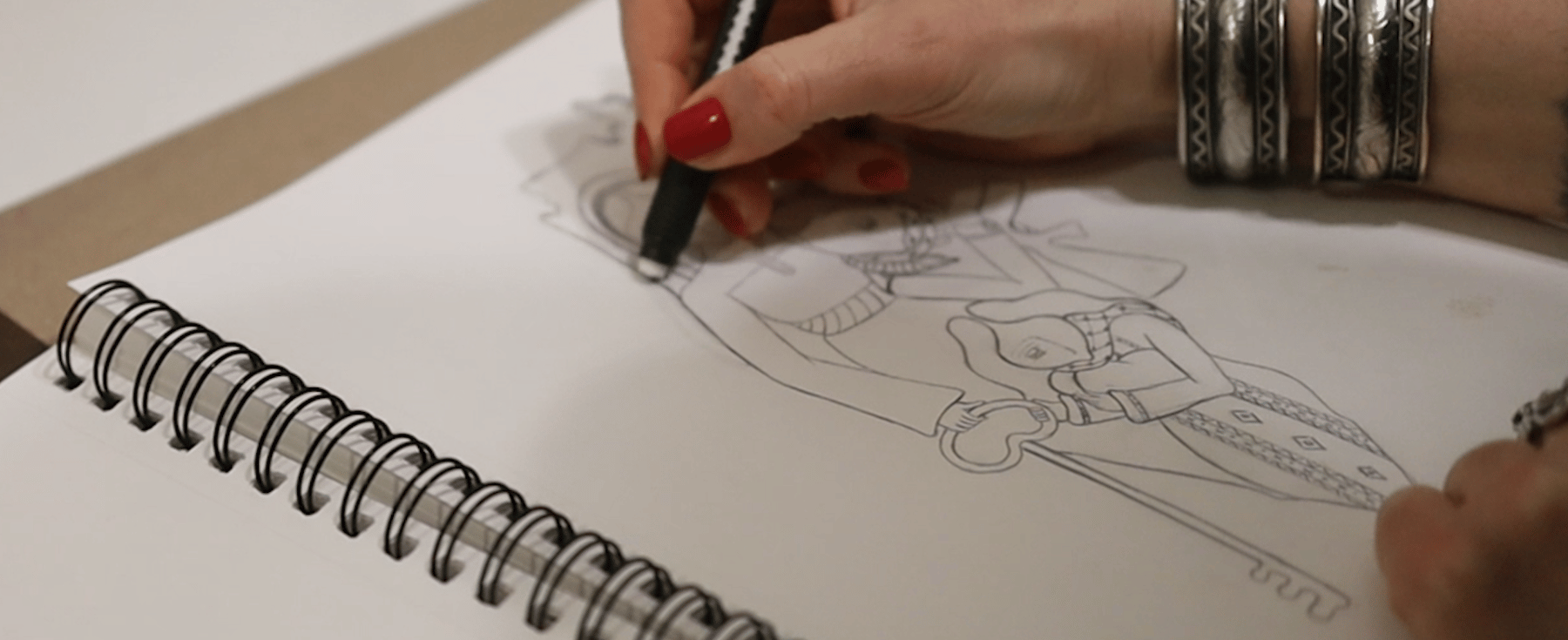
Arely Rodriguez knew she wanted her final class project to matter. And not just in a gradebook sense.
When her professor challenged students to explore something personal and socially relevant, Arely leaned into two passions she already held close: art, and healing.
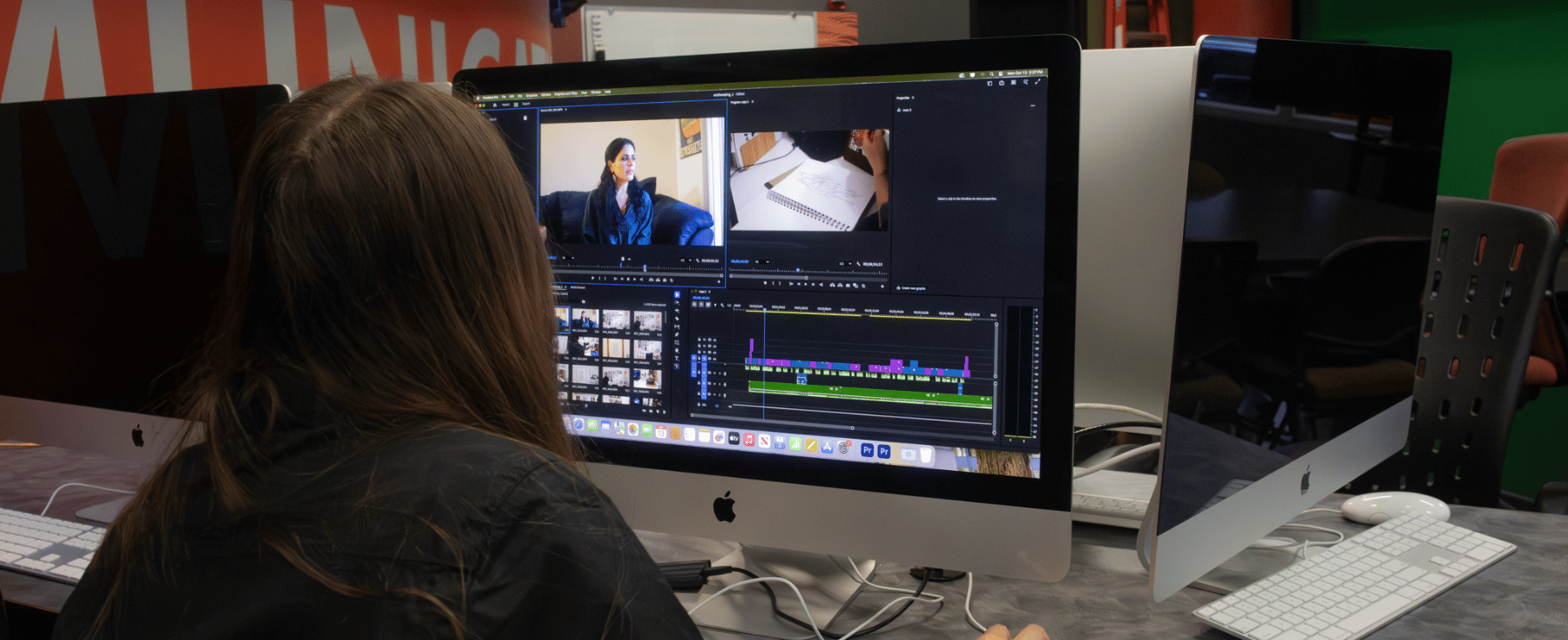
Digital Media and Storytelling graduate student Arely Rodriguez edits The Art of Healing in the School of Communication’s Convergence Studio.
"I knew I wanted to do something in relation to highlighting a Palestinian voice," she said. "But I also personally like art. I was in art club in high school... I've always loved drawing, painting. Anything that has to do with creativity and putting your emotions into something you're creating."
Those instincts led her to Mary Hazboun, a Palestinian artist based in Chicago. Hazboun became the focus of The Art of Healing, Arely’s short film, which was nominated for and won a Crystal Pillar Award by the NATAS Chicago/Midwest Chapter.
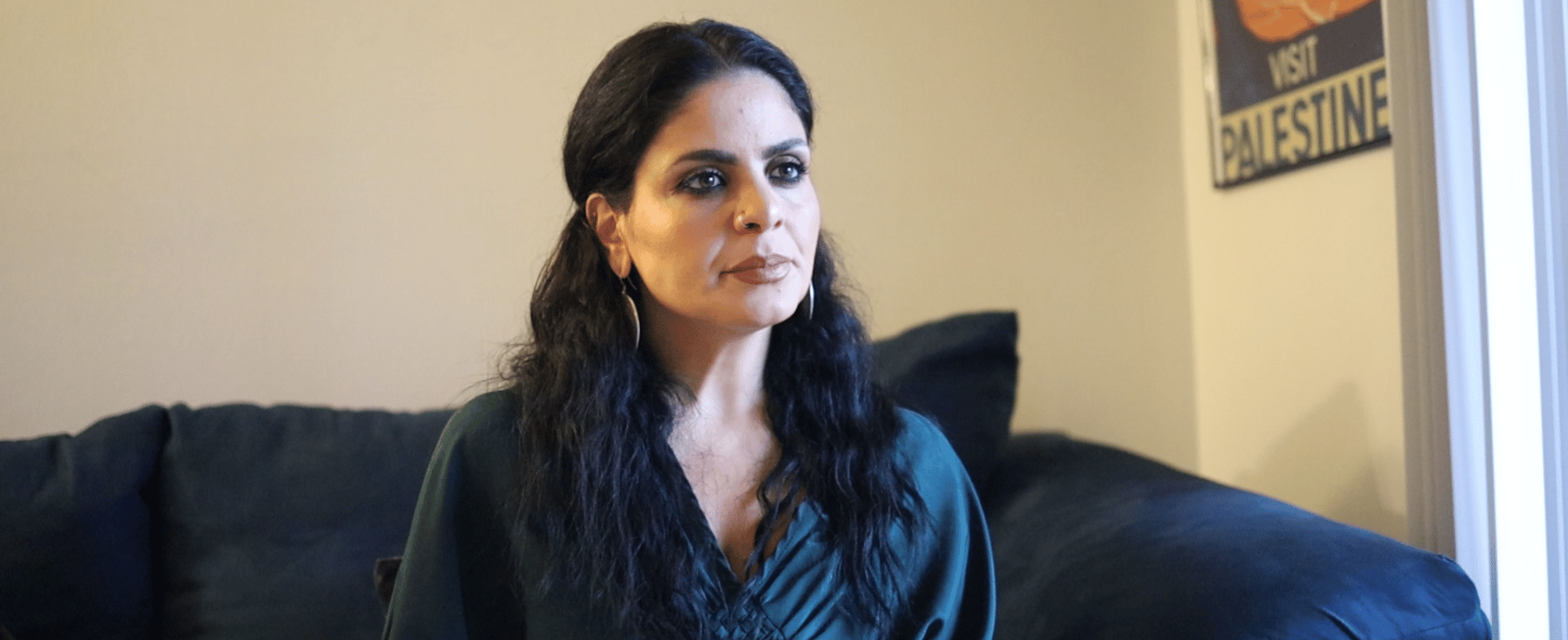
Mary Hazboun sits for an interview with filmmaker Arely Rodriguez, sharing the personal experiences that shaped her art.
Weeping is a practice of liberation for me. Mary Hazboun, Palestinian artist
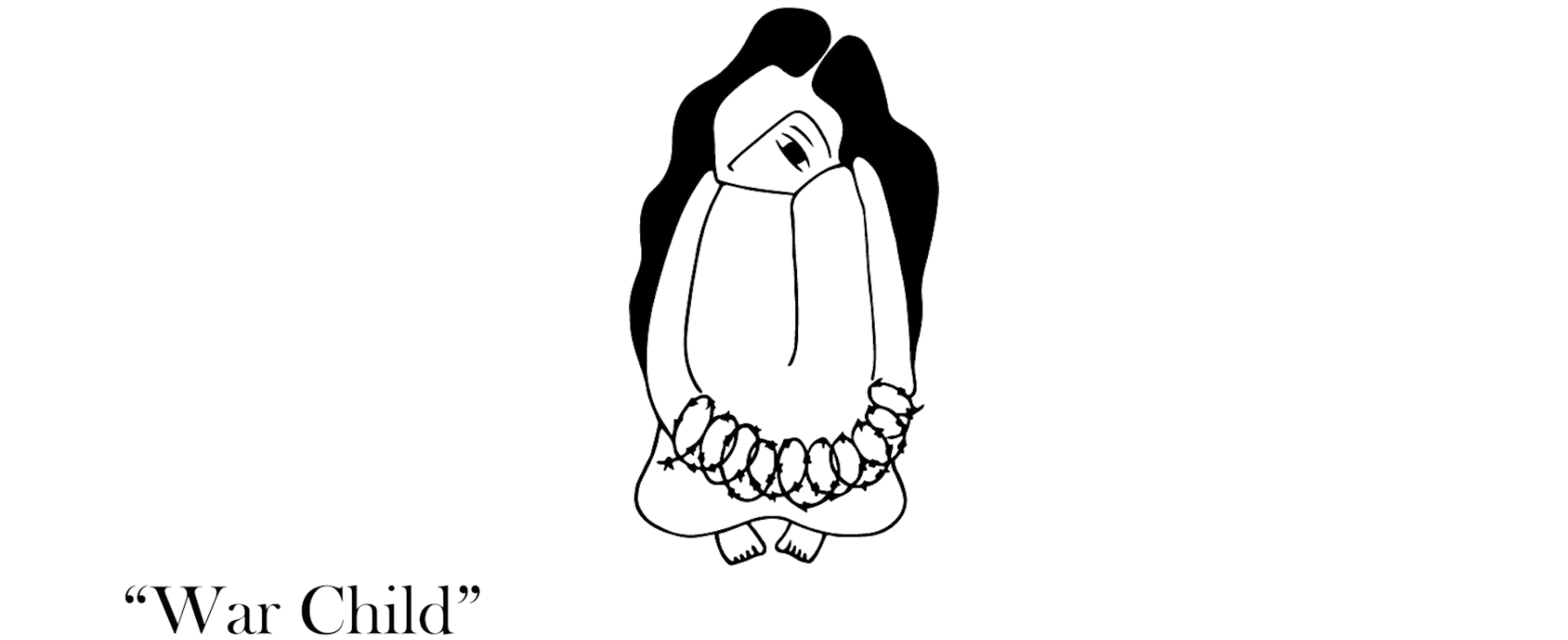
“War Child,” one of Mary Hazboun’s pieces featured in The Art of Healing, reflecting themes of memory, survival, and resistance.
The piece explores Mary’s journey from Bethlehem to Chicago and how art became her means of processing displacement and trauma. "She found that her form of dealing with everything she had gone through was drawing," Arely explained.
Mary's work, Arely notes, often centers female bodies and personal experiences. While Mary studied women and gender studies at DePaul, not art, her pieces now serve as emotional documentation and visual resistance.
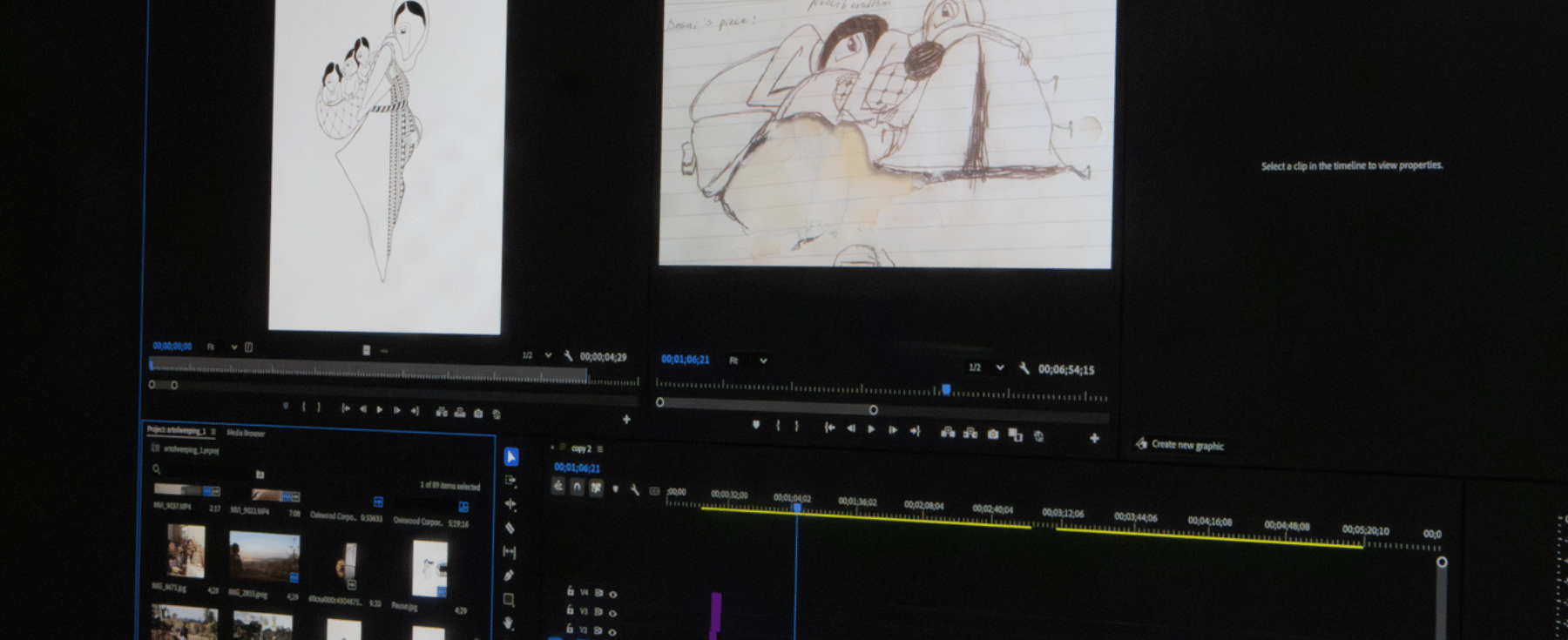
A close-up view of Arely Rodriguez’s editing monitor, showing Mary Hazboun’s artwork and early sketches as they appear in the film.
The film features several of Mary’s images, alongside her narration. Each tells a story rooted in memory, war, survival, and liberation. In one scene, Arely includes a video of a stranger with Mary’s artwork tattooed on their body—a testament to how far her creations have reached.
Arely said working on the project shifted her own understanding of healing: "Art is healing. I think it's like, there's an art to it, right? Like it's not perfect, it's not linear, it's not one way for everyone. And in speaking through Mary, through this project... she, like everyone through the healing process, still has moments where she's back in that mindset of being a young girl and having to move to America where she's afraid and doesn't know anything."
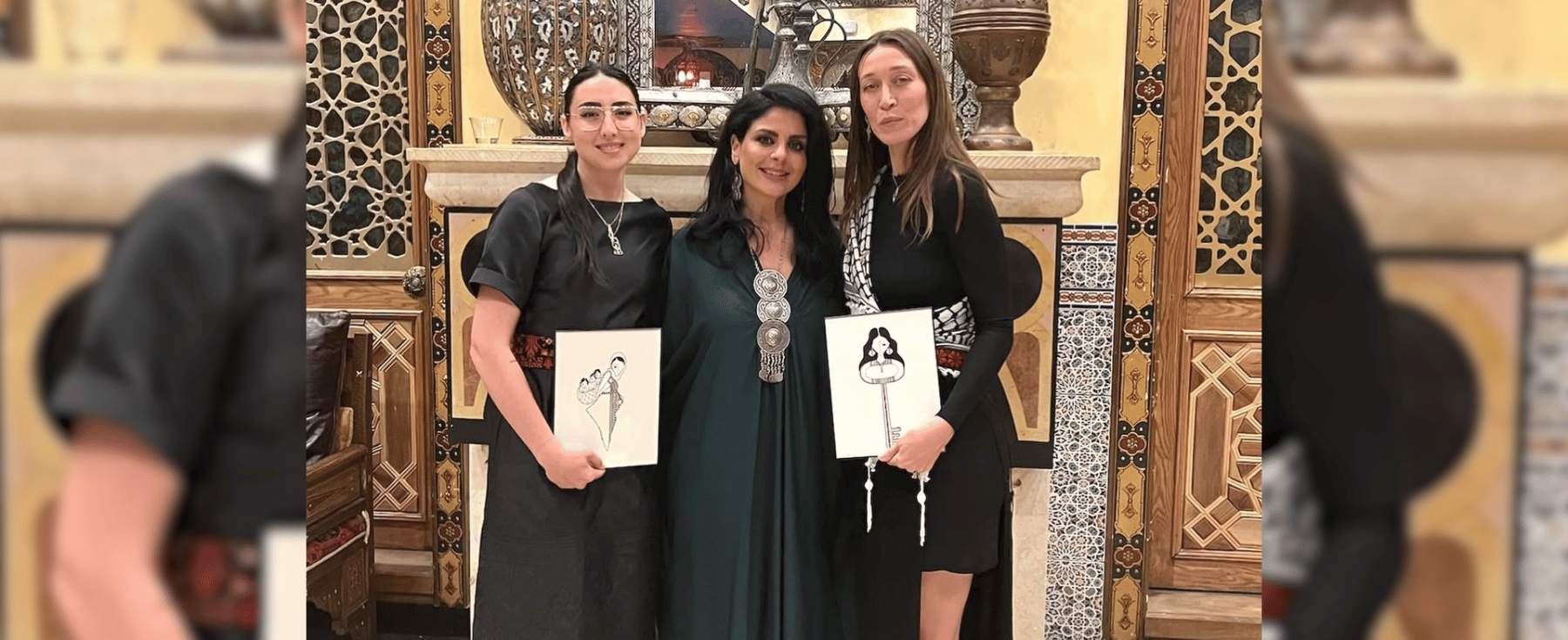
Mary Hazboun stands with two local community members at a cultural event, holding prints of her artwork that inspired The Art of Healing.
The film ends on a hopeful note, showing how Mary found strength in community—a theme that resonated with Arely as well. "Weeping is a practice of liberation for me," Arely said, quoting Mary’s words from the film.
What started as a class assignment became something deeper: a connection between two storytellers, one sharing her journey through illustration, and the other amplifying it through film.
Story by Destiny Woods • Photos by Paige Lynn and Arely Rodriguez • Dec., 2, 2025
The Art of Healing: Arely Rodriguez's Storytelling of Pain and Power
"I knew I wanted to do something in relation to highlighting a Palestinian voice," she said. "But I also personally like art. I was in art club in high school... I've always loved drawing, painting. Anything that has to do with creativity and putting your emotions into something you're creating."
Those instincts led her to Mary Hazboun, a Palestinian artist based in Chicago. Hazboun became the focus of The Art of Healing, Arely’s short film, which was nominated for and won a Crystal Pillar Award by the NATAS Chicago/Midwest Chapter.
The piece explores Mary’s journey from Bethlehem to Chicago and how art became her means of processing displacement and trauma. "She found that her form of dealing with everything she had gone through was drawing," Arely explained.
Mary's work, Arely notes, often centers female bodies and personal experiences. While Mary studied women and gender studies at DePaul, not art, her pieces now serve as emotional documentation and visual resistance.
The film features several of Mary’s images, alongside her narration. Each tells a story rooted in memory, war, survival, and liberation. In one scene, Arely includes a video of a stranger with Mary’s artwork tattooed on their body—a testament to how far her creations have reached.
Arely said working on the project shifted her own understanding of healing: "Art is healing. I think it's like, there's an art to it, right? Like it's not perfect, it's not linear, it's not one way for everyone. And in speaking through Mary, through this project... she, like everyone through the healing process, still has moments where she's back in that mindset of being a young girl and having to move to America where she's afraid and doesn't know anything."
The film ends on a hopeful note, showing how Mary found strength in community—a theme that resonated with Arely as well. "Weeping is a practice of liberation for me," Arely said, quoting Mary’s words from the film.
What started as a class assignment became something deeper: a connection between two storytellers, one sharing her journey through illustration, and the other amplifying it through film.