
St. Albert's Day 2025
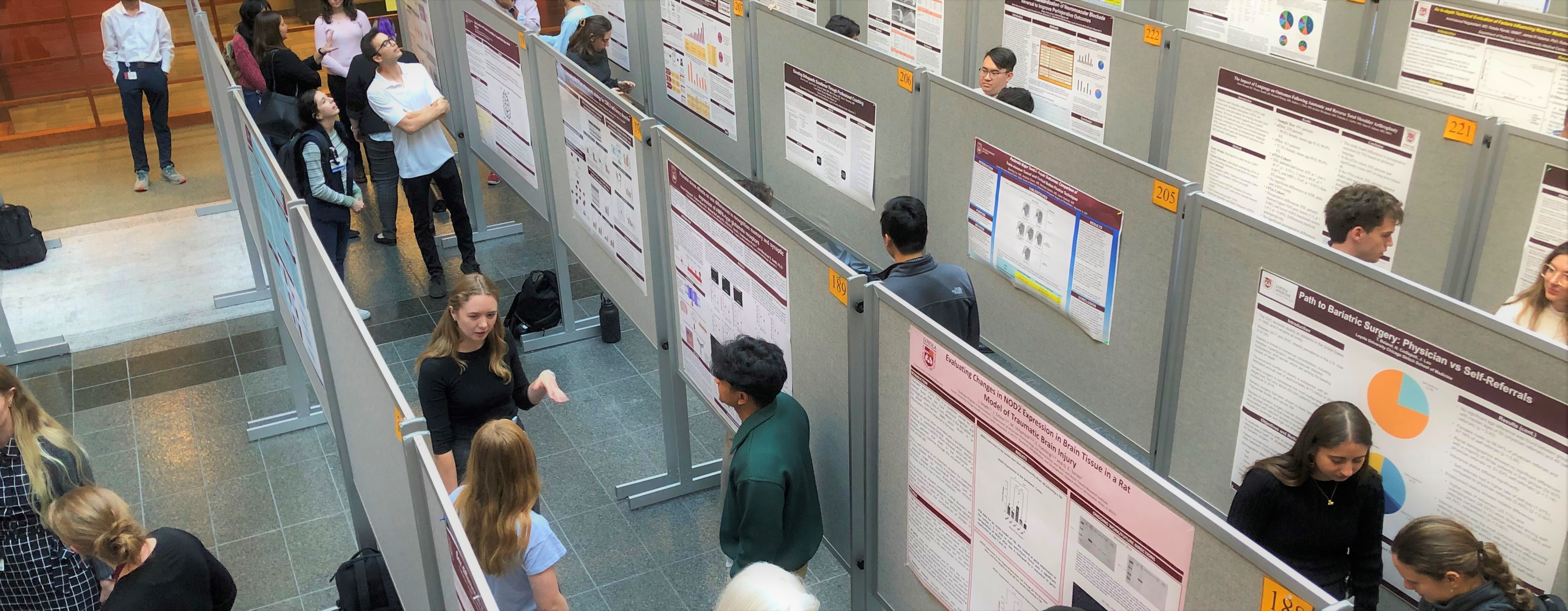
Loyola University Chicago marked another successful year of scientific achievement and community celebration with the 2025 St. Albert’s Day. This annual tradition highlights the university’s campus wide commitment to research, collaboration, and academic excellence. Held at the Health Sciences Campus, the event brought together students, faculty, staff, and mentors from multiple schools and disciplines to share their work, engage in scientific dialogue, and honor outstanding scholarship.
St. Albert’s Day has long served as a cornerstone of Loyola’s research culture. It is a day when emerging scholars present their findings and established researchers offer mentorship and insight. Each year, the celebration reinforces Loyola’s mission to advance knowledge, cultivate discovery, and foster a vibrant scientific community that is dedicated to improving human health and understanding.
The 2025 event featured hundreds of scientific posters that showcased research from the Graduate School's Biomedical Sciences Programs in the Center for Translational Research and Education, the Stritch School of Medicine, the Marcella Niehoff School of Nursing, and the Parkinson School of Health Sciences and Public Health. Students at every level had the opportunity to communicate their research to peers and faculty, gaining experience in science communication while building connections that strengthen the university’s academic community. Throughout the day, the atmosphere was filled with curiosity, collaboration, and excitement for scientific discovery.
A central feature of the celebration was the awards ceremony, which recognized outstanding oral research presentations among graduate students. These awards highlight the creativity, rigor, and dedication that define Loyola’s training environment and the supportive role of faculty mentors who guide students throughout their academic journeys.
Winners of the PhD Student Competition
1st Michael Volyanyuk (Neuroscience program, Dr. Eileen Foecking lab)
2nd Suzanne Quinn (Integrative Cell Biology program, Dr. Michael Nishimura lab)
2nd Tris Buck (Molecular Pharmacology and Therapeutics program, Dr. Monsheel Sodhi lab)
Winners of the Master’s Student Competition
1st. Catherine Brassil (Infectious Disease and Immunology program, Dr. Bryan Mounce lab)
2nd. Autumn Johnson (Neuroscience program, Dr. Gonzalo Torres lab)
3rd. Hussein Qtaish (Molecular Pharmacology and Therapeutics program, Dr. Simon Kaja lab)
These award recipients represent the next generation of scientific leaders at Loyola. Their achievements highlight the strength of the university’s graduate programs and the high level of mentorship provided by faculty across the Health Sciences Campus. The awards also reflect the dedication and passion that students bring to their research and the broader scientific community.
In addition to the awards ceremony, St. Albert’s Day created opportunities for interdisciplinary conversations, new collaborations, and meaningful community engagement. This cross-campus participation is a defining element of St. Albert’s Day and one of the reasons the event remains such an important part of Loyola’s academic culture.
The day concluded with a sense of celebration and shared accomplishment. St. Albert’s Day continues to serve as a moment where the Loyola community reflects on its collective strengths and looks ahead to another year of discovery. The 2025 celebration reaffirmed the university’s commitment to supporting research excellence, nurturing scientific curiosity, and preparing the next generation of biomedical scholars and innovators.
Biomedical Sciences at Loyola University Chicago
Events like St. Albert's Day are filled with inspiring presentations, awards, and collaborative discussions and are integral to advancing our students' journey in Biomedical Sciences.
If you're driven to make a meaningful impact in the field, we invite you to explore the exceptional programs at Loyola University Chicago. Learn how our community of scientists and resources can help you achieve academic excellence and fuel your passion for scientific discovery.
Loyola University Chicago marked another successful year of scientific achievement and community celebration with the 2025 St. Albert’s Day. This annual tradition highlights the university’s campus wide commitment to research, collaboration, and academic excellence. Held at the Health Sciences Campus, the event brought together students, faculty, staff, and mentors from multiple schools and disciplines to share their work, engage in scientific dialogue, and honor outstanding scholarship.
St. Albert’s Day has long served as a cornerstone of Loyola’s research culture. It is a day when emerging scholars present their findings and established researchers offer mentorship and insight. Each year, the celebration reinforces Loyola’s mission to advance knowledge, cultivate discovery, and foster a vibrant scientific community that is dedicated to improving human health and understanding.
The 2025 event featured hundreds of scientific posters that showcased research from the Graduate School's Biomedical Sciences Programs in the Center for Translational Research and Education, the Stritch School of Medicine, the Marcella Niehoff School of Nursing, and the Parkinson School of Health Sciences and Public Health. Students at every level had the opportunity to communicate their research to peers and faculty, gaining experience in science communication while building connections that strengthen the university’s academic community. Throughout the day, the atmosphere was filled with curiosity, collaboration, and excitement for scientific discovery.
A central feature of the celebration was the awards ceremony, which recognized outstanding oral research presentations among graduate students. These awards highlight the creativity, rigor, and dedication that define Loyola’s training environment and the supportive role of faculty mentors who guide students throughout their academic journeys.
Winners of the PhD Student Competition
1st Michael Volyanyuk (Neuroscience program, Dr. Eileen Foecking lab)
2nd Suzanne Quinn (Integrative Cell Biology program, Dr. Michael Nishimura lab)
2nd Tris Buck (Molecular Pharmacology and Therapeutics program, Dr. Monsheel Sodhi lab)
Winners of the Master’s Student Competition
1st. Catherine Brassil (Infectious Disease and Immunology program, Dr. Bryan Mounce lab)
2nd. Autumn Johnson (Neuroscience program, Dr. Gonzalo Torres lab)
3rd. Hussein Qtaish (Molecular Pharmacology and Therapeutics program, Dr. Simon Kaja lab)
These award recipients represent the next generation of scientific leaders at Loyola. Their achievements highlight the strength of the university’s graduate programs and the high level of mentorship provided by faculty across the Health Sciences Campus. The awards also reflect the dedication and passion that students bring to their research and the broader scientific community.
In addition to the awards ceremony, St. Albert’s Day created opportunities for interdisciplinary conversations, new collaborations, and meaningful community engagement. This cross-campus participation is a defining element of St. Albert’s Day and one of the reasons the event remains such an important part of Loyola’s academic culture.
The day concluded with a sense of celebration and shared accomplishment. St. Albert’s Day continues to serve as a moment where the Loyola community reflects on its collective strengths and looks ahead to another year of discovery. The 2025 celebration reaffirmed the university’s commitment to supporting research excellence, nurturing scientific curiosity, and preparing the next generation of biomedical scholars and innovators.
Biomedical Sciences at Loyola University Chicago
Events like St. Albert's Day are filled with inspiring presentations, awards, and collaborative discussions and are integral to advancing our students' journey in Biomedical Sciences.
If you're driven to make a meaningful impact in the field, we invite you to explore the exceptional programs at Loyola University Chicago. Learn how our community of scientists and resources can help you achieve academic excellence and fuel your passion for scientific discovery.