
Alma Begičević Spotlight
Dr. Alma Begičević began teaching in Loyola’s Sociology Program in 2016. Her research interests are wide and varied, but a common thread is her interest in equality and justice, especially for marginalized groups.
On October 30, 2025, Dr. Begičević delivered a virtual presentation at the International University in Sarajevo titled “Money as Justice,” contributing to ongoing research on the role of monetary compensation in transitional justice. Her study highlights how, in post-genocide Bosnia and Herzegovina, financial reparations serve not only as economic remedies but also as powerful symbols that promote societal recognition of victims’ suffering, moral injury, and the need for social inclusion.
Drawing on Georg Simmel’s theory of money as a social symbol, as well as insights from sociology of law and political economy, she presented her ethnographic work in Bosnia and Herzegovina demonstrating the potentiality of monetary awards to facilitate recognition, foster political participation, and support moral and social healing—particularly for marginalized populations impacted by state crimes. Using qualitative methods, her research underscores the importance of integrating economic reparations into broader strategies for social and moral reconstruction, positioning Bosnia and Herzegovina as a compelling case study for scholars interested in human rights, social movements, sociology of law, social justice, international criminology, and political economy within the context of state crimes.
Read more about Dr. Begičević on her website.
Dr. Alma Begičević began teaching in Loyola’s Sociology Program in 2016. Her research interests are wide and varied, but a common thread is her interest in equality and justice, especially for marginalized groups.
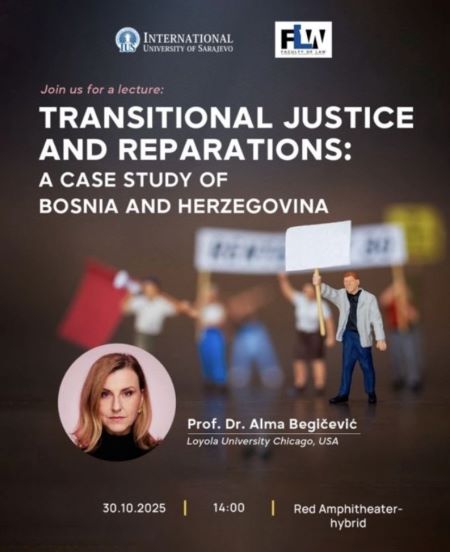
On October 30, 2025, Dr. Begičević delivered a virtual presentation at the International University in Sarajevo titled “Money as Justice,” contributing to ongoing research on the role of monetary compensation in transitional justice. Her study highlights how, in post-genocide Bosnia and Herzegovina, financial reparations serve not only as economic remedies but also as powerful symbols that promote societal recognition of victims’ suffering, moral injury, and the need for social inclusion.
Drawing on Georg Simmel’s theory of money as a social symbol, as well as insights from sociology of law and political economy, she presented her ethnographic work in Bosnia and Herzegovina demonstrating the potentiality of monetary awards to facilitate recognition, foster political participation, and support moral and social healing—particularly for marginalized populations impacted by state crimes. Using qualitative methods, her research underscores the importance of integrating economic reparations into broader strategies for social and moral reconstruction, positioning Bosnia and Herzegovina as a compelling case study for scholars interested in human rights, social movements, sociology of law, social justice, international criminology, and political economy within the context of state crimes.
Read more about Dr. Begičević on her website.