
Dickinson Spotlight
Dickinson Authors 'Sacred Pilgrim, Secular Pilgrim'
The book invites readers to slow down and reflect on what it means to seek meaning in a complex, modern world
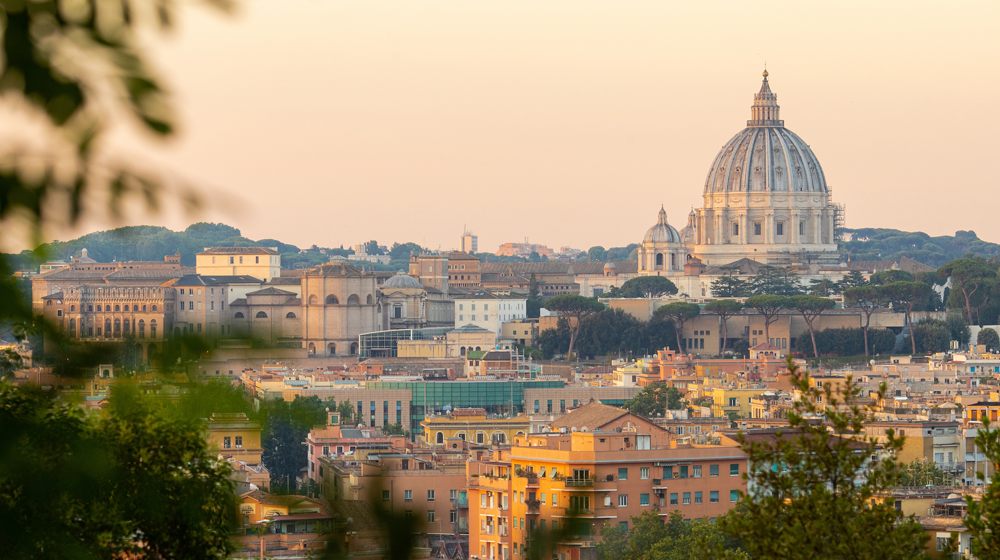
Colby Dickinson, PhD, professor of theology in Loyola University Chicago’s College of Arts and Sciences, is the author of Sacred Pilgrim, Secular Pilgrim: A Roman Journey, published by Cascade Books (WIPF and Stock Publishers). The book blends travel narrative, philosophical reflection, historical overview, and personal memoir as Dickinson retraces his pilgrimages to notable Roman churches and reflects on what it means to be a pilgrim in our secular, pluralistic age.
“Dr. Dickinson’s work invites readers to slow down and reflect on what it means to seek meaning in a complex, modern world,” said Peter J. Schraeder, Dean of the College of Arts and Sciences. “By weaving together theology, philosophy, and his personal visits to churches in Rome, Italy, this book provides an incredibly insightful view of what it means to be an international traveler and especially pilgrim in our increasingly globalized world.”
In Sacred Pilgrim, Secular Pilgrim, Dickinson invites readers into his journey through Rome’s layered spiritual and cultural landscape, exploring how attention to place, history, and experience can transform both inward life and outward understanding. The book questions the boundaries between sacred and secular, showing how pilgrimage can become a dialogue between the physical journey and inner reflection.
“This book grew out of walking through Rome with a notebook, recording my experiences as a pilgrim during a challenging season of my life,” said Dickinson. “Those personal reflections came together with research on Rome’s churches, saints, and martyrs, and a desire to find space for silence amid the bustle and tourism that haunt the ‘eternal city’ today. The book is a meditation on how to be a pilgrim in a busy, modern context, whether or not you are Catholic.”
The book will be featured at an upcoming alumni event, “Brains in a Bar: An Evening with Colby Dickinson,” where Dickinson will discuss his latest book with alumni and friends of the university. The event is scheduled for Thursday, February 12, 6–8 p.m. and is part of Loyola’s ongoing efforts to connect faculty scholarship with the broader Loyola community.
“Sacred Pilgrim, Secular Pilgrim is a superb and timely book, following not only in a centuries-long tradition of Christian pilgrimage as undertaken by many, but giving us a glimpse into the author’s recent personal pilgrim journey as framed by particular places visited in Rome,” said Shaun Henson, Faculty of Theology and Religion, University of Oxford. “Wayfarers not only will learn from the wealth of this writer’s deep experiences, but will find here hearty food for their own interior and exterior travels.”
Drawing on his expertise in contemporary continental philosophy and theology, Dickinson explores pilgrimage not just as travel but as an embodied way of engaging with self, tradition, and the world. Sacred Pilgrim, Secular Pilgrim offers readers philosophical insight alongside vivid encounters with the ancient city of Rome, making it a compelling read for students and scholars of theology, philosophy, history, and spiritual practice alike.
Learn more about Dickinson and his work.
About the College of Arts and Sciences
Founded in 1870, the College of Arts and Sciences is the oldest and largest of Loyola University Chicago’s 13 schools and colleges, serving as the academic home for nearly 8,000 students (roughly 50 percent of Loyola’s total student population). It is academically diverse with twenty academic departments that span an array of intellectual pursuits, ranging from the natural sciences and computational sciences to the humanities, the social sciences, and the fine and performing arts. It is also highly interdisciplinary with thirty-one interdisciplinary programs and seven interdisciplinary centers, including the mission-centric Jesuit Heritage Research Center and the Hank Center for the Catholic Intellectual Heritage. The College is home to over 450 full-time, award-winning faculty, who are committed to teaching and research excellence. They teach nearly 2,000 classes each semester, including 88 percent of all Core Curriculum classes taken by undergraduate students across the university. They also contribute to eleven doctoral programs whose graduates have helped propel Loyola starting in 2025 to R-1 research status (the highest research status a university can achieve). Our students and faculty are engaged internationally at our John Felice Rome Center in Italy, as well as at dozens of university-sponsored study abroad and research sites around the world. Home to the departments that anchor the university’s Core Curriculum, the College seeks to prepare all of Loyola’s students to think critically, to engage the world of the 21st century at ever-deepening levels, and to become caring and compassionate individuals. Our faculty, staff, and students view service to others not just as one option among many, but as a constitutive dimension of their very being. In the truest sense of the Jesuit ideal, our graduates strive to be “individuals for others.”
Colby Dickinson, PhD, professor of theology in Loyola University Chicago’s College of Arts and Sciences, is the author of Sacred Pilgrim, Secular Pilgrim: A Roman Journey, published by Cascade Books (WIPF and Stock Publishers). The book blends travel narrative, philosophical reflection, historical overview, and personal memoir as Dickinson retraces his pilgrimages to notable Roman churches and reflects on what it means to be a pilgrim in our secular, pluralistic age.
“Dr. Dickinson’s work invites readers to slow down and reflect on what it means to seek meaning in a complex, modern world,” said Peter J. Schraeder, Dean of the College of Arts and Sciences. “By weaving together theology, philosophy, and his personal visits to churches in Rome, Italy, this book provides an incredibly insightful view of what it means to be an international traveler and especially pilgrim in our increasingly globalized world.”
In Sacred Pilgrim, Secular Pilgrim, Dickinson invites readers into his journey through Rome’s layered spiritual and cultural landscape, exploring how attention to place, history, and experience can transform both inward life and outward understanding. The book questions the boundaries between sacred and secular, showing how pilgrimage can become a dialogue between the physical journey and inner reflection.
“This book grew out of walking through Rome with a notebook, recording my experiences as a pilgrim during a challenging season of my life,” said Dickinson. “Those personal reflections came together with research on Rome’s churches, saints, and martyrs, and a desire to find space for silence amid the bustle and tourism that haunt the ‘eternal city’ today. The book is a meditation on how to be a pilgrim in a busy, modern context, whether or not you are Catholic.”
The book will be featured at an upcoming alumni event, “Brains in a Bar: An Evening with Colby Dickinson,” where Dickinson will discuss his latest book with alumni and friends of the university. The event is scheduled for Thursday, February 12, 6–8 p.m. and is part of Loyola’s ongoing efforts to connect faculty scholarship with the broader Loyola community.
“Sacred Pilgrim, Secular Pilgrim is a superb and timely book, following not only in a centuries-long tradition of Christian pilgrimage as undertaken by many, but giving us a glimpse into the author’s recent personal pilgrim journey as framed by particular places visited in Rome,” said Shaun Henson, Faculty of Theology and Religion, University of Oxford. “Wayfarers not only will learn from the wealth of this writer’s deep experiences, but will find here hearty food for their own interior and exterior travels.”
Drawing on his expertise in contemporary continental philosophy and theology, Dickinson explores pilgrimage not just as travel but as an embodied way of engaging with self, tradition, and the world. Sacred Pilgrim, Secular Pilgrim offers readers philosophical insight alongside vivid encounters with the ancient city of Rome, making it a compelling read for students and scholars of theology, philosophy, history, and spiritual practice alike.
Learn more about Dickinson and his work.
About the College of Arts and Sciences
Founded in 1870, the College of Arts and Sciences is the oldest and largest of Loyola University Chicago’s 13 schools and colleges, serving as the academic home for nearly 8,000 students (roughly 50 percent of Loyola’s total student population). It is academically diverse with twenty academic departments that span an array of intellectual pursuits, ranging from the natural sciences and computational sciences to the humanities, the social sciences, and the fine and performing arts. It is also highly interdisciplinary with thirty-one interdisciplinary programs and seven interdisciplinary centers, including the mission-centric Jesuit Heritage Research Center and the Hank Center for the Catholic Intellectual Heritage. The College is home to over 450 full-time, award-winning faculty, who are committed to teaching and research excellence. They teach nearly 2,000 classes each semester, including 88 percent of all Core Curriculum classes taken by undergraduate students across the university. They also contribute to eleven doctoral programs whose graduates have helped propel Loyola starting in 2025 to R-1 research status (the highest research status a university can achieve). Our students and faculty are engaged internationally at our John Felice Rome Center in Italy, as well as at dozens of university-sponsored study abroad and research sites around the world. Home to the departments that anchor the university’s Core Curriculum, the College seeks to prepare all of Loyola’s students to think critically, to engage the world of the 21st century at ever-deepening levels, and to become caring and compassionate individuals. Our faculty, staff, and students view service to others not just as one option among many, but as a constitutive dimension of their very being. In the truest sense of the Jesuit ideal, our graduates strive to be “individuals for others.”