
Silva NSF Grant
Computer Science Professor Receives $1 Million in Linked NSF Grants
Yas Silva's Research Aims to Combat Cyberbullying, Make Social Media Safer

Yas Silva, PhD, a computer science professor in Loyola University Chicago’s College of Arts and Sciences, and his collaborators at Arizona State University (Deborah Hall and Huan Liu) have received $1 million in linked grants from the National Science Foundation (NSF) to continue advancing the BullyBlocker Project—an interdisciplinary research initiative focused on creating safer, more supportive social media experiences.
The newly funded grant, titled Collaborative Research: SaTC: CORE: Medium: Toward Well-being by Design in Social Media, will support ongoing collaboration between Silva and researchers at Arizona State University.
The team will expand its work at the intersection of computer science and psychology, aiming to advance our understanding of how cyberbullying and other types of problematic online behaviors can be identified and prevented. The core objective of this interdisciplinary project is to design and develop models and apps to prevent and identify instances of cyberbullying and related forms of online toxicity in social networks.
“This scholarly work exemplifies the type of interdisciplinary research that not only advances academic knowledge but also has a tangible impact on people’s lives,” said Peter J. Schraeder, Dean of the College of Arts and Sciences. “By bringing together computer science, psychology, and our Jesuit values, this grant supports vital innovation aimed at making digital spaces healthier and safer.”
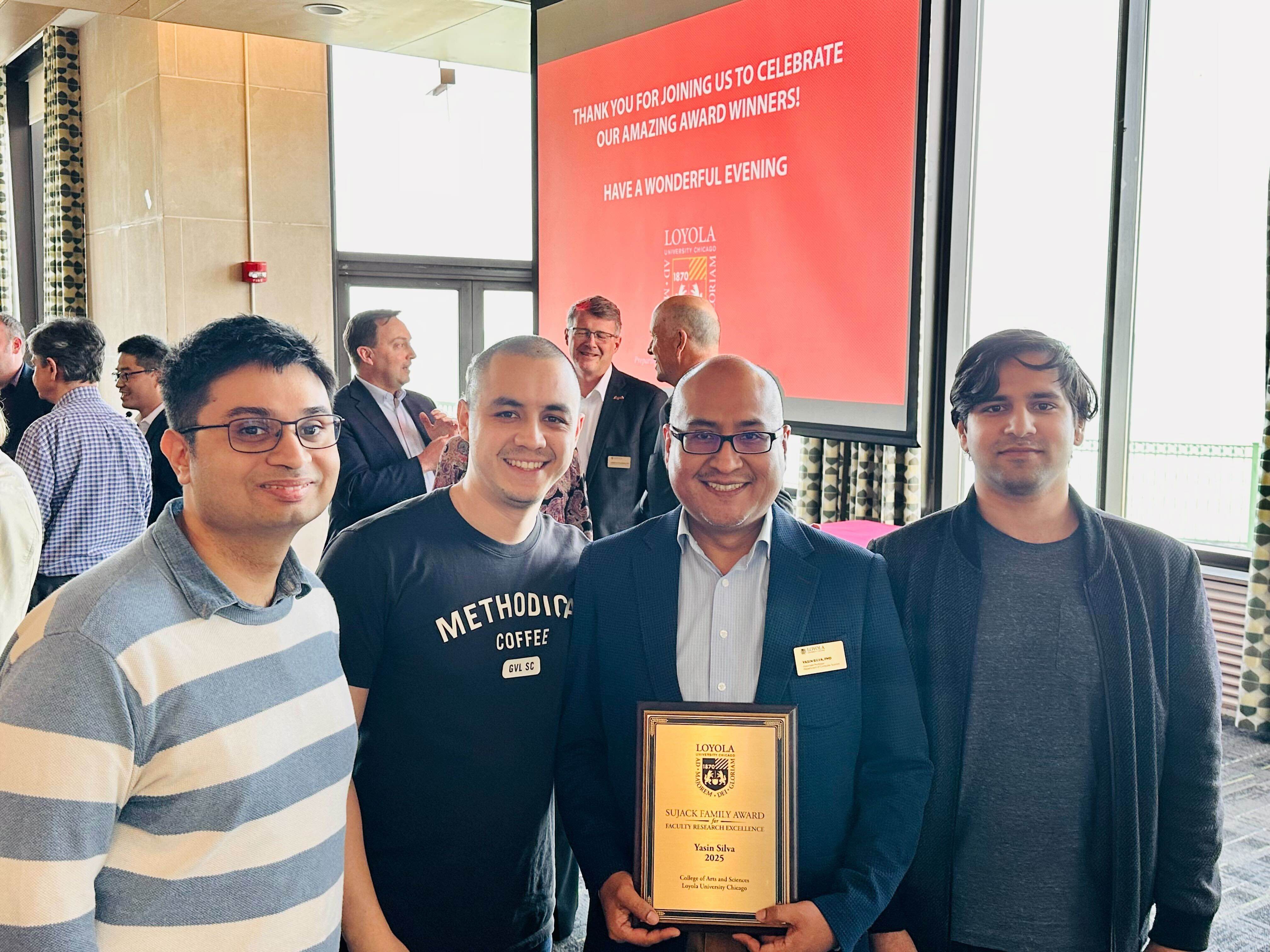
“This grant will enable us to continue developing innovative research focused on designing models and tools for healthier social media experiences such as early detection of cyberbullying, predictive models that consider bullying severity, and new social media features to maximize well-being,” said Silva.
The project is structured around three core research aims:
- Developing predictive models for early detection of problematic online behaviors, with an emphasis on the assessment of severity
- Designing social media features that prioritize users’ well-being (rather than attention)
- Studying important aspects of problematic online behavior, such as how cyberbullying and indicators of decreased well-being elicit bystander intervention
“This research aligns with our Jesuit mission of caring for the whole person and addresses a pressing need in today’s digital society: the creation of well-being-centered social media platforms,” said Silva.
Dr. Silva has led the BullyBlocker Lab for over a decade. The lab includes Loyola faculty members Mohammed Abuhamad, George K. Thiruvathukal, Satyaki Sikdar, and Daniel Moreira, who contribute their expertise in AI, data analytics, and network science, and nine Loyola students who will be deeply involved in this NSF-supported research.
“Our research assistants engage in every phase of the project—from problem identification and literature review to designing and evaluating solutions, and even co-authoring scholarly publications,” Silva said. “We’re proud to equip our students with the interdisciplinary tools and mentorship they need to become leaders in socially relevant, tech-driven research.”
Over the years, the BullyBlocker Lab has earned a strong interdisciplinary reputation, producing numerous co-authored publications, several mobile apps—including the ActionPoint App—and multiple predictive models that contribute to the prevention and understanding of cyberbullying.
Learn more about the awards and projects:
NSF Awards:
LUC Lead Site
ASU Site
BullyBlocker Project:
https://bullyblocker.cs.luc.edu/
About the College of Arts and Sciences
Founded in 1870, the College of Arts and Sciences is the oldest and largest of Loyola University Chicago’s 13 schools and colleges, serving as the academic home for nearly 8,000 students (roughly 50 percent of Loyola’s total student population). It is academically diverse with twenty academic departments that span an array of intellectual pursuits, ranging from the natural sciences and computational sciences to the humanities, the social sciences, and the fine and performing arts. It is also highly interdisciplinary with thirty-one interdisciplinary programs and seven interdisciplinary centers, including the mission-centric Jesuit Heritage Research Center and the Hank Center for the Catholic Intellectual Heritage. The College is home to over 450 full-time, award-winning faculty, who are committed to teaching and research excellence. They teach nearly 2,000 classes each semester, including 88 percent of all Core Curriculum classes taken by undergraduate students across the university. They also contribute to eleven doctoral programs whose graduates have helped propel Loyola starting in 2025 to R-1 research status (the highest research status a university can achieve). Our students and faculty are engaged internationally at our John Felice Rome Center in Italy, as well as at dozens of university-sponsored study abroad and research sites around the world. Home to the departments that anchor the university’s Core Curriculum, the College seeks to prepare all of Loyola’s students to think critically, to engage the world of the 21st century at ever-deepening levels, and to become caring and compassionate individuals. Our faculty, staff, and students view service to others not just as one option among many, but as a constitutive dimension of their very being. In the truest sense of the Jesuit ideal, our graduates strive to be “individuals for others.”
Yas Silva, PhD, a computer science professor in Loyola University Chicago’s College of Arts and Sciences, and his collaborators at Arizona State University (Deborah Hall and Huan Liu) have received $1 million in linked grants from the National Science Foundation (NSF) to continue advancing the BullyBlocker Project—an interdisciplinary research initiative focused on creating safer, more supportive social media experiences.
The newly funded grant, titled Collaborative Research: SaTC: CORE: Medium: Toward Well-being by Design in Social Media, will support ongoing collaboration between Silva and researchers at Arizona State University.
The team will expand its work at the intersection of computer science and psychology, aiming to advance our understanding of how cyberbullying and other types of problematic online behaviors can be identified and prevented. The core objective of this interdisciplinary project is to design and develop models and apps to prevent and identify instances of cyberbullying and related forms of online toxicity in social networks.
“This scholarly work exemplifies the type of interdisciplinary research that not only advances academic knowledge but also has a tangible impact on people’s lives,” said Peter J. Schraeder, Dean of the College of Arts and Sciences. “By bringing together computer science, psychology, and our Jesuit values, this grant supports vital innovation aimed at making digital spaces healthier and safer.”
“This grant will enable us to continue developing innovative research focused on designing models and tools for healthier social media experiences such as early detection of cyberbullying, predictive models that consider bullying severity, and new social media features to maximize well-being,” said Silva.
The project is structured around three core research aims:
- Developing predictive models for early detection of problematic online behaviors, with an emphasis on the assessment of severity
- Designing social media features that prioritize users’ well-being (rather than attention)
- Studying important aspects of problematic online behavior, such as how cyberbullying and indicators of decreased well-being elicit bystander intervention
“This research aligns with our Jesuit mission of caring for the whole person and addresses a pressing need in today’s digital society: the creation of well-being-centered social media platforms,” said Silva.
Dr. Silva has led the BullyBlocker Lab for over a decade. The lab includes Loyola faculty members Mohammed Abuhamad, George K. Thiruvathukal, Satyaki Sikdar, and Daniel Moreira, who contribute their expertise in AI, data analytics, and network science, and nine Loyola students who will be deeply involved in this NSF-supported research.
“Our research assistants engage in every phase of the project—from problem identification and literature review to designing and evaluating solutions, and even co-authoring scholarly publications,” Silva said. “We’re proud to equip our students with the interdisciplinary tools and mentorship they need to become leaders in socially relevant, tech-driven research.”
Over the years, the BullyBlocker Lab has earned a strong interdisciplinary reputation, producing numerous co-authored publications, several mobile apps—including the ActionPoint App—and multiple predictive models that contribute to the prevention and understanding of cyberbullying.
Learn more about the awards and projects:
NSF Awards:
LUC Lead Site
ASU Site
BullyBlocker Project:
https://bullyblocker.cs.luc.edu/
About the College of Arts and Sciences
Founded in 1870, the College of Arts and Sciences is the oldest and largest of Loyola University Chicago’s 13 schools and colleges, serving as the academic home for nearly 8,000 students (roughly 50 percent of Loyola’s total student population). It is academically diverse with twenty academic departments that span an array of intellectual pursuits, ranging from the natural sciences and computational sciences to the humanities, the social sciences, and the fine and performing arts. It is also highly interdisciplinary with thirty-one interdisciplinary programs and seven interdisciplinary centers, including the mission-centric Jesuit Heritage Research Center and the Hank Center for the Catholic Intellectual Heritage. The College is home to over 450 full-time, award-winning faculty, who are committed to teaching and research excellence. They teach nearly 2,000 classes each semester, including 88 percent of all Core Curriculum classes taken by undergraduate students across the university. They also contribute to eleven doctoral programs whose graduates have helped propel Loyola starting in 2025 to R-1 research status (the highest research status a university can achieve). Our students and faculty are engaged internationally at our John Felice Rome Center in Italy, as well as at dozens of university-sponsored study abroad and research sites around the world. Home to the departments that anchor the university’s Core Curriculum, the College seeks to prepare all of Loyola’s students to think critically, to engage the world of the 21st century at ever-deepening levels, and to become caring and compassionate individuals. Our faculty, staff, and students view service to others not just as one option among many, but as a constitutive dimension of their very being. In the truest sense of the Jesuit ideal, our graduates strive to be “individuals for others.”