
Preparing Future Leaders in Applied Behavior Analysis
Preparing Future Leaders in Applied Behavior Analysis
A Q&A with Samantha Riggleman
With the demand for professionals trained in Applied Behavior Analysis (ABA) on the rise, Loyola University Chicago’s new MEd in Applied Behavior Analysis program is preparing students to use evidence-based strategies to support meaningful behavior change and improve lives across a range of settings. In this Q&A, Samantha Riggleman, associate professor and ABA graduate program chair, shares insights into what students can expect in the program:
For those who may be unfamiliar with or new to the field, could you briefly describe what Applied Behavior Analysis is?
Applied Behavior Analysis (ABA) is the scientific application of learning principles to improve socially significant behaviors or simply the science of behavior. There are several different subspeciality areas, or threads under the behavior of ABA, in which one can practice. One thread is working with individuals who may or may not have a disability or a diagnosis to teach them behaviors that are going to increase their independence and their presence in their community.
ABA is not just for kids with autism or with disabilities. Any time that you're looking to change a behavior or increase new knowledge with kids, you probably are using a concept or principle from ABA. How many times do you hear parents say, “Eat your broccoli and then you can have ice cream?” That's using an ABA principle. In business, consultants use a lot of ABA principles to think about how to increase productivity or enhance task behaviors with their employees. There's a lot of different facets to ABA that can be applied to many fields.
What excites you most about bringing your expertise to Loyola and leading the new ABA program?
What really drew me to Loyola specifically is that I really believe in Loyola's mission—not only its Jesuit mission, but also its mission of providing high-quality content and experiences to our students so that they not only pass the BCBA exam but also go on to become leaders in the field.
Even though our program is online and asynchronous, we offer a great cohort model that gives students opportunities to connect with instructors and peers and participate in activities online and on campus together. Our cohort size is small—about 40 students per cohort and no more than 20 per class—to ensure that all students benefit from personalized support and high-quality instruction. Our students also have access to great research opportunities, whether online or in schools in Chicago and elsewhere.
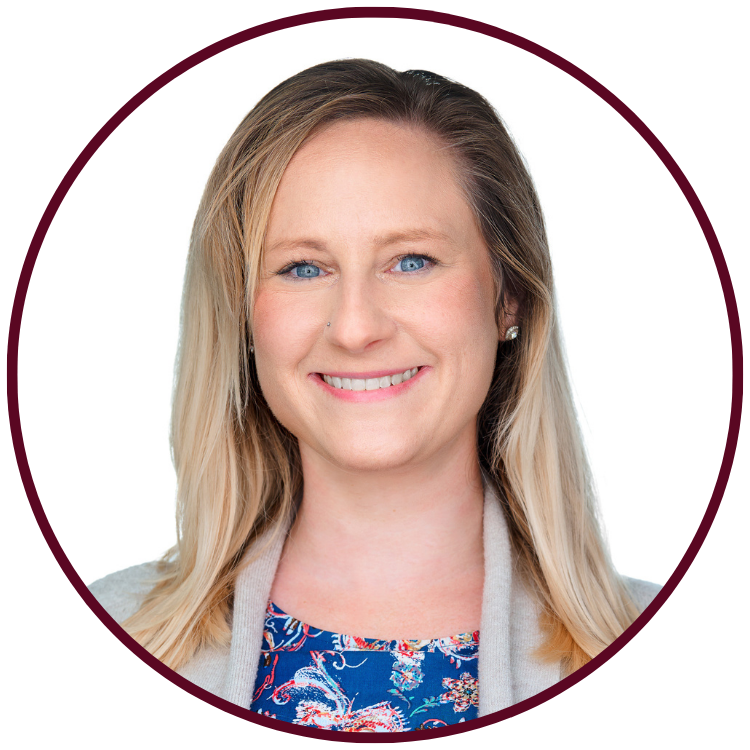
Dr. Samantha Riggleman
Applied Behavior Analysis Program Chair
Most graduates of the ABA program will go on to take the Board-Certified Behavior Analyst (BCBA) certification exam. What are the requirements to take the exam, and how does the program prepare students for it?
To become a Board Certified Behavior Analyst (BCBA), you need to have completed verified coursework, earned a master’s degree, and have supervised field experience, which is completed separately from the program.
All of our quizzes and tests are written in a way that is very similar to the BCBA exam to help students familiarize themselves with the language that's used. We offer several BCBA test prep workshops for students as they go through the program, as well as an online course that has additional resources for students to explore on their own.
Loyola is also partnering with companies that exhibit high-quality, ethical ABA practice to offer students supervised fieldwork experiences that complement their coursework and prepare them for professional certification.
What are some examples of career paths that are available to graduates of Loyola’s ABA program?
Typically, students go on to either work in schools to support kids with autism and other exceptionalities in a K-12 setting, or they become behavior specialists that provide direct ABA services in home, clinical, community, or hospital settings. Those are the most common trajectories, but there are other opportunities that are available as well.
BCBAs also work in areas such as clinical mental health, school psychology, or supporting those with substance use disorders. Another area I find really interesting is behavioral sports psychology. Many professional sports teams will have a BCBA on staff to help increase performance using behavioral principles. Another area is organization behavior management, where companies will hire a BCBA to come in and look at how to increase workplace performance and satisfaction.
What advice would you give to someone considering a career in ABA?
Don’t feel like you have to limit yourself to working in clinics or exclusively with children with autism. The principles of ABA can be applied to any behavior change across individuals, abilities, and settings. What you learn in Loyola’s program prepares you to use behavioral science to make meaningful change in diverse contexts, from education and healthcare to business and community programs.
ABA is also a highly collaborative field. Practitioners often work alongside occupational therapists, physical therapists, speech-language pathologists, special educators, and other professionals. If you value teamwork, evidence-based practice, and helping people achieve meaningful outcomes, ABA is an incredibly rewarding career path.
Learn more about Loyola’s MEd in Applied Behavior Analysis program and contact Samantha Riggleman with questions.
By: Dylan Peterson
October, 2025
With the demand for professionals trained in Applied Behavior Analysis (ABA) on the rise, Loyola University Chicago’s new MEd in Applied Behavior Analysis program is preparing students to use evidence-based strategies to support meaningful behavior change and improve lives across a range of settings. In this Q&A, Samantha Riggleman, associate professor and ABA graduate program chair, shares insights into what students can expect in the program:
For those who may be unfamiliar with or new to the field, could you briefly describe what Applied Behavior Analysis is?
Applied Behavior Analysis (ABA) is the scientific application of learning principles to improve socially significant behaviors or simply the science of behavior. There are several different subspeciality areas, or threads under the behavior of ABA, in which one can practice. One thread is working with individuals who may or may not have a disability or a diagnosis to teach them behaviors that are going to increase their independence and their presence in their community.
ABA is not just for kids with autism or with disabilities. Any time that you're looking to change a behavior or increase new knowledge with kids, you probably are using a concept or principle from ABA. How many times do you hear parents say, “Eat your broccoli and then you can have ice cream?” That's using an ABA principle. In business, consultants use a lot of ABA principles to think about how to increase productivity or enhance task behaviors with their employees. There's a lot of different facets to ABA that can be applied to many fields.
What excites you most about bringing your expertise to Loyola and leading the new ABA program?
What really drew me to Loyola specifically is that I really believe in Loyola's mission—not only its Jesuit mission, but also its mission of providing high-quality content and experiences to our students so that they not only pass the BCBA exam but also go on to become leaders in the field.
Even though our program is online and asynchronous, we offer a great cohort model that gives students opportunities to connect with instructors and peers and participate in activities online and on campus together. Our cohort size is small—about 40 students per cohort and no more than 20 per class—to ensure that all students benefit from personalized support and high-quality instruction. Our students also have access to great research opportunities, whether online or in schools in Chicago and elsewhere.
Most graduates of the ABA program will go on to take the Board-Certified Behavior Analyst (BCBA) certification exam. What are the requirements to take the exam, and how does the program prepare students for it?
To become a Board Certified Behavior Analyst (BCBA), you need to have completed verified coursework, earned a master’s degree, and have supervised field experience, which is completed separately from the program.
All of our quizzes and tests are written in a way that is very similar to the BCBA exam to help students familiarize themselves with the language that's used. We offer several BCBA test prep workshops for students as they go through the program, as well as an online course that has additional resources for students to explore on their own.
Loyola is also partnering with companies that exhibit high-quality, ethical ABA practice to offer students supervised fieldwork experiences that complement their coursework and prepare them for professional certification.
What are some examples of career paths that are available to graduates of Loyola’s ABA program?
Typically, students go on to either work in schools to support kids with autism and other exceptionalities in a K-12 setting, or they become behavior specialists that provide direct ABA services in home, clinical, community, or hospital settings. Those are the most common trajectories, but there are other opportunities that are available as well.
BCBAs also work in areas such as clinical mental health, school psychology, or supporting those with substance use disorders. Another area I find really interesting is behavioral sports psychology. Many professional sports teams will have a BCBA on staff to help increase performance using behavioral principles. Another area is organization behavior management, where companies will hire a BCBA to come in and look at how to increase workplace performance and satisfaction.
What advice would you give to someone considering a career in ABA?
Don’t feel like you have to limit yourself to working in clinics or exclusively with children with autism. The principles of ABA can be applied to any behavior change across individuals, abilities, and settings. What you learn in Loyola’s program prepares you to use behavioral science to make meaningful change in diverse contexts, from education and healthcare to business and community programs.
ABA is also a highly collaborative field. Practitioners often work alongside occupational therapists, physical therapists, speech-language pathologists, special educators, and other professionals. If you value teamwork, evidence-based practice, and helping people achieve meaningful outcomes, ABA is an incredibly rewarding career path.
Learn more about Loyola’s MEd in Applied Behavior Analysis program and contact Samantha Riggleman with questions.
By: Dylan Peterson
October, 2025