
Preparing to Lead in Higher Education
Preparing to Lead in Higher Education
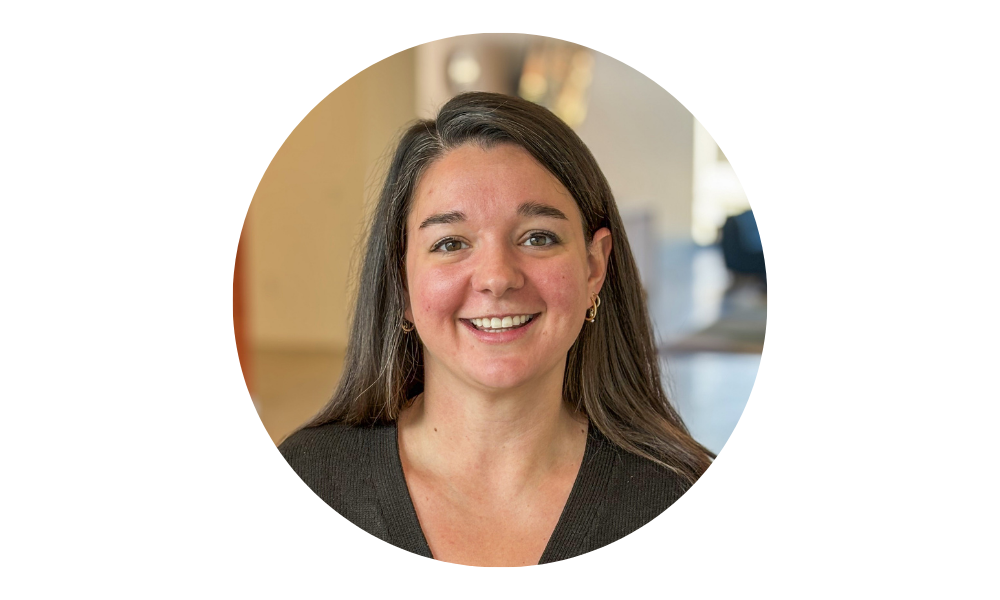
When Ann Knezetic enrolled in Loyola's EdD in Higher Education program, she already had over a decade of higher ed experience spanning recruitment, enrollment, and student affairs. The program, designed to prepare higher education professionals for executive-level administrative roles, was a natural next step in a wide-ranging and ambitious career.
 Pursuing an EdD in Higher Education
“I always knew I wanted to move up in higher education. My goal is to be a vice president at a university someday, and I knew a doctoral degree would be valued,” Knezetic explains. “I really debated between a PhD and an EdD, but I’m a practitioner by nature, and the EdD felt more manageable and aligned with my professional goals.”
Loyola stood out to Knezetic for its Jesuit identity. Growing up, her father worked at a Jesuit college, and she later earned her undergraduate degree at another Jesuit institution. But what truly drew her to the program was the faculty.
"Faculty are such an important consideration when looking at doctoral programs. I really appreciated their research, which is really about challenging status quos and thinking about our educational structures and how we live within them,” Knezetic explains. At the same time, “the faculty have a wide range of experiences, allowing them to challenge and mentor us in different ways."
Finding community and support
Knezetic, who is currently based in St. Louis, was also drawn to the program's flexible, fully online format, which has allowed her to pursue her doctorate remotely while sustainably managing her professional commitments. While navigating a fully online program requires intentional effort, she says the experience has been anchored by a tight-knit cohort that is both supportive and collaborative.
“My cohort members all have different identities and lived experiences, but we’re very close,” she says. “We have lively discussions, bounce ideas off each other, and regularly chat and check in to see how each other is doing. While the distance is there, we’ve really built a community that supports one another.”
Bridging theory and real-world experience
Given the diverse professional backgrounds of her peers, that sense of community and open dialogue has proven to be invaluable in an academic setting that challenges students to bring their real-world experience into the classroom. Whether engaging with concepts related to organizational theory or diversity and social justice, Knezetic has found that the program consistently provides her with fresh perspectives and new ways of framing her own professional experiences.
“Oftentimes, the program gives me new language to understand things that are happening in my own work. It also gives you a leadership perspective that you may not always see unless you're directly in a leadership role yourself,” she says.
Leading effectively in higher education
According to Knezetic, examining what it means to be a good leader in higher ed is a consistent theme that runs throughout the program. “It really reinforced that being a good leader is subjective. It depends on who's defining leadership and who's defining good,” she says. At the same time, “one of my key takeaways is that sometimes we only think about leadership through the lens of faculty and staff, but the most important considerations revolve around how you are centering and supporting students.”
That commitment to putting students first is reflected in her dissertation, which examines the experiences of students when they first enroll in community college. It’s an area she sees as critically under-researched, and one that’s informed both by her own professional experiences working at two-year institutions as well as her desire to amplify voices that are often overlooked.
“My dissertation, and really the whole program, has really reinforced how important it is to center student voices,” she says. “It’s easy to think about organizational structure, but that’s not how our students experience us. It’s so important for leaders to bridge that gap and be open to embracing radical ideas.”
To learn more about Loyola’s EdD in Higher Education program, visit our website or contact our Graduate & Professional Admission team with questions.
By: Dylan Peterson
March, 2026
When Ann Knezetic enrolled in Loyola's EdD in Higher Education program, she already had over a decade of higher ed experience spanning recruitment, enrollment, and student affairs. The program, designed to prepare higher education professionals for executive-level administrative roles, was a natural next step in a wide-ranging and ambitious career.
Pursuing an EdD in Higher Education
“I always knew I wanted to move up in higher education. My goal is to be a vice president at a university someday, and I knew a doctoral degree would be valued,” Knezetic explains. “I really debated between a PhD and an EdD, but I’m a practitioner by nature, and the EdD felt more manageable and aligned with my professional goals.”
Loyola stood out to Knezetic for its Jesuit identity. Growing up, her father worked at a Jesuit college, and she later earned her undergraduate degree at another Jesuit institution. But what truly drew her to the program was the faculty.
"Faculty are such an important consideration when looking at doctoral programs. I really appreciated their research, which is really about challenging status quos and thinking about our educational structures and how we live within them,” Knezetic explains. At the same time, “the faculty have a wide range of experiences, allowing them to challenge and mentor us in different ways."
Finding community and support
Knezetic, who is currently based in St. Louis, was also drawn to the program's flexible, fully online format, which has allowed her to pursue her doctorate remotely while sustainably managing her professional commitments. While navigating a fully online program requires intentional effort, she says the experience has been anchored by a tight-knit cohort that is both supportive and collaborative.
“My cohort members all have different identities and lived experiences, but we’re very close,” she says. “We have lively discussions, bounce ideas off each other, and regularly chat and check in to see how each other is doing. While the distance is there, we’ve really built a community that supports one another.”
Bridging theory and real-world experience
Given the diverse professional backgrounds of her peers, that sense of community and open dialogue has proven to be invaluable in an academic setting that challenges students to bring their real-world experience into the classroom. Whether engaging with concepts related to organizational theory or diversity and social justice, Knezetic has found that the program consistently provides her with fresh perspectives and new ways of framing her own professional experiences.
“Oftentimes, the program gives me new language to understand things that are happening in my own work. It also gives you a leadership perspective that you may not always see unless you're directly in a leadership role yourself,” she says.
Leading effectively in higher education
According to Knezetic, examining what it means to be a good leader in higher ed is a consistent theme that runs throughout the program. “It really reinforced that being a good leader is subjective. It depends on who's defining leadership and who's defining good,” she says. At the same time, “one of my key takeaways is that sometimes we only think about leadership through the lens of faculty and staff, but the most important considerations revolve around how you are centering and supporting students.”
That commitment to putting students first is reflected in her dissertation, which examines the experiences of students when they first enroll in community college. It’s an area she sees as critically under-researched, and one that’s informed both by her own professional experiences working at two-year institutions as well as her desire to amplify voices that are often overlooked.
“My dissertation, and really the whole program, has really reinforced how important it is to center student voices,” she says. “It’s easy to think about organizational structure, but that’s not how our students experience us. It’s so important for leaders to bridge that gap and be open to embracing radical ideas.”
To learn more about Loyola’s EdD in Higher Education program, visit our website or contact our Graduate & Professional Admission team with questions.
By: Dylan Peterson
March, 2026