
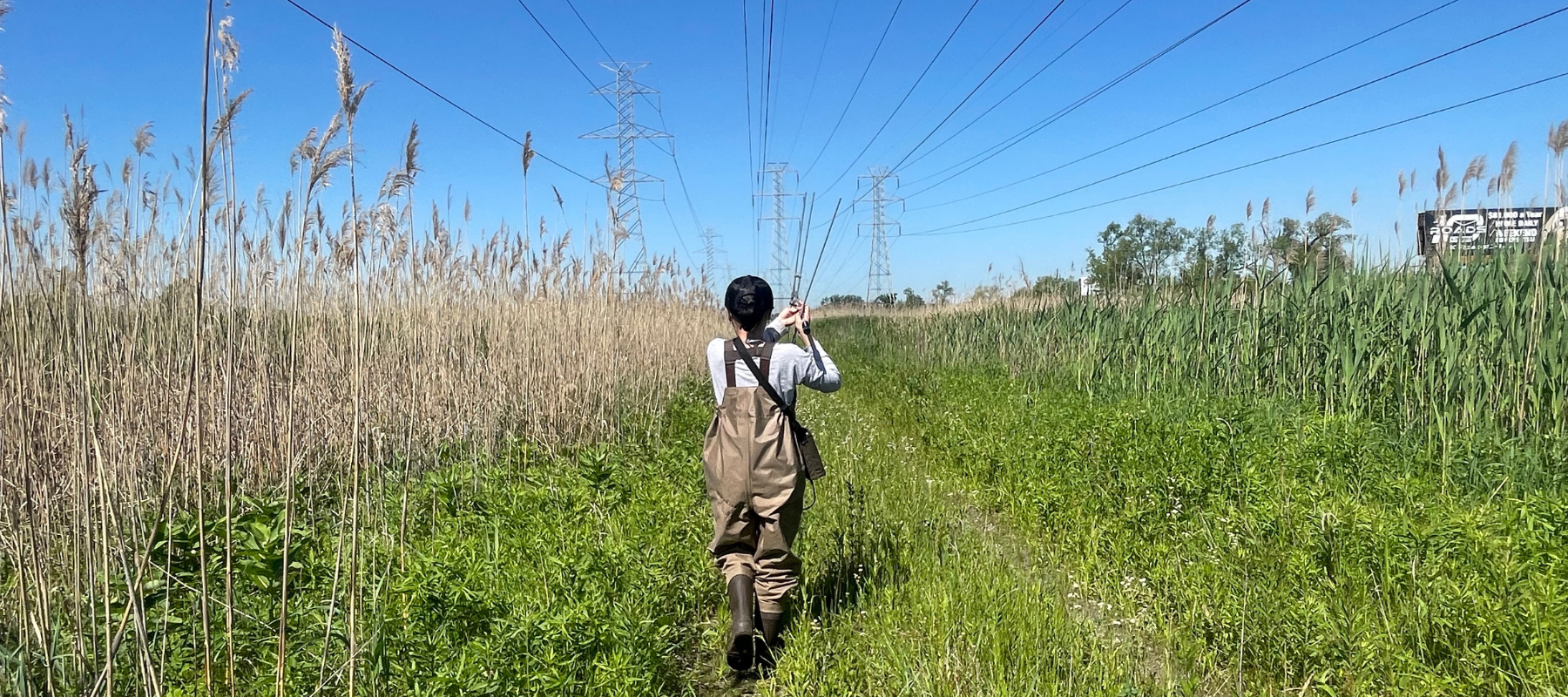
Pre-service Teacher Research Experience in Biodiversity Studies
Research Experience for Teachers
With generous support from NSF, Loyola University Chicago is thrilled offer a Summer Research Internship Program for future high school science and math teachers.
This unique opportunity is designed for teacher candidates from any school who want to deepen their content expertise, strengthen their inquiry-based teaching, and experience the excitement of real scientific discovery.
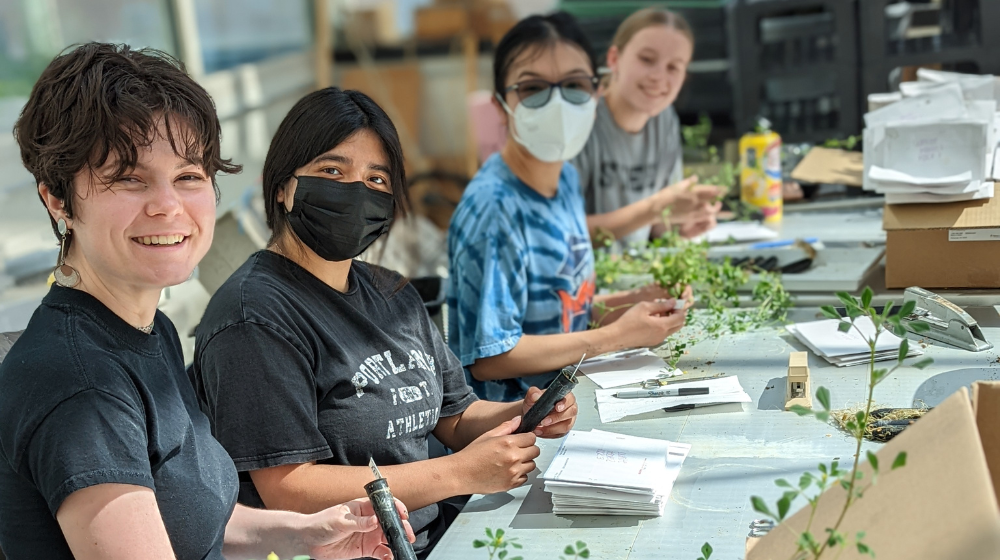
Over the 10-week paid summer internship, participants will join a Loyola faculty research lab as full-time members of an active research team. Interns will gain first-hand experience with authentic scientific inquiry—an essential foundation for bringing meaningful, investigation-driven learning into the classroom.
In addition to hands-on research, biodiversity interns will take part in targeted professional learning sessions on STEM education. These workshops will help interns translate their research experience into engaging, inquiry-rich classroom practices they can use throughout their teaching careers.
Biodiversity Studies Summer Internship
The focus of this program is Biodiversity in an urban setting. The loss of biodiversity is one of the biggest challenges of our time and thus biodiversity science is one of the fastest growing and most integrative fields in all of science and incorporates questions and methodologies from a range of disciplines including biology, chemistry, geology, computer science, math, and statistics. Questions: Contact Dr. Michael Grillo, mgrillo1@luc.edu.
The Team
Mike Grillo, PhD, Biology
Lara Smetana, PhD, Science Education
Katherine Gross, PhD, External Evaluator
Betsy Leong, Graduate Research Assistant
Loyola Science Faculty Mentors: Participating laboratories may vary from year to year.
Below are a few examples of past science faculty mentors and the research projects their pre-RET student conducted.
| Researcher | Area of Research | Example of Preservice Teacher Research Project |
|---|---|---|
| Michael Grillo | Evolution of plant diversity, plant-microbe coevolution | Impacts of urbanization on plant host associated microbiome diversity |
| John Kelly | Ecology and diversity of aquatic microbial communities | Effects of pharmaceuticals on microbial community diversity in urban streams |
| Thomas Sanger | Morphological diversity and evolution of reptiles | Urban heat islands: Embryonic thermal stress and its risk to 21st century lizard diversity |
| Timothy Hoellein | Aquatic ecology and ecological impacts of microplastic | The effect of flooding on the abundance and distribution of plastic litter in urban streams |
Program Details
Eligibility:
- Participants should be currently pursuing or should have recently earned a Bachelor’s degree in any field of Science or Math, and have demonstrated interest in a career teaching secondary (high school) science or math.
- Participants must be US Citizens, US Nationals, or US Permanent Resident Aliens to be eligible for funding through this National Science Foundation program.
- open to students from Loyola as well as any other US university
What: Full time summer research fellowships
Who: STEM majors interested in pursuing a degree in teaching high school science
Where: Loyola University of Chicago’s Lakeshore Campus in Rogers Park
When: Summer (full time with some schedule flexibility).
Schedules are dependent on the specific research project and are arranged by the pre-RET and research mentor.
Stipend: $6,000 stipend plus funds to attend a conference
Questions: Contact Dr. Michael Grillo, mgrillo1@luc.edu
Application Details
We review applications on a rolling basis starting in December, so please apply early to receive full consideration.
Application Link: Loyola pre-RET Application
Questions: Contact Dr. Michael Grillo, mgrillo1@luc.edu
Education and Biology collaboration secures National Science Foundation funding
Preparing high-quality secondary science and mathematics teachers
The program exposes future teachers to research and provides first-hand experience with the scientific process to enhance their preparedness and ability to effectively teach science in the classroom. The focus of this program is biodiversity in an urban setting.
Learn More10
Students will work full time over 10 weeks in a Loyola faculty member's lab
$6,000
Participants will receive a $6,000 stipend
For this program, both graduate and undergraduate students will work full time over 10 weeks in a Loyola faculty members lab during the summer (May-August) and will participate in weekly professional development sessions. Participants will receive a $6,000 stipend and will have opportunities to attend a professional conference.
With generous support from NSF, Loyola University Chicago is thrilled offer a Summer Research Internship Program for future high school science and math teachers.
This unique opportunity is designed for teacher candidates from any school who want to deepen their content expertise, strengthen their inquiry-based teaching, and experience the excitement of real scientific discovery.
Over the 10-week paid summer internship, participants will join a Loyola faculty research lab as full-time members of an active research team. Interns will gain first-hand experience with authentic scientific inquiry—an essential foundation for bringing meaningful, investigation-driven learning into the classroom.
In addition to hands-on research, biodiversity interns will take part in targeted professional learning sessions on STEM education. These workshops will help interns translate their research experience into engaging, inquiry-rich classroom practices they can use throughout their teaching careers.
Biodiversity Studies Summer Internship
The focus of this program is Biodiversity in an urban setting. The loss of biodiversity is one of the biggest challenges of our time and thus biodiversity science is one of the fastest growing and most integrative fields in all of science and incorporates questions and methodologies from a range of disciplines including biology, chemistry, geology, computer science, math, and statistics. Questions: Contact Dr. Michael Grillo, mgrillo1@luc.edu.
For this program, both graduate and undergraduate students will work full time over 10 weeks in a Loyola faculty members lab during the summer (May-August) and will participate in weekly professional development sessions. Participants will receive a $6,000 stipend and will have opportunities to attend a professional conference.