
Building Bridges Through Bilingual Social Work
Building bridges through bilingual social work
For many Latine, immigrant, and refugee communities in the United States, access to quality mental health care remains limited by language and cultural barriers, mistrust in social services, and other inequitable circumstances. In response, Loyola University Chicago’s Online Bilingual Master of Social Work (MSW) program is preparing a new generation of compassionate, culturally responsive social workers capable of navigating systemic barriers and providing critical care in both English and Spanish.
Learning in English and Spanish
As one of the first programs of its kind in the US, the Online Bilingual MSW employs an innovative bilingual format that encourages students to refine and expand their language skills. Led by bilingual and bicultural faculty and supported by a student community largely composed of native Spanish speakers, students learn from and alongside a community that mirrors the populations they are preparing to serve.
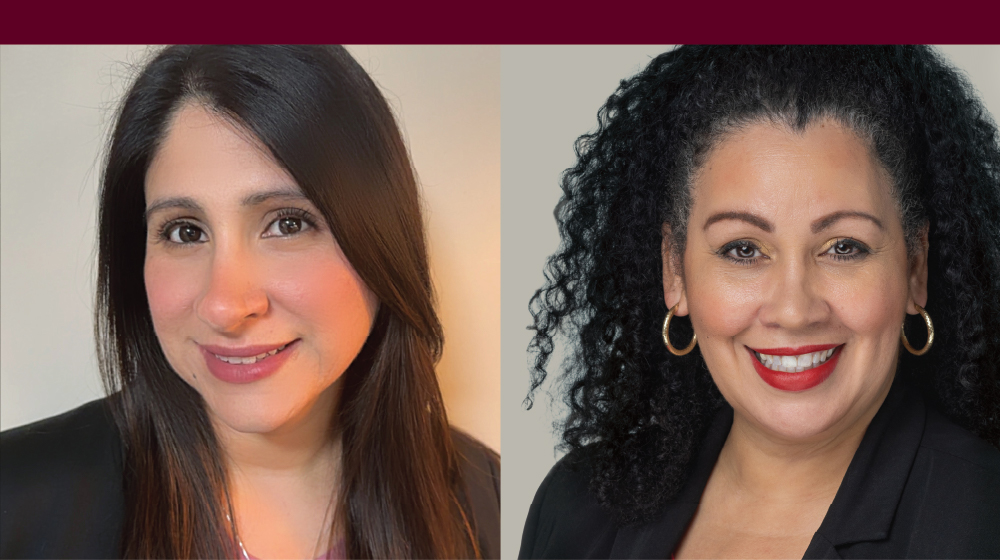
“The beauty of having classes in both Spanish and English is that students can turn in their assignments in whichever language they prefer,” says the program’s assistant director Maribel Lopez. “We encourage students who are strong in one language to submit their work in the other to ensure they are prepared to use both languages.”
For students such as Kryztal Vargas, the program’s bilingual structure was a major draw. As a native Spanish speaker, Vargas had long wanted to earn a master’s degree in social work but had been hesitant about studying in English until she discovered Loyola’s program.
“I really value the ability to learn in my first language while simultaneously developing my professional vocabulary in English as well,” Vargas explains. “We have discussions in both languages in class, which has allowed me to engage with different cultural perspectives and feel better prepared to work with diverse communities.”
“We have students from a wide array of Latin American countries. How we say something in Puerto Rico is not necessarily the same as how it might be said in Mexico, Colombia, or Ecuador,” adds Lopez. “Our program uses a cohort model that really allows students to support one another and embrace that richness of culture and diversity.”
Culturally sensitive care
Beyond simply preparing students to work professionally in both languages, the program places a strong emphasis on intercultural sensitivity and humility, ensuring that students are equipped to address the unique barriers that prevent Latine, immigrant, and refugee communities from accessing quality care.
“It’s all about validation and acceptance,” says Lopez. “It can be so hard to grasp the many complexities experienced when someone from a different culture is immersed in a new environment, but our goal is to provide students with the tools needed to support diverse populations with purpose, compassion, and respect.”
Building community in an online format
As a fully online program, the Online Bilingual MSW offers an innovative and flexible format that allows students to balance coursework with their personal and professional commitments. Yet despite its virtual setting, faculty are intentional about fostering a strong sense of community and connection.
“The professors create a trusting and collaborative environment that has made me feel like I’m part of a united and engaged community,” says Vargas. “In my cohort, we maintain daily contact via a WhatsApp group. We share ideas and assist with assignments, clarify doubts, and provide mutual support.”
Gaining real-world experience
Online Bilingual MSW students are required to complete two internships that will prepare them to integrate classroom theory into real-world practice. Through Loyola, they gain access to opportunities at more than 200 partner agencies across the country and receive personalized guidance and support through every step of the placement process.
Currently, Vargas is completing an internship in the client support services department at Legal Aid Chicago, where she supports Spanish-speaking clients by offering social and emotional support and connecting them with essential resources such as food pantries and other community services.
“Throughout my internship, I’ve been applying what I’ve learned in class in real-world situations. This experience has improved my communication and empathy skills and has intensified my aspiration to work in environments where I can provide integrated social and emotional support to empower others,” Vargas says.
“This is not just a career, it’s a calling at the forefront of hope, justice, and healing,” says Lopez. “At Loyola, we are here to walk alongside you as you work toward achieving your goals and will prepare you to carry forward into your career with purpose and compassion.”
Building bridges through bilingual social work
For many Latine, immigrant, and refugee communities in the United States, access to quality mental health care remains limited by language and cultural barriers, mistrust in social services, and other inequitable circumstances. In response, Loyola University Chicago’s Online Bilingual Master of Social Work (MSW) program is preparing a new generation of compassionate, culturally responsive social workers capable of navigating systemic barriers and providing critical care in both English and Spanish.
Learning in English and Spanish
As one of the first programs of its kind in the US, the Online Bilingual MSW employs an innovative bilingual format that encourages students to refine and expand their language skills. Led by bilingual and bicultural faculty and supported by a student community largely composed of native Spanish speakers, students learn from and alongside a community that mirrors the populations they are preparing to serve.
“The beauty of having classes in both Spanish and English is that students can turn in their assignments in whichever language they prefer,” says the program’s assistant director Maribel Lopez. “We encourage students who are strong in one language to submit their work in the other to ensure they are prepared to use both languages.”
For students such as Kryztal Vargas, the program’s bilingual structure was a major draw. As a native Spanish speaker, Vargas had long wanted to earn a master’s degree in social work but had been hesitant about studying in English until she discovered Loyola’s program.
“I really value the ability to learn in my first language while simultaneously developing my professional vocabulary in English as well,” Vargas explains. “We have discussions in both languages in class, which has allowed me to engage with different cultural perspectives and feel better prepared to work with diverse communities.”
“We have students from a wide array of Latin American countries. How we say something in Puerto Rico is not necessarily the same as how it might be said in Mexico, Colombia, or Ecuador,” adds Lopez. “Our program uses a cohort model that really allows students to support one another and embrace that richness of culture and diversity.”
Culturally sensitive care
Beyond simply preparing students to work professionally in both languages, the program places a strong emphasis on intercultural sensitivity and humility, ensuring that students are equipped to address the unique barriers that prevent Latine, immigrant, and refugee communities from accessing quality care.
“It’s all about validation and acceptance,” says Lopez. “It can be so hard to grasp the many complexities experienced when someone from a different culture is immersed in a new environment, but our goal is to provide students with the tools needed to support diverse populations with purpose, compassion, and respect.”
Building community in an online format
As a fully online program, the Online Bilingual MSW offers an innovative and flexible format that allows students to balance coursework with their personal and professional commitments. Yet despite its virtual setting, faculty are intentional about fostering a strong sense of community and connection.
“The professors create a trusting and collaborative environment that has made me feel like I’m part of a united and engaged community,” says Vargas. “In my cohort, we maintain daily contact via a WhatsApp group. We share ideas and assist with assignments, clarify doubts, and provide mutual support.”
Gaining real-world experience
Online Bilingual MSW students are required to complete two internships that will prepare them to integrate classroom theory into real-world practice. Through Loyola, they gain access to opportunities at more than 200 partner agencies across the country and receive personalized guidance and support through every step of the placement process.
Currently, Vargas is completing an internship in the client support services department at Legal Aid Chicago, where she supports Spanish-speaking clients by offering social and emotional support and connecting them with essential resources such as food pantries and other community services.
“Throughout my internship, I’ve been applying what I’ve learned in class in real-world situations. This experience has improved my communication and empathy skills and has intensified my aspiration to work in environments where I can provide integrated social and emotional support to empower others,” Vargas says.
“This is not just a career, it’s a calling at the forefront of hope, justice, and healing,” says Lopez. “At Loyola, we are here to walk alongside you as you work toward achieving your goals and will prepare you to carry forward into your career with purpose and compassion.”