
Bridging Business and Sustainability: Inside Loyola’s Net Impact Chapter
By Danielle Hurtt
For students interested in sustainability, the path forward is not always clearly defined. While environmental science programs provide critical knowledge, opportunities to explore how sustainability fits into different industries can be limited. Loyola University Chicago’s Net Impact chapter is working to change that.
Net Impact is a national organization focused on sustainable business, with more than 400 chapters across the United States. Loyola’s undergraduate chapter brings that mission to campus with a specific focus: connecting students in the School of Environmental Sustainability (SES) with those in the Quinlan School of Business.
“Our goal is really to build a bridge between Quinlan and SES,” said Anna Shenai, president of Loyola’s Net Impact chapter. “But we’re open to any and all majors—anyone who wants to have an environmental impact in their career.”
Unlike many student organizations, Net Impact does not meet weekly or maintain a traditional general body. Instead, the group prioritizes hosting a small number of high-impact events each semester, typically three to four, designed to support students’ professional development and career exploration.
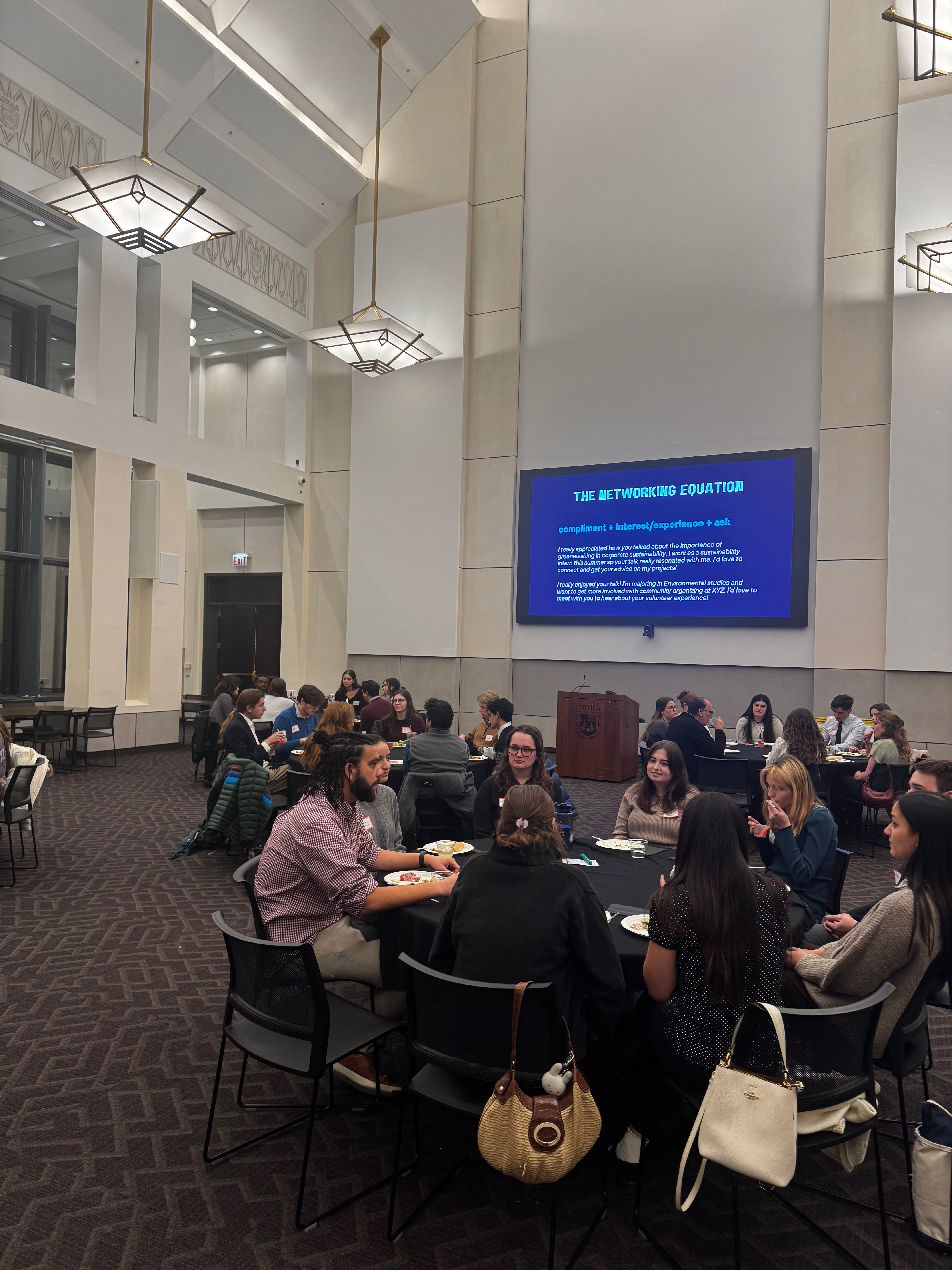
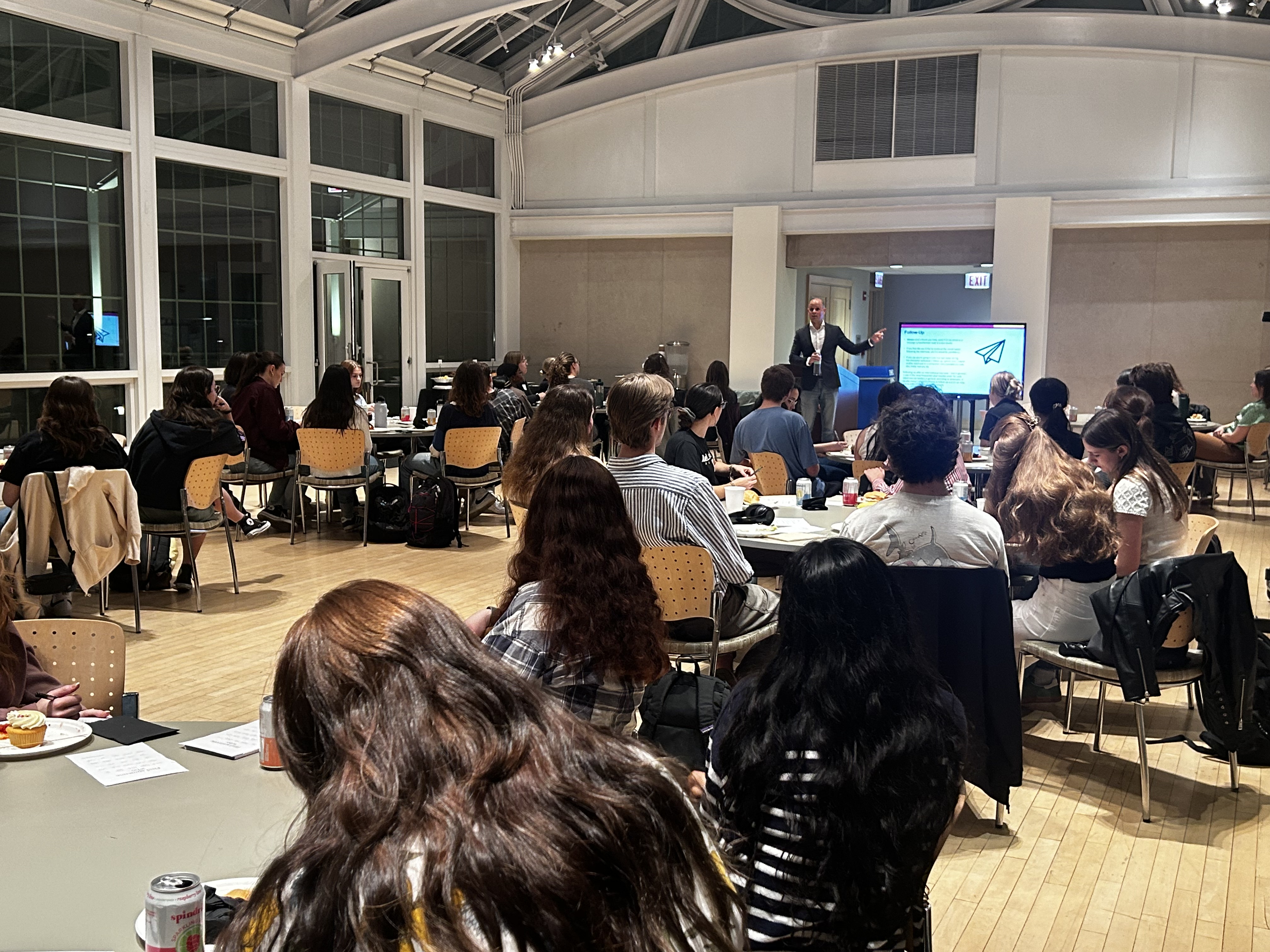
Many of these events take the form of hands-on workshops. Past sessions have focused on building LinkedIn profiles, strengthening resumes, and navigating internship and job applications. During these workshops, students actively work on their materials while receiving guidance and feedback, making the experience both practical and immediately useful. In addition to skill-based sessions, Net Impact also hosts networking events. Majority of network events often feature Loyola alumni allowing students the opportunity to hear directly from recent graduates about their experiences entering the workforce, particularly in sustainability-related roles.
“We’re really lucky to have a strong alumni network,” Shenai said. “A lot of them are recent graduates, so they can give really relevant advice about navigating the job market and what those first entry-level jobs look like.”
For Shenai, an environmental science major with a concentration in environmental health and a second major in public health, Net Impact has also been a way to expand her own perspective. While many assume she is part of the business school due to her role, she emphasized that her background is firmly rooted in environmental studies.
Being part of Net Impact, she explained, has helped her better understand how sustainability intersects with other fields, and how to communicate those ideas effectively within various fields.
“In SES, it can sometimes feel like an echo chamber,” Shenai said. “We all understand these issues, but being able to talk about sustainability with people who don’t have that background is really important.”
That ability to communicate across disciplines is central to the organization’s mission. By bringing together students from different academic backgrounds, Net Impact helps break down barriers and encourages a more holistic understanding of sustainability in the real world.
The organization also addresses a gap that many students experience during their undergraduate careers: a lack of structured time for professional development. While coursework provides a strong academic foundation, opportunities to reflect on career goals and prepare for the job market are often limited.
“Finding time to think about your career can be really hard when you have so much else going on,” Shenai said. “Even just spending an hour working on your resume or thinking about what you want can make a big difference.”
Net Impact aims to create that space. Through its events, the organization encourages students to slow down, reflect, and take actionable steps toward their future careers.
Looking ahead, the group is also focused on growth. With several current e-board members preparing to graduate, Net Impact is actively recruiting new leaders to continue building the organization and expanding its reach; particularly among business students at Quinlan, who can sometimes be difficult to engage due to the physical and academic separation between campuses.
Despite these challenges, Shenai remains optimistic about the organization’s future and its ability to connect students across disciplines.
For students unsure of how to translate their interests in sustainability into a career, Net Impact offers a clear starting point.
“It’s really just about taking that time to focus on your professional development,” Shenai said. “That’s what we try to provide.”
As sustainability continues to shape industries across the globe, organizations like Net Impact are helping Loyola students prepare to not just enter the workforce, but to make a meaningful impact within it.
By Danielle Hurtt
For students interested in sustainability, the path forward is not always clearly defined. While environmental science programs provide critical knowledge, opportunities to explore how sustainability fits into different industries can be limited. Loyola University Chicago’s Net Impact chapter is working to change that.
Net Impact is a national organization focused on sustainable business, with more than 400 chapters across the United States. Loyola’s undergraduate chapter brings that mission to campus with a specific focus: connecting students in the School of Environmental Sustainability (SES) with those in the Quinlan School of Business.
“Our goal is really to build a bridge between Quinlan and SES,” said Anna Shenai, president of Loyola’s Net Impact chapter. “But we’re open to any and all majors—anyone who wants to have an environmental impact in their career.”
Unlike many student organizations, Net Impact does not meet weekly or maintain a traditional general body. Instead, the group prioritizes hosting a small number of high-impact events each semester, typically three to four, designed to support students’ professional development and career exploration.
Many of these events take the form of hands-on workshops. Past sessions have focused on building LinkedIn profiles, strengthening resumes, and navigating internship and job applications. During these workshops, students actively work on their materials while receiving guidance and feedback, making the experience both practical and immediately useful. In addition to skill-based sessions, Net Impact also hosts networking events. Majority of network events often feature Loyola alumni allowing students the opportunity to hear directly from recent graduates about their experiences entering the workforce, particularly in sustainability-related roles.
“We’re really lucky to have a strong alumni network,” Shenai said. “A lot of them are recent graduates, so they can give really relevant advice about navigating the job market and what those first entry-level jobs look like.”
For Shenai, an environmental science major with a concentration in environmental health and a second major in public health, Net Impact has also been a way to expand her own perspective. While many assume she is part of the business school due to her role, she emphasized that her background is firmly rooted in environmental studies.
Being part of Net Impact, she explained, has helped her better understand how sustainability intersects with other fields, and how to communicate those ideas effectively within various fields.
“In SES, it can sometimes feel like an echo chamber,” Shenai said. “We all understand these issues, but being able to talk about sustainability with people who don’t have that background is really important.”
That ability to communicate across disciplines is central to the organization’s mission. By bringing together students from different academic backgrounds, Net Impact helps break down barriers and encourages a more holistic understanding of sustainability in the real world.
The organization also addresses a gap that many students experience during their undergraduate careers: a lack of structured time for professional development. While coursework provides a strong academic foundation, opportunities to reflect on career goals and prepare for the job market are often limited.
“Finding time to think about your career can be really hard when you have so much else going on,” Shenai said. “Even just spending an hour working on your resume or thinking about what you want can make a big difference.”
Net Impact aims to create that space. Through its events, the organization encourages students to slow down, reflect, and take actionable steps toward their future careers.
Looking ahead, the group is also focused on growth. With several current e-board members preparing to graduate, Net Impact is actively recruiting new leaders to continue building the organization and expanding its reach; particularly among business students at Quinlan, who can sometimes be difficult to engage due to the physical and academic separation between campuses.
Despite these challenges, Shenai remains optimistic about the organization’s future and its ability to connect students across disciplines.
For students unsure of how to translate their interests in sustainability into a career, Net Impact offers a clear starting point.
“It’s really just about taking that time to focus on your professional development,” Shenai said. “That’s what we try to provide.”
As sustainability continues to shape industries across the globe, organizations like Net Impact are helping Loyola students prepare to not just enter the workforce, but to make a meaningful impact within it.