
manoomin
Drones Help Scientists Track Declining Wild Rice in the Great Lakes
Researchers have found that drones equipped with specialized cameras could help scientists more efficiently monitor and protect northern wild rice, a culturally and ecologically important plant that is under threat in the Great Lakes region.
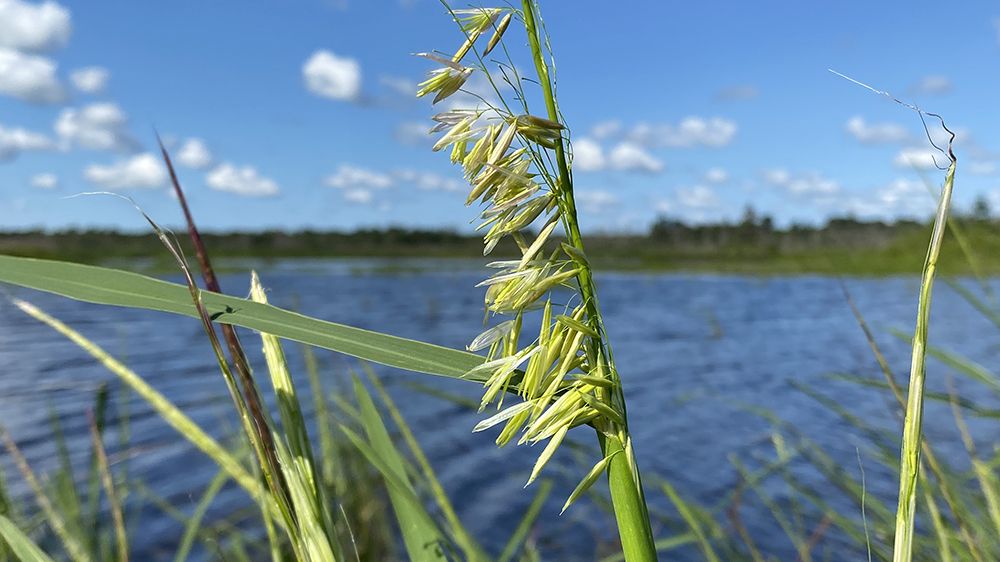
Wild rice, or Manoomin, is an ecologically and culturally important plant in the Great Lakes region.
Northern wild rice, known scientifically as Zizania palustris and called Manoomin by many Indigenous communities, is native to lakes and wetlands across the Upper Midwest. The plant holds deep cultural significance for the Anishinaabe people and provides food for wildlife, including migrating waterfowl. But in Michigan, only about 1% of historic wild rice beds remain due to habitat loss, pollution, development, and climate change.
Monitoring the plant’s distribution has traditionally required researchers to travel by boat and manually survey wetlands—an approach that can be slow and difficult in remote areas. Shane Lishawa, a senior research associate at Loyola University Chicago’s School of Environmental Sustainability, was part of a research team that found that uncrewed aerial systems (UAS), or drones, could provide a faster, more efficient solution. Easier access to data about the plant’s distribution would be valuable for those working to conserve and restore wild rice beds.
“Ultimately, we are working toward developing a tool to aid Indigenous communities and other managers in their efforts to steward Manoomin populations. If managers are able to more quickly and accurately assess the health of their Manoomin beds, this is a win for human communities and aquatic ecosystems across the Great Lakes region,” said Lishawa.
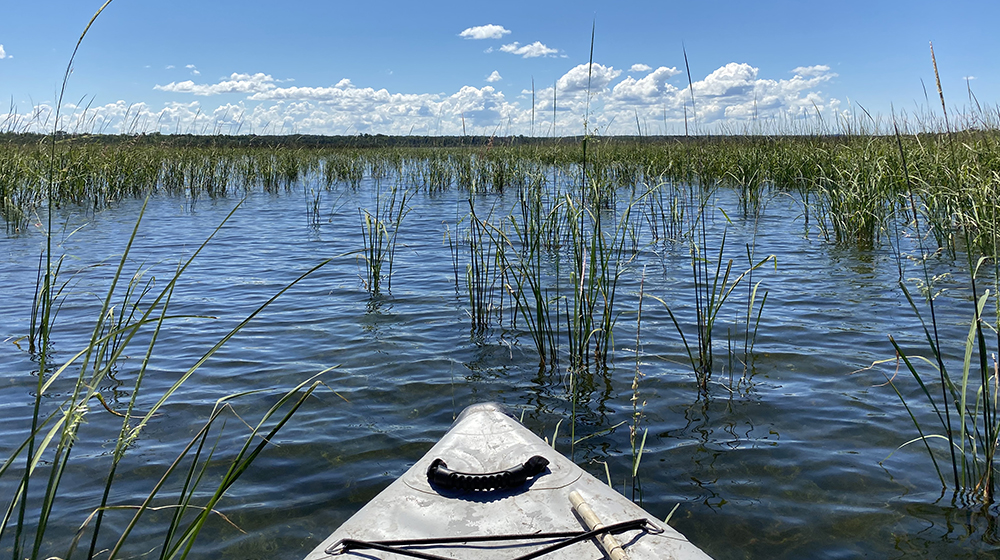
Monitoring wild rice distribution has traditionally required researchers to travel through wetlands by boat.
In the study, researchers flew a drone over French Farm Lake in northern Michigan, capturing high-resolution images with a multispectral camera that records several types of light, including wavelengths invisible to the human eye. Post-processing software enabled the team to calculate vegetation height and other metrics from the imagery. They analyzed the data to determine how to distinguish wild rice from other wetland plants such as bulrush, pickerelweed, and water lilies. The team tested a variety of methods of identifying wild rice within mixed vegetation and compared the accuracy of each method to findings from ground surveys of the plant populations.
The results suggest drones could become an important tool for conservation groups and Indigenous nations working to protect and restore wild rice habitats. By covering large areas quickly and at relatively low cost, drone surveys could help identify where wild rice still grows and where restoration efforts could succeed.
Researchers say the next step is to test their methods across other lakes and wetlands in the Upper Midwest. In the longer term, they aim to develop a tool that would make it easier for any natural resource manager with access to a drone to analyze aerial images and identify wild rice populations. If successful, the technology could support broader restoration projects aimed at protecting Manoomin—an essential cultural and ecological resource in the Great Lakes region.
by Stephanie Folk
March 2026
Northern wild rice, known scientifically as Zizania palustris and called Manoomin by many Indigenous communities, is native to lakes and wetlands across the Upper Midwest. The plant holds deep cultural significance for the Anishinaabe people and provides food for wildlife, including migrating waterfowl. But in Michigan, only about 1% of historic wild rice beds remain due to habitat loss, pollution, development, and climate change.
Monitoring the plant’s distribution has traditionally required researchers to travel by boat and manually survey wetlands—an approach that can be slow and difficult in remote areas. Shane Lishawa, a senior research associate at Loyola University Chicago’s School of Environmental Sustainability, was part of a research team that found that uncrewed aerial systems (UAS), or drones, could provide a faster, more efficient solution. Easier access to data about the plant’s distribution would be valuable for those working to conserve and restore wild rice beds.
“Ultimately, we are working toward developing a tool to aid Indigenous communities and other managers in their efforts to steward Manoomin populations. If managers are able to more quickly and accurately assess the health of their Manoomin beds, this is a win for human communities and aquatic ecosystems across the Great Lakes region,” said Lishawa.
In the study, researchers flew a drone over French Farm Lake in northern Michigan, capturing high-resolution images with a multispectral camera that records several types of light, including wavelengths invisible to the human eye. Post-processing software enabled the team to calculate vegetation height and other metrics from the imagery. They analyzed the data to determine how to distinguish wild rice from other wetland plants such as bulrush, pickerelweed, and water lilies. The team tested a variety of methods of identifying wild rice within mixed vegetation and compared the accuracy of each method to findings from ground surveys of the plant populations.
The results suggest drones could become an important tool for conservation groups and Indigenous nations working to protect and restore wild rice habitats. By covering large areas quickly and at relatively low cost, drone surveys could help identify where wild rice still grows and where restoration efforts could succeed.
Researchers say the next step is to test their methods across other lakes and wetlands in the Upper Midwest. In the longer term, they aim to develop a tool that would make it easier for any natural resource manager with access to a drone to analyze aerial images and identify wild rice populations. If successful, the technology could support broader restoration projects aimed at protecting Manoomin—an essential cultural and ecological resource in the Great Lakes region.
by Stephanie Folk
March 2026