
Environmental Gentrification Research
Research points to more inclusive pathways to greener cities
Efforts to clean up pollution and expand urban green spaces sometimes face pushback from community members who fear that such projects will drive up housing costs and displace long-term residents—particularly people of color, low-income families, and older adults. Researchers at Loyola University Chicago’s School of Environmental Sustainability are exploring how cities can create a healthier, greener environment without driving gentrification. Their recent work offers insights for balancing sustainability and social equity.
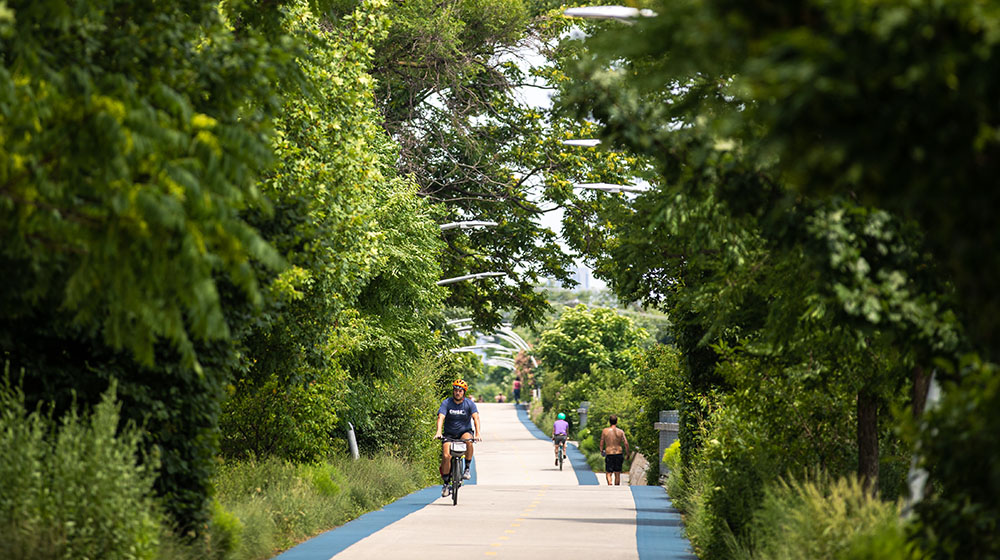
The 606 is an elevated trail that connects the Wicker Park, Bucktown, Logan Square, and Humboldt Park neighborhoods of Chicago. Construction of the trail raised concerns about environmental gentrification. In previous studies, Loyola researchers examined equity issues related to the project.
Exploring the economic impacts of urban green spaces
SES Associate Professor Richard (Max) Melstrom, PhD, collaborated with Jarron VanCeylon, PhD, of Bowdoin College to study the economic impacts of developing greenways in major cities.
Their study focused on whether large greenway projects drive gentrification by increasing housing demand and displacing nearby residents. The researchers analyzed data surrounding a 22-mile greenway under construction in Atlanta—a project designed to connect neighborhoods with new trails and parks.
Melstrom and VanCeylon found that housing demand and prices increased around the greenway corridor, but this occurred primarily before construction began. This suggests that, in some cases, greenways can be a symptom of gentrification rather than its primary cause.
From a policy perspective, the work indicates a need for alternative approaches to combating gentrification while ensuring that communities can benefit from green spaces.
Developing more equitable planning processes
SES Associate Professor Tania Schusler, PhD, and Amy Krings, PhD, of Ohio State University examined how cities can make environmental improvements without unintentionally deepening racial and economic inequities. Through 27 in-depth interviews with community organizers, planners, housing specialists, and environmental advocates, the researchers identified practical strategies for equitable environmental revitalization.
Five key principles emerged:
- Involve residents early and often. Give communities real influence over planning and decisions, rather than imposing top-down plans.
- Make engagement inclusive and fair. Seek input from residents who are often left out and compensate them for their time and expertise.
- Connect environmental goals with social priorities. Link greening efforts to affordable housing, local jobs, and public health.
- Confront inequities directly. Identify and address structural racism and other systemic barriers in planning processes.
- Coordinate action across levels of government. Align local, state, and federal policies to prevent displacement and ensure lasting impact.
The researchers emphasize that community-driven, inclusive planning—where power and resources are shared fairly—is essential for building greener, more just cities.
by Stephanie Folk
October 2025
Exploring the economic impacts of urban green spaces
SES Associate Professor Richard (Max) Melstrom, PhD, collaborated with Jarron VanCeylon, PhD, of Bowdoin College to study the economic impacts of developing greenways in major cities.
Their study focused on whether large greenway projects drive gentrification by increasing housing demand and displacing nearby residents. The researchers analyzed data surrounding a 22-mile greenway under construction in Atlanta—a project designed to connect neighborhoods with new trails and parks.
Melstrom and VanCeylon found that housing demand and prices increased around the greenway corridor, but this occurred primarily before construction began. This suggests that, in some cases, greenways can be a symptom of gentrification rather than its primary cause.
From a policy perspective, the work indicates a need for alternative approaches to combating gentrification while ensuring that communities can benefit from green spaces.
Developing more equitable planning processes
SES Associate Professor Tania Schusler, PhD, and Amy Krings, PhD, of Ohio State University examined how cities can make environmental improvements without unintentionally deepening racial and economic inequities. Through 27 in-depth interviews with community organizers, planners, housing specialists, and environmental advocates, the researchers identified practical strategies for equitable environmental revitalization.
Five key principles emerged:
- Involve residents early and often. Give communities real influence over planning and decisions, rather than imposing top-down plans.
- Make engagement inclusive and fair. Seek input from residents who are often left out and compensate them for their time and expertise.
- Connect environmental goals with social priorities. Link greening efforts to affordable housing, local jobs, and public health.
- Confront inequities directly. Identify and address structural racism and other systemic barriers in planning processes.
- Coordinate action across levels of government. Align local, state, and federal policies to prevent displacement and ensure lasting impact.
The researchers emphasize that community-driven, inclusive planning—where power and resources are shared fairly—is essential for building greener, more just cities.
by Stephanie Folk
October 2025