
Kristina Tsakos
Loyola alum helps restore habitats nationwide
A 2023 Loyola alum brings her passion for conservation and restoration to large-scale mitigation projects across the country.
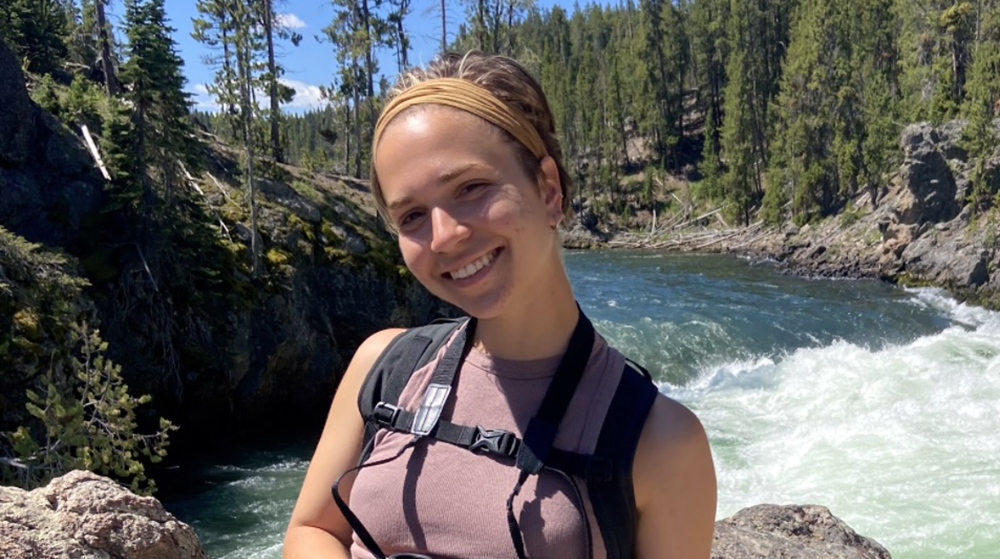
Kristina Tsakos helps conserve and restore habitat across the United States as an operations manager at Magnolia, an environmental mitigation company.
When Kristina Tsakos (BS ’23) arrived at Loyola University Chicago, she knew she wanted to major in environmental science, and she was confident that the School of Environmental Sustainability (SES) was the ideal place to study the complex interactions between people and the natural world. Today, she helps conserve and restore habitat across the United States as an operations manager at Magnolia, an environmental mitigation company.
Building a foundation for success
Tsakos credits much of her professional success to the foundation she built at Loyola. She said her career interests came into focus through her work as an undergraduate research assistant with Team Typha, a research group developing strategies to restore Great Lakes wetland habitats. She applied for a role on the team after taking an environmental statistics class with Brian Ohsowski, PhD, who co-leads the group with fellow SES faculty member Shane Lishawa, MS.
Tsakos joined Team Typha as a sophomore and worked with the team through graduation, often spending long summer days in the field collecting data on emerging restoration techniques.
“That experience set me on this wetland trajectory I’m on today,” she said. “It helped me prepare for my current role because I got experience analyzing scientific texts, managing research projects, collaborating with others, and presenting my work. It also really strengthened my love of wetlands.”
Tsakos also appreciated the opportunity to explore the intersection of science and the humanities through Loyola’s interdisciplinary curriculum. She points to courses on ethics and the human dimensions of conservation as examples. Overall, she appreciated being part of a community of people who shared her passion for sustainability and the environment.
“Being in an environment where everyone really cared about what they did was very motivational and inspiring. That kind of atmosphere sets a great launching platform for young professionals,” she said.
Growing a career in mitigation and restoration
After graduating from Loyola in 2023, Tsakos began her career as a consultant before starting her current job at Magnolia. The company provides mitigation solutions for renewable energy developers, farmers, and other clients whose projects impact sensitive habitats.
“Magnolia restores and permanently protects land to offset unavoidable environmental impacts,” she explains. “We conserve large areas—sometimes hundreds of acres—of wetlands or forest habitat for endangered species, ensuring that those areas remain protected in perpetuity.”
Tsakos assesses sites for habitat quality and restoration potential and monitors progress at large-scale restoration sites across the country. Her role gives her a rare, hands-on view of how conservation science, policy, and business intersect.
“I get to see every side of conservation—the regulatory aspect, the hard science, and even the business side,” she said. “It’s been really fulfilling to have many different facets of conservation in my day-to-day work.”
Over the past summer, Tsakos spent much of her time in the field, monitoring sites across Illinois, Indiana, Ohio, and Missouri. She collected data on tree growth, herbaceous cover, and habitat quality. She also deployed acoustic detectors to track endangered bat species such as the Indiana bat and northern long-eared bat, and she documented the progress of ongoing restoration projects.
“It’s rewarding to know that the work we’re doing directly contributes to restoring high-quality ecosystems and providing connectivity between habitats,” she said.
Finding guidance and giving it back
Like many recent graduates, Tsakos admits that she grappled with uncertainty during the transition into the professional world.
“What helped me was reaching out to the people at Loyola who saw me at my most fulfilled—professors, mentors, and former research partners. Talking to them helped me find what I wanted to do,” she said.
She encourages current SES students to take advantage of every available opportunity and resource.
“Use the library, join clubs, talk to professors, and connect with as many people in your field as you can,” she advises. “College is the time for trial and error—figuring out what you really enjoy and what kind of impact you want to make.”
Now based in Chicago’s Wrigleyville neighborhood, Tsakos spends her days helping restore and protect landscapes across the country. It’s challenging, dynamic work—but it’s exactly where she wants to be.
by Stephanie Folk
October 2025
When Kristina Tsakos (BS ’23) arrived at Loyola University Chicago, she knew she wanted to major in environmental science, and she was confident that the School of Environmental Sustainability (SES) was the ideal place to study the complex interactions between people and the natural world. Today, she helps conserve and restore habitat across the United States as an operations manager at Magnolia, an environmental mitigation company.
Building a foundation for success
Tsakos credits much of her professional success to the foundation she built at Loyola. She said her career interests came into focus through her work as an undergraduate research assistant with Team Typha, a research group developing strategies to restore Great Lakes wetland habitats. She applied for a role on the team after taking an environmental statistics class with Brian Ohsowski, PhD, who co-leads the group with fellow SES faculty member Shane Lishawa, MS.
Tsakos joined Team Typha as a sophomore and worked with the team through graduation, often spending long summer days in the field collecting data on emerging restoration techniques.
“That experience set me on this wetland trajectory I’m on today,” she said. “It helped me prepare for my current role because I got experience analyzing scientific texts, managing research projects, collaborating with others, and presenting my work. It also really strengthened my love of wetlands.”
Tsakos also appreciated the opportunity to explore the intersection of science and the humanities through Loyola’s interdisciplinary curriculum. She points to courses on ethics and the human dimensions of conservation as examples. Overall, she appreciated being part of a community of people who shared her passion for sustainability and the environment.
“Being in an environment where everyone really cared about what they did was very motivational and inspiring. That kind of atmosphere sets a great launching platform for young professionals,” she said.
Growing a career in mitigation and restoration
After graduating from Loyola in 2023, Tsakos began her career as a consultant before starting her current job at Magnolia. The company provides mitigation solutions for renewable energy developers, farmers, and other clients whose projects impact sensitive habitats.
“Magnolia restores and permanently protects land to offset unavoidable environmental impacts,” she explains. “We conserve large areas—sometimes hundreds of acres—of wetlands or forest habitat for endangered species, ensuring that those areas remain protected in perpetuity.”
Tsakos assesses sites for habitat quality and restoration potential and monitors progress at large-scale restoration sites across the country. Her role gives her a rare, hands-on view of how conservation science, policy, and business intersect.
“I get to see every side of conservation—the regulatory aspect, the hard science, and even the business side,” she said. “It’s been really fulfilling to have many different facets of conservation in my day-to-day work.”
Over the past summer, Tsakos spent much of her time in the field, monitoring sites across Illinois, Indiana, Ohio, and Missouri. She collected data on tree growth, herbaceous cover, and habitat quality. She also deployed acoustic detectors to track endangered bat species such as the Indiana bat and northern long-eared bat, and she documented the progress of ongoing restoration projects.
“It’s rewarding to know that the work we’re doing directly contributes to restoring high-quality ecosystems and providing connectivity between habitats,” she said.
Finding guidance and giving it back
Like many recent graduates, Tsakos admits that she grappled with uncertainty during the transition into the professional world.
“What helped me was reaching out to the people at Loyola who saw me at my most fulfilled—professors, mentors, and former research partners. Talking to them helped me find what I wanted to do,” she said.
She encourages current SES students to take advantage of every available opportunity and resource.
“Use the library, join clubs, talk to professors, and connect with as many people in your field as you can,” she advises. “College is the time for trial and error—figuring out what you really enjoy and what kind of impact you want to make.”
Now based in Chicago’s Wrigleyville neighborhood, Tsakos spends her days helping restore and protect landscapes across the country. It’s challenging, dynamic work—but it’s exactly where she wants to be.
by Stephanie Folk
October 2025