
BS in Environmental Science: Conservation and Restoration Ecology
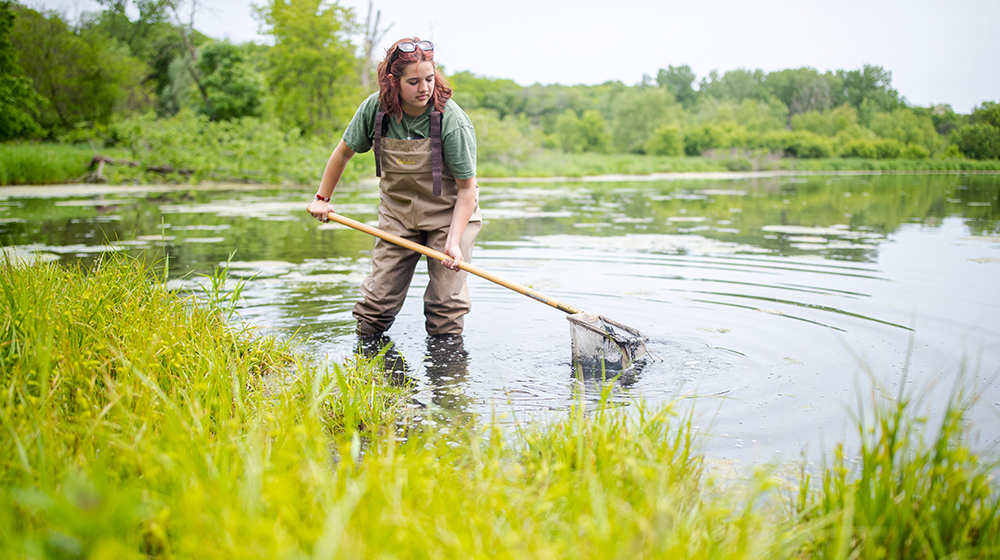
Conservation and restoration ecology students learn how to protect and restore natural habitats and systems.
Biodiversity at local, regional, and global scales currently faces unprecedented threats from pressures including climate change, invasive species, and habitat alteration. Our conservation and restoration program prepares tomorrow's leaders to develop and implement effective strategies to protect and restore natural ecosystems. Students explore ecological principles, how humans interact with and impact ecosystems, and methods of repairing environmental damage.
Students in the conservation and restoration concentration will:
- Build a strong foundation in environmental science, plant and animal studies, and policy related to biodiversity conservation.
- Gain practical experience with restoration and conservation field techniques, ecological data collection, and habitat assessment.
- Learn to identify and address major threats to biodiversity through research-based solutions.
- Develop skills to connect scientific knowledge with ethical and social justice considerations in environmental decision-making.
- Get experience working directly with faculty mentors on projects with local, national, and international impact.
Program Highlights
- Hands-on learning at LUREC — Our 100-acre Loyola University Retreat and Ecology Campus (LUREC) serves as a living laboratory where students restore native habitats, monitor wildlife, and gain experience in ecological field methods and sustainability practices.
- Cutting-edge labs and facilities — State-of-the-art technology and research spaces allow students to study ecosystem function, biodiversity, and environmental change using professional tools and techniques.
- Mentorship from interdisciplinary faculty — Learn from experts in conservation biology, ecological restoration, invasive species management, and environmental justice through coursework and collaborative research.
- Active student community — Join sustainability-focused clubs and student-led initiatives that expand classroom learning, build leadership skills, and connect you with peers who share a passion for ecological stewardship.
- Global learning opportunities — Study abroad in ecologically significant environments, including tropical field courses in Ecuador, to expand your understanding of global biodiversity and conservation challenges.
- Internal and external internship opportunities - Loyola students in Conservation and Restoration Ecology have interned within the School of Environmental Sustainability at the Searle Biodiesel Lab and Urban Agriculture Facility. Students have also partnered with renowned Chicago-area institutions, including the Field Museum, the Forest Preserve District of Cook County, the Chicago Botanic Garden, the Lincoln Park Zoo, the Peggy Notebaert Nature Museum, the Shedd Aquarium, and many others.
Careers
Graduates are well-prepared for impactful careers in conservation and environmental management. Career pathways include:
- Federal, state, and local natural resource agencies
- Conservation NGOs focused on research, policy, outreach, restoration, and community engagement
- Wildlife conservation, museums, aquariums, and zoological institutions
- Environmental consulting and sustainability roles in the private sector
- Graduate studies (MS or PhD) in ecology, conservation biology, natural resource management, or related disciplines
Curriculum
The Conservation and Restoration Ecology concentration combines coursework in environmental science, organismal ecology, and the ways that society can effectively enhance biodiversity to help students build both scientific knowledge and professional field skills. Students in this concentration will choose among classroom and lab courses such as Restoration Ecology, Conservation Biology, Field Ornithology, Conservation Genetics, Geographic Information Systems, Mammalogy, Ecology, Freshwater Ecosystems, Soil Ecology, Human Dimensions of Conservation, and Environmental Justice. Visit the course catalog to view the curriculum.
Admission
To apply for admission and scholarship consideration, please visit the Office of Undergraduate Admission and indicate your interest in this program on your application. For more information, see the following resources:
Students in the conservation and restoration concentration will:
- Build a strong foundation in environmental science, plant and animal studies, and policy related to biodiversity conservation.
- Gain practical experience with restoration and conservation field techniques, ecological data collection, and habitat assessment.
- Learn to identify and address major threats to biodiversity through research-based solutions.
- Develop skills to connect scientific knowledge with ethical and social justice considerations in environmental decision-making.
- Get experience working directly with faculty mentors on projects with local, national, and international impact.
Program Highlights
- Hands-on learning at LUREC — Our 100-acre Loyola University Retreat and Ecology Campus (LUREC) serves as a living laboratory where students restore native habitats, monitor wildlife, and gain experience in ecological field methods and sustainability practices.
- Cutting-edge labs and facilities — State-of-the-art technology and research spaces allow students to study ecosystem function, biodiversity, and environmental change using professional tools and techniques.
- Mentorship from interdisciplinary faculty — Learn from experts in conservation biology, ecological restoration, invasive species management, and environmental justice through coursework and collaborative research.
- Active student community — Join sustainability-focused clubs and student-led initiatives that expand classroom learning, build leadership skills, and connect you with peers who share a passion for ecological stewardship.
- Global learning opportunities — Study abroad in ecologically significant environments, including tropical field courses in Ecuador, to expand your understanding of global biodiversity and conservation challenges.
- Internal and external internship opportunities - Loyola students in Conservation and Restoration Ecology have interned within the School of Environmental Sustainability at the Searle Biodiesel Lab and Urban Agriculture Facility. Students have also partnered with renowned Chicago-area institutions, including the Field Museum, the Forest Preserve District of Cook County, the Chicago Botanic Garden, the Lincoln Park Zoo, the Peggy Notebaert Nature Museum, the Shedd Aquarium, and many others.
Careers
Graduates are well-prepared for impactful careers in conservation and environmental management. Career pathways include:
- Federal, state, and local natural resource agencies
- Conservation NGOs focused on research, policy, outreach, restoration, and community engagement
- Wildlife conservation, museums, aquariums, and zoological institutions
- Environmental consulting and sustainability roles in the private sector
- Graduate studies (MS or PhD) in ecology, conservation biology, natural resource management, or related disciplines
Curriculum
The Conservation and Restoration Ecology concentration combines coursework in environmental science, organismal ecology, and the ways that society can effectively enhance biodiversity to help students build both scientific knowledge and professional field skills. Students in this concentration will choose among classroom and lab courses such as Restoration Ecology, Conservation Biology, Field Ornithology, Conservation Genetics, Geographic Information Systems, Mammalogy, Ecology, Freshwater Ecosystems, Soil Ecology, Human Dimensions of Conservation, and Environmental Justice. Visit the course catalog to view the curriculum.
Admission
To apply for admission and scholarship consideration, please visit the Office of Undergraduate Admission and indicate your interest in this program on your application. For more information, see the following resources: